





Coco Coir Fibre
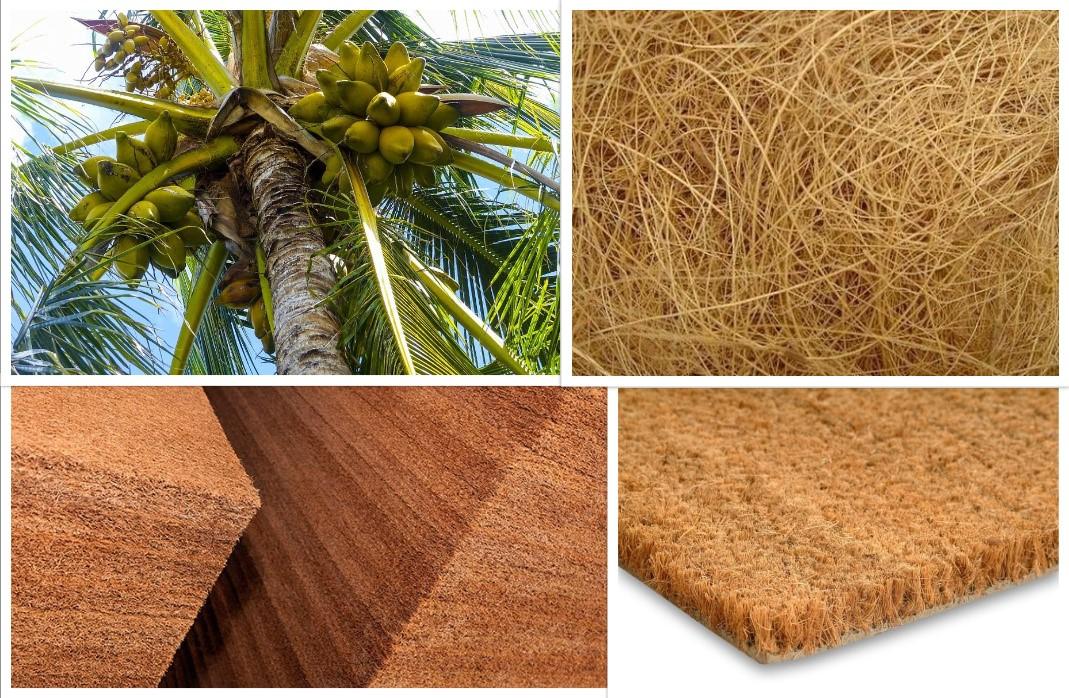
The thickest and most resistant of all commercial natural fibres, coir is a coarse, short fibre extracted from the outer shell of coconuts.
Coconut coir or, “Coco coir”, is a very versatile resource that is harvested from a fibrous layer underneath the exterior shell of the coconut. Since coconut growers consider it a waste product, its utilization is highly sustainable. You may have heard of coco coir being used in gardening, but there are many applications for it across multiple industries, beyond horticulture. Here are 10 interesting facts about coco coir that you probably didn’t know!
• Coco coir has many uses including in textiles, upholstery, making rope/fishing nets, environmental cleanup and horticulture, floor mats, doormats, brushes and mattresses.
• There is brown coco coir & white coco coir, each with different properties. When coconuts are ripe, they produce brown coir which is used in gardening and horticulture. White coir is harvested from unripe coconuts, and is much finer and lighter, it even floats on water. This makes it ideal for fishing nets, brushes, and finer textiles.
• Coco coir works well as a snail deterrent when used in the garden.
• Coco coir is highly absorbent and can hold up to 10x the water as peat moss. Some use it as a sustainable alternative to peat moss
• People often use coco coir as bedding in terrariums for snakes, lizards, turtles, and spiders.
• When used for gardening, coco coir is usually packed in a compressed brick. You need to soak the brick with water which allows it to expand substantially. You can then use it as a growing medium or potting mix additive.
• Coco coir contains very low levels of nutrients, so you can’t normally use it as the sole growing medium for plants, EXCEPT, you can use it for microgreens due to their extremely short grow cycle. This is because they don’t require soil nutrients. You also use coco coir in hydroponics since you add the nutrients directly into the water.
• You can re-use coco coir several times in gardening as it retains its properties over time.
• Because of its highly absorptive properties, people sometimes use coco coir to help clean up oil spills and other caustic fluids.
• People use coco coir in litter boxes and animal bedding because of its highly absorptive capabilities. It is much more sustainable than traditional clay cat litter pellets, which don’t break down. Coco coir also absorbs much more liquid than hay, straw, or newspaper which people often use as animal bedding.
These are just a few of the many interesting characteristics and applications of coco coir. In the spirit of sustainability, the utilization of coco coir is a sound environmental practice. Spread the word and take a step in a more sustainable direction.

Poll: As a customer, what do you think about automation?
The Press investigates the growing reliance on your unpaid labour.
Automation (or the “unpaid shift”) is often described as efficient ... but it tends to benefit employers more than consumers.
We want to know: What do you think about automation?
Are you for, or against?
-
9.5% For. Self-service is less frustrating and convenient.
-
43.5% I want to be able to choose.
-
47.1% Against. I want to deal with people.

It's nearly Showtime in Rotorua!
2 for 1 ticket offer
Get all those new year jobs sorted with a visit to the Show! It’s all about idea’s, inspiration and exclusive show specials at the Rotorua Home and Garden Show on from the 20th - 22nd of February at Energy Events Centre. Join the fun with our 2 for 1 Adult Ticket Offer
There’ll be a huge variety Home and Garden Exhibitors, featuring everything from Kitchens, Artists, Builders, Landscaping, Heating, Spas, Flooring, Heatlh & Well-being and more! Add to that good food, great coffee and you have the perfect day out. Get your to-do list ready and we'll see you at the Show.
Save the date in your diaries: 20 - 22 February
Fri & Sat 10 – 5, Sun 10 – 4
Energy Events Centre, Rotorua
Adults $6
Gold Card Friday $3
Under 16 free


Fundraining for Bowl Cancer
Hi,
This February, I am taking part in Move your Butt for Bowel Cancer and will be conquering 200km for the 100 Kiwis who die from bowel cancer every month.
My goal is to raise funds for Bowel Cancer NZ to support patients, raise awareness and fund research to beat bowel cancer.
Please sponsor my challenge and support my efforts to save Kiwi lives.
To make a donation, simply visit my personal fundraising page below:
www.moveyourbutt.org.nz...
Thanks so much for your support.
Roydon
 Loading…