






Addressing historical greviances
By David Hill, Local Democracy Reporter
Local Māori will soon be able to return to live on their customary land.
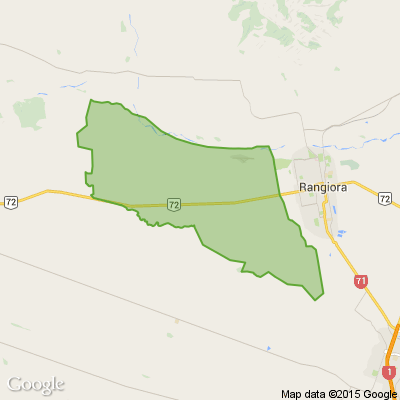
Waimakariri District Council chief executive Jeff Millward says the proposed Waimakariri District Plan, which was notified in September 2021, includes special purpose zoning for Māori Reserve 873, between Kaiapoi and Rangiora.
This included allowing for up to seven houses on a four hectare section.
These have been incorporated into the draft Greater Christchurch Spatial Plan, which has recognised the need for infrastructure investment for kāinga nohoanga (places of residence) across the Greater Christchurch area.
"Historically they have been prevented from living on their own land and growing crops for mahinga kai," Millward said.
The National Policy Statement on Urban Development stated that well-functioning urban environments needed to have a variety of homes, and this included enabling Māori to express their cultural traditions and norms.
Māori Reserve 873, which included the kāinga (village) of Tuahiwi and the surrounding rural area, was set aside by the Crown in 1848 as a kāinga nohoanga.
The 1868 Native Land Court defined Ngāi Tahu mahinga kai and whānau rights.
But subsequent territorial authorities, including the Waimakariri District Council, which was established in 1989, had overlooked the history and introduced rural zoning rules and applied them to Māori Reserve 873.
Most recently, about 2005, the Waimakariri District Council changed the rural zoning for the reserve to 10 acres without consulting with the rūnanga.
This was unworkable as properties were already much smaller and had multiple houses on them.
The land grievances were due in part to different cultural understandings and the complexity of Māori ownership.
Māori practised Kaitiakitanga (stewardship) where resources including land were looked after by the hapū for the next generation.
The consequence has seen Māori lose the ability to use the land for mahinga kai and whānau have been unable to live on the land.
Comment was sought from Ngāi Tūāhuriri.
■ Public interest journalism funded through New Zealand on Air.


Poll: Should we ditch daylight saving? 🕰️
First introduced in New Zealand in 1927 with the passing of the Summer Time Act, it's what we know as 'Daylight Saving' and this year it ends on the first Sunday in April.
While we do get to sleep in this time around, some people would like to scrap the clock tinkering for good.
And why? Some evidence suggests the time changes are bad for our health as they mess with sleep patterns leading to short-term fatigue and affecting mood. Meanwhile the hour change is frustrating for farmers and a nightmare for getting the littlies to sleep. But what's your take?

-
38.4% Yes - get rid of the clock changes
-
59.9% No, I enjoy it
-
1.7% Other - I'll share below

Don't overthink this riddle...
I have a silver sole
but no feet,
I make my living by bringing the heat.
What am I?
Do you think you know the answer? Simply 'Like' this post if you know the answer and the big reveal will be posted in the comments at 2pm on the day!
Want to stop seeing these in your newsfeed?
Head here and hover on the Following button on the top right of the page (and it will show Unfollow) and then click it. If it is giving you the option to Follow, then you've successfully unfollowed the Riddles page.

Poll: Does a savoury scone require cheese on top, or folded inside?
Help settle the great kiwi debate ... cheese on top, or folded inside?

-
76.4% Inside!
-
23.6% On top!
 Loading…