






Lack of regulations hamper councils
By David Hill, Local Democracy Reporter
A lack of regulation makes it difficult for councils to manage their weed spraying programmes, Environment Canterbury (ECan) science director Dr Tim Davie says.
Responding to concerns raised by Kaiapoi resident Michael Bate, Davie said the Parliamentary Commissioner for the Environment and the Environmental Protection Authority (EPA) lacked the necessary clout to offer guidance to councils.
Bate tabled two Radio New Zealand articles from last year, at a Waimakariri Zone Committee meeting last week about the lack of mechanisms to govern chemical use.
‘‘The EPA, as it stands, is meant to have oversight around chemical use, but there’s very little legislative requirements and there’s no requirement to report it,’’ Davie said.
‘‘If the EPA had a mandate and was properly funded we would have standards to respond to.’’
Parliamentary Commissioner for the Environment Simon Upton presented a report to Parliament last year raising concerns about the regulations around chemical use.
The report identified consequences such as lakes overloaded with zinc, too much antibiotics in wastewater and harm to bees from insecticide-dipped seeds.
It recommended expanding the EPA’s powers to require more data to be collected from chemical importers, manufacturers and sellers.
But more funding was needed.
Davie said it was important for the PCE to highlight those issues.
‘‘But he can’t enforce it and the government hasn’t responded.’’
ECan managed 59 river rating and drainage districts.
Weed management was essential to keep communities safe from flood risks and to protect biodiversity.
Waterways were vulnerable to infestations of exotic pest plant species which choked braided rivers and restricted natural functions.
Davie said spraying was ‘‘the nasty compromise’’ to manage weeds and the spread of gorse around riverbeds.
Glyphosate was widely used in New Zealand and other countries as a general-purpose herbicide and was considered safe by the EPA.
‘‘In an ideal world we would rather not spray,’’ Davie said.
‘‘Glyphosate is a spray which is reasonably short lived. It is a compromise and it is a really difficult thing to manage.’’
The Waimakariri District Council is preparing a report on spraying practices and chemicals used in the district.
■ Waimakariri Zone Committee chairperson Michael Blackwell and deputy chairperson Arapata Reuben both stepped down at last week’s meeting.
Carolyne Latham was elected chairperson, with Erin Harvie elected deputy chairperson.
Former Rangiora High School student Ruby Gill-Clifford was appointed as a youth rep to the zone committee.
Ruby served three years on ECan’s Youth Rōpū and was deputy chairperson last year.
She is studying for a science degree at Canterbury University.
*Public Interest Journalism funded through NZ On Air


Poll: Should we ditch daylight saving? 🕰️
First introduced in New Zealand in 1927 with the passing of the Summer Time Act, it's what we know as 'Daylight Saving' and this year it ends on the first Sunday in April.
While we do get to sleep in this time around, some people would like to scrap the clock tinkering for good.
And why? Some evidence suggests the time changes are bad for our health as they mess with sleep patterns leading to short-term fatigue and affecting mood. Meanwhile the hour change is frustrating for farmers and a nightmare for getting the littlies to sleep. But what's your take?

-
40.5% Yes - get rid of the clock changes
-
57.6% No, I enjoy it
-
1.9% Other - I'll share below

Loud explosions rangiora
Did anyone else get woken around 7 ish by a very loud sound that shook my house?

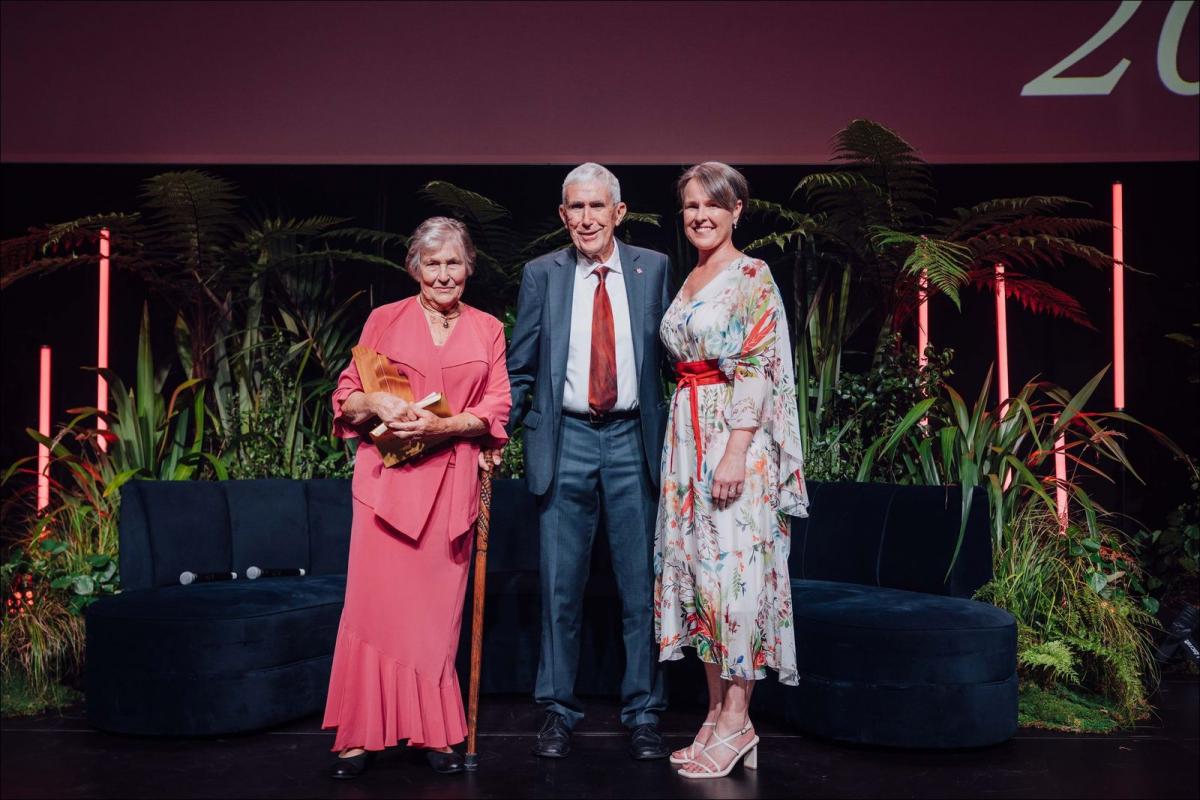
Alan and Hazel Kerr share Senior New Zealander of the Year Award 2026
Dr Alan and Hazel Kerr describe themselves as ‘just ordinary old Kiwis’, despite being named as the 2026 Ryman Healthcare Senior New Zealanders of the Year Te Mātāpuputu o te Tau.
The amazing couple prompted a standing ovation at a star-studded Auckland event which recognised their tireless efforts, with Alan travelling to and from Gaza and the West Bank 40 times to help children over 20 years, and Hazel travelling 20 times.
Click read more to find out more.
 Loading…