
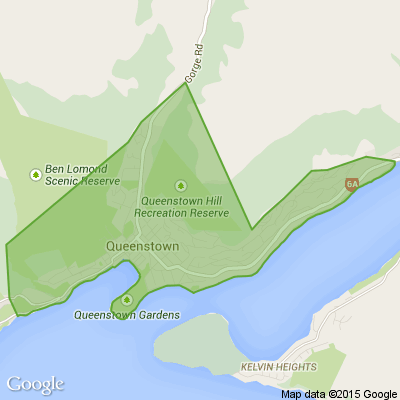





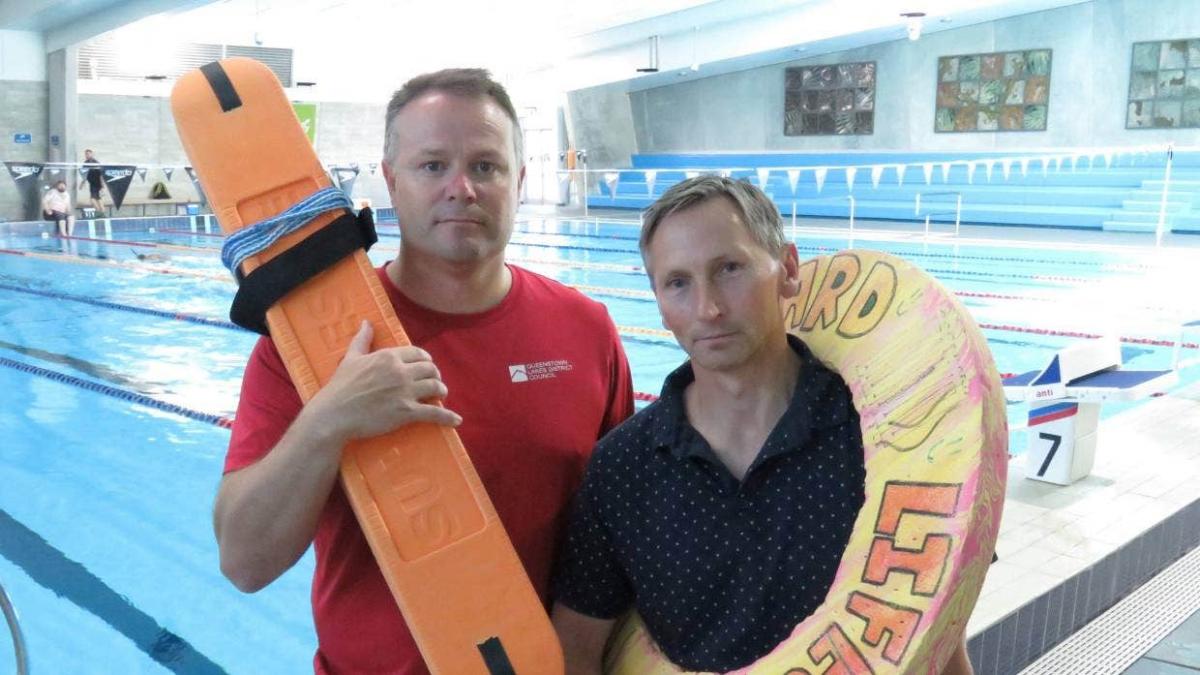
Queenstown's only indoor public pool to close on weekends due to lifeguard shortage
From reporter Debbie Jamieson:
Queenstown’s only indoor public swimming pool will close on weekends, indefinitely, with the council blaming a lifeguard shortage.
And the news for families in the area gets worse: Arrowtown’s outdoor pool will close about a month early – on February 13 – for the same reason.
The Queenstown Lakes District Council-owned pools are the latest businesses to be hit by a widespread staff shortage, exacerbated in Queenstown by an extensive housing shortage.
Council sport and recreation manager Simon Battrick said the decision to close Alpine Aqualand in Frankton, Queenstown on weekends from February 18 was unavoidable due to a lack of staff.
The council chose to close on weekends to avoid disrupting swimming and fitness programmes.
Battrick said the district’s pools always struggled to find staff in February when high school and university students returned to their studies.
However, a global shortage of lifeguards and Queenstown’s local staff shortage meant the situation was worse this year.
Alpine Aqualand was down to nine staff and needed another 10 (full-time and part-time) to fill rosters.
A minimum of three full-time and one part-time lifeguards were needed to open on weekends.
The Queenstown Lakes district was not the only area suffering a shortage of lifeguards. In the Timaru District several pools have also been forced to reduce their operating hours in the last week.
Battrick said anyone who could swim 200 metres in under six minutes could apply to be a lifeguard.
Staff underwent two weeks training and two weeks supervision before being independent lifeguards.
The starting pay rate was $23.65 an hour and tops out at about $26.
As of the first of April the pool would be able to sponsor migrant workers but needed to pay a minimum $29.66 an hour, which was too high, he said.
“The reality is that this is an entry level job. “We have to live within our means.”
The hourly rate in the Queenstown Lakes was higher than at many other pools around New Zealand, as it recognised the higher cost of living in the district.
The council had advertised the roles extensively and had some bites, he said.
“It’s just really hard at the moment.
“Someone can give us a call, and we can take them through the process, give them a contract, and then next day they say they’re taking a job at the supermarket.”
There would be some exceptions to the use of the pool on the weekend including the locals swimming club, which was coached by a qualified lifeguard and swimming lessons.
The weekend closures would hit families and children who visit and play at the pool,
The situation would continue until more staff were available.
Mayor Glyn Lewers said the staff shortage issue was being felt right across council and there was no magic solution.
He was concerned about the impact of the closure of the pool on local families on weekends when the weather was not good for swimming in local waterways.
The pools provided a low cost recreational activity and social connection.
Now there was a barrier to providing that.
“We went through this with Covid. We don’t want to go through it again,” he said.
This was the first time in six years the pool had been closed, except during Covid-19.

Poll: How important is the ability to book a doctor’s appointment online?
Hi Neighbours
Here at The Doctors we would love to hear how you prefer to book your doctor’s appointments. With busy schedules, different people find different methods easier.
For some, online booking is very convenient, you can make an appointment anytime without needing to wait on the phone. Others still prefer calling the clinic and speaking to a real person, especially if they have specific questions about their visit.
Your feedback helps us understand what works best for our patients and how we can improve access to care.

-
37.2% I prefer booking online whenever possible
-
23.2% Online booking is helpful but not essential
-
36% I prefer calling the clinic
-
3.7% I didn’t know online booking was available

A reminder this hunting season
As thousands of hunters are making their plans for autumn – the Roar – recreational firearms groups are urging hunters to always be 100% sure of their targets.
Te Tari Pureke - Firearms Safety Authority NZ, which chairs the Recreational Firearms Users Group, has begun a public information campaign reminding hunters everywhere of Rule #4 of the Firearms Safety Code: to identify their target beyond all doubt.
Director Communities and Corporate, Mike McIlraith, says there is an estimated 50,000-60,000 New Zealanders involved in big game animal hunting each year, and the Roar is the key event for many hunters each year.
“The Roar is a fantastic time of year for hunters to get out into the hills after a trophy animal but hunting safely and making sure everyone gets home in one piece, still must be the most important goal of every trip,” says Mike McIlraith.
“The consequences of not fully identifying your target beyond all doubt can be catastrophic. Our message to hunters is a really simple one: If you are not sure, then don’t shoot.”
Mike McIlraith says while hunting fatalities are thankfully rare, research has shown that misidentification of the target is the largest firearms related risk to New Zealand deer hunters, and 80% of the time this involves members of the same hunting group.
The Authority says hunters should not feel pressured to take a shot: “Instead, hunters should take the time to analyse their target, wait and see if it is a hind or stag, how old is the animal, how many points does its antlers have? Identifying your target means never firing at sound, shape, colour or movement alone.”
Mike McIlraith says good hunters will slow down, and run through some simple mental checks:
- Can I see the whole animal, or could this be another hunter?
- Where are my hunting companions – could this be them or someone else?
- How much of the animal can you see, if it is a hind or stag, how old is the animal, how - many points does its antlers have?
“Taking a little extra time to identify your target and check the firing zone is the key to safer hunting. No meat or no trophy is better than no mate,” he says.


Poll: Does a savoury scone require cheese on top, or folded inside?
Help settle the great kiwi debate ... cheese on top, or folded inside?

-
76.5% Inside!
-
23.5% On top!
 Loading…