





Multimillion-dollar virtual production studio setting up in Queenstown
From reporter Debbie Jamieson:
A multimillion-dollar digital studio will be a cornerstone tenant in a $45 million Queenstown research and innovation facility.
The New Zealand arm of United Kingdom-based Target3D will construct its first studio on the ground floor of the building, director Shannon Dowsing announced on Friday.
The company specialises in motion capture and virtual production used in film and television as well as high performance sport, robotics and biometrics.
Recent projects include Bjork’s music videos, an augmented reality performance by singer Liam Payne at the 2021 Bafta awards and Clays, a UK-string of virtual reality clay bird shooting themed bars.
After working with the company directors in London Dowsing established sister company Rāngai in his home town of Tairāwhiti Gisborne, to train students in virtual production, and enable the establishment of Target3D.
The Research and Innovation Queenstown hub developers approached him to consider basing the business there, which also enabled the company to secure a $2m government loan to get established.
The funding came from the $18m Queenstown Economic Transformation and Resilience Fund set up to diversify the local economy beyond tourism, increase economic resilience and develop high paying jobs.
Economic and Regional Development Minister Stuart Nash also announced a loan of up to $1.25m to Loaded Reports Ltd, a Queenstown-based software company that specialises in hospitality management, on Friday.
Founded by James Arnott and Richard McLeod in 2004, the company has 13 hospitality outlets across New Zealand and 900 software customers.
It is planning to enter the Australian market next year, having raised $3.25m of equity and debt including the government loan and support from investment fund Invest South.
Research and Innovation Queenstown is in the early stages of constructing a 5400sqm building as a base to attract, enable and facilitate research and innovation activities and companies to diversify Queenstown’s economy.
It includes office space, networking areas and complementary commercial uses such as recreation, film and visual presentation theatres.
The $45m building attracted a loan of up to $22.5m from the Government’s shovel ready infrastructure fund.
The idea of the digital studio project within the Queenstown hub was initially conceived by local technology entrepreneur Rod Drury, who said it was great to see it come to life.
“I'm very excited about the educational aspects of this facility and the opportunities it will create for learning providers in Southern Lakes,” he said.
Target3D co-founder Allan Rankin said it was exciting to bring the studio to New Zealand.
“Due to the boom in demand for virtual technology, we expect the space to be in strong demand from creatives and industry, but also as a centre for R&D and learning.”
Dowsing said the total project would cost about $6m and probably employ six people as core staff but up to 45 people during production periods.
It would be useful to educators, filmmakers, game designers, and content creators, he said.
He expected it would be operational early in 2024 with a full list of projects ready to go.
There were already projects being discussed, but he could not give details of those due to commercial sensitivities.
Nash said the studio would provide diversification within the screen industry in a district better known for location shoots than in-studio screen production.
“The studio will include infrastructure to support virtual production which includes LED screens, motion capture, game engine servers, lighting, production equipment and staging.
“This will provide access for filmmakers, game designers and television producers to the latest technology.
“It also aims to encourage screen production companies to remain in the district for longer periods, therefore increasing district and regional spend,” he said.
Nationally the screen industry employs about 16,200 New Zealanders and contributes $3.3 billion to the economy annually.
Research and Innovation Queenstown director Johnathan Chen said the studio would be a key tenant and a focal point for collaboration.
“This studio creates multidisciplinary collaboration to provide innovative solutions across a number of industries, such as film, gaming, IT, tourism and even future cities.”


Poll: How important is the ability to book a doctor’s appointment online?
Hi Neighbours
Here at The Doctors we would love to hear how you prefer to book your doctor’s appointments. With busy schedules, different people find different methods easier.
For some, online booking is very convenient, you can make an appointment anytime without needing to wait on the phone. Others still prefer calling the clinic and speaking to a real person, especially if they have specific questions about their visit.
Your feedback helps us understand what works best for our patients and how we can improve access to care.

-
37.2% I prefer booking online whenever possible
-
23.2% Online booking is helpful but not essential
-
36% I prefer calling the clinic
-
3.7% I didn’t know online booking was available

A reminder this hunting season
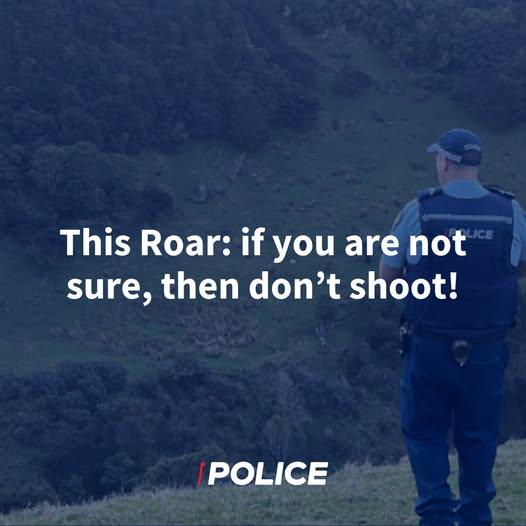
As thousands of hunters are making their plans for autumn – the Roar – recreational firearms groups are urging hunters to always be 100% sure of their targets.
Te Tari Pureke - Firearms Safety Authority NZ, which chairs the Recreational Firearms Users Group, has begun a public information campaign reminding hunters everywhere of Rule #4 of the Firearms Safety Code: to identify their target beyond all doubt.
Director Communities and Corporate, Mike McIlraith, says there is an estimated 50,000-60,000 New Zealanders involved in big game animal hunting each year, and the Roar is the key event for many hunters each year.
“The Roar is a fantastic time of year for hunters to get out into the hills after a trophy animal but hunting safely and making sure everyone gets home in one piece, still must be the most important goal of every trip,” says Mike McIlraith.
“The consequences of not fully identifying your target beyond all doubt can be catastrophic. Our message to hunters is a really simple one: If you are not sure, then don’t shoot.”
Mike McIlraith says while hunting fatalities are thankfully rare, research has shown that misidentification of the target is the largest firearms related risk to New Zealand deer hunters, and 80% of the time this involves members of the same hunting group.
The Authority says hunters should not feel pressured to take a shot: “Instead, hunters should take the time to analyse their target, wait and see if it is a hind or stag, how old is the animal, how many points does its antlers have? Identifying your target means never firing at sound, shape, colour or movement alone.”
Mike McIlraith says good hunters will slow down, and run through some simple mental checks:
- Can I see the whole animal, or could this be another hunter?
- Where are my hunting companions – could this be them or someone else?
- How much of the animal can you see, if it is a hind or stag, how old is the animal, how - many points does its antlers have?
“Taking a little extra time to identify your target and check the firing zone is the key to safer hunting. No meat or no trophy is better than no mate,” he says.

Poll: Does a savoury scone require cheese on top, or folded inside?
Help settle the great kiwi debate ... cheese on top, or folded inside?

-
76.5% Inside!
-
23.5% On top!
 Loading…