







When finding a fault, you sometimes must go past the noise
I have experienced the frustration of knowing there is a fault in a circuit, but not knowing how or where to pinpoint it. To do so takes time, that is well worth the effort.
Living on a 6-acre block of land in South Auckland means that noise is not as easy to recognize as it was when living on a block of concrete in Auckland city. Generally, if there is a fault in the services you receive in the city, you can phone a business to report this fault and a fault finder or technician will be sent to fix the issue so that you can continue with your business. It is not always known to you why there was a fault, only that there is an (interim) fix and you can continue with business. The fault may occur again, and another call to report the fault will see it fixed. However, when living in a rural location, the business owner often becomes the technician, meaning that you have a better understanding of how your external units work to make up the smooth operation of your daily business.
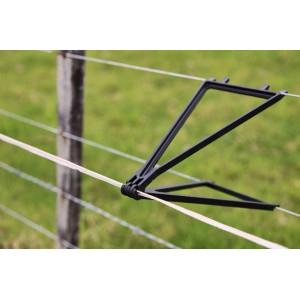
Recently I noticed that the cattle were getting through the electric tape and into the young trees planted in the paddock. Of course, this observation happened to be on a stormy day, when I would rather have stayed inside and phoned a technician to sort out this problem. Only I own the problem and so I am responsible for finding the fault. Through experience I have learnt to leave the electrics on so that you can hear where the fence is shorting out. Sometimes it appears obvious as in this case, where the cattle had pushed the tape off the standards, and the tape was in the grass causing it to short. Feeling relieved that I had appeared to have found the fault quickly, I managed to get the tape back through the standards. Walking back to the electric fence unit, I was dismayed to see that the Red light was blinking, meaning that I had not fixed or found the fault. I then walked around the 6 acres of fencing to listen out for a shorting sound. Of course, the fault was not to be heard. I then went to the house and got my Fence Fault Finder and proceeded to test the fence to pinpoint where it was shorting out. After testing patches of fence for it to point forward, I managed to find the fault by going past it. Fault fixed and fences working again, meant the trees would live to see another day.
I believe when a business unit is not working to its full capacity, this has a similar effect on a business either up or down the line. If, as a business owner, you are so removed from your daily business noise that when there is a fault, you rely on an external source to fix it, this fix may keep your business working if only for the interim. Take time to listen to your business. It should pulse with a singular beat. Don’t get distracted by the acres of wire that deaden the sound, instead take time to listen to each unit (department). Ensure the units are set to reach the same volts using the same meter. If the Fence Unit is not strong enough to drive the energy required for the current fence, put in a stronger unit that can withstand the load when under pressure. Do not put in interim fixes that become permanent. These fixes will not keep the business strong when you need to up the energy in busy periods.
Listen. Look. Learn. Lead.
Andrea Smith
TempDirect

Poll: Should the government levy industries that contribute to financial hardship?
As reported in the Post, there’s a $30 million funding gap in financial mentoring. This has led to services closing and mentors stepping in unpaid just to keep helping people in need 🪙💰🪙
One proposed solution? Small levies on industries that profit from financial hardship — like banks, casinos, and similar companies.
So we want to hear what you think:
Should the government ask these industries to contribute?

-
59.6% Yes, supporting people is important!
-
26% No, individuals should take responsibility
-
14.4% ... It is complicated

A Neighbourly Riddle! Don’t Overthink It… Or Do?😜
Do you think you know the answer? Simply 'Like' this post if you know the answer and the big reveal will be posted in the comments at 2pm on the day!
If you multiply this number by any other number, the answer will always be the same. What number is this?


Have you got New Zealand's best shed? Show us and win!
Once again, Resene and NZ Gardener are on the hunt for New Zealand’s best shed! Send in the photos and the stories behind your man caves, she sheds, clever upcycled spaces, potty potting sheds and colourful chicken coops. The Resene Shed of the Year 2026 winner receives $1000 Resene ColorShop voucher, a $908 large Vegepod Starter Pack and a one-year subscription to NZ Gardener. To enter, tell us in writing (no more than 500 words) why your garden shed is New Zealand’s best, and send up to five high-quality photos by email to mailbox@nzgardener.co.nz. Entries close February 23, 2026.

 Loading…