






Buy Once, Buy Well
Why we have an endless fascination with mid-century modern. There’s just something about mid-century design (MCD) that captures the imagination. The architecture is emblematic, exciting, and nostalgic. It’s close enough in our history to feel familiar, yet far enough away to be inspirational.
We live in such a completely different way, that interiors of the 50s, 60s and 70s are responding to social behaviours and cues that are no longer the norm, so there’s something contradictory yet enthralling. It touched our generation, our parents, and grandparents, near enough to be real in a way that period antiques of the early 20th century and older, seem more relic-like – exciting sure, but less tangible somehow, coming from a world we can’t really imagine.
MCM exists in the post war world, reflecting a vibrant period of social, technological and political change where design was ground-breaking, architecture brave and sculptural. To those who may have felt that mid-century, retro design has been a passing fad, sit back down! Mid-century style continues to inspire and excite showing its face in new architecture and interior design.
As such, the choice to invest in or keep an original piece of mid-century design is a sound one. Not only are you engaging with something the interior world considers usable in perpetuity, you are continuing a legacy of stewardship and conservation of an important part of our design heritage.
In a world where capitalism has spent our lives teaching us to consume and discard, we are now moving rapidly towards an ideal of longevity and sustainability. So, when you make the decision to ‘adopt’ a classic piece of design, you are giving it another chance to invigorate an interior, and careful consideration to its conservation opens up a world of upholstery opportunities.
There are several main fabric types that seem to perpetuate and have the “flavour” or sentiment of mid-century style whilst also being suitable for upholstery. Simple textures allow the shape of a piece to stand out, warm wools will hug the shapes of these designs, while boucle feels completely relevant to this period.
Fortunately, there are a lot of careful and respectful retailers and upholsterers devoted to the maintenance and celebration of these stunning pieces.
Over the next few weeks we will hear from local upholsterers and retailers of MCD furniture who are equally as passionate about the style and their process for restoring these popular pieces of furniture.
With locations in Sydney and Auckland the owners of Tangerine and Teal Sasha and Vanessa were raised in a home surrounded by art and likely learned their appreciation for a cultivated aesthetic. Some of the well-known brands you may find with Vanessa in Auckland include Otto Larsen, Don, Jon Jansen, and Parker and in Sydney with Sacha you are likely to find Fler, Snelling, Featherston, Parker and Wrightbuilt.
What do you love about mid-century furniture and design?
Simple clean lines and great design feature in the majority of MCM furniture pieces, they are timeless in design and look great mixed in with contemporary pieces to give character and nostalgia to your home.
What items are you always looking out for?
We don’t import furniture from overseas and instead focus our search locally for interesting pieces by local New Zealand and Australian designers who are often underrated on the world stage but have great designs. Recently Vanessa restored and sold a lovely sideboard by New Zealand designer Rudi Schwarz and here in Sydney I just sold a rare dining suite by George Korody.
How did you come to select the fabrics for these stunning pieces?
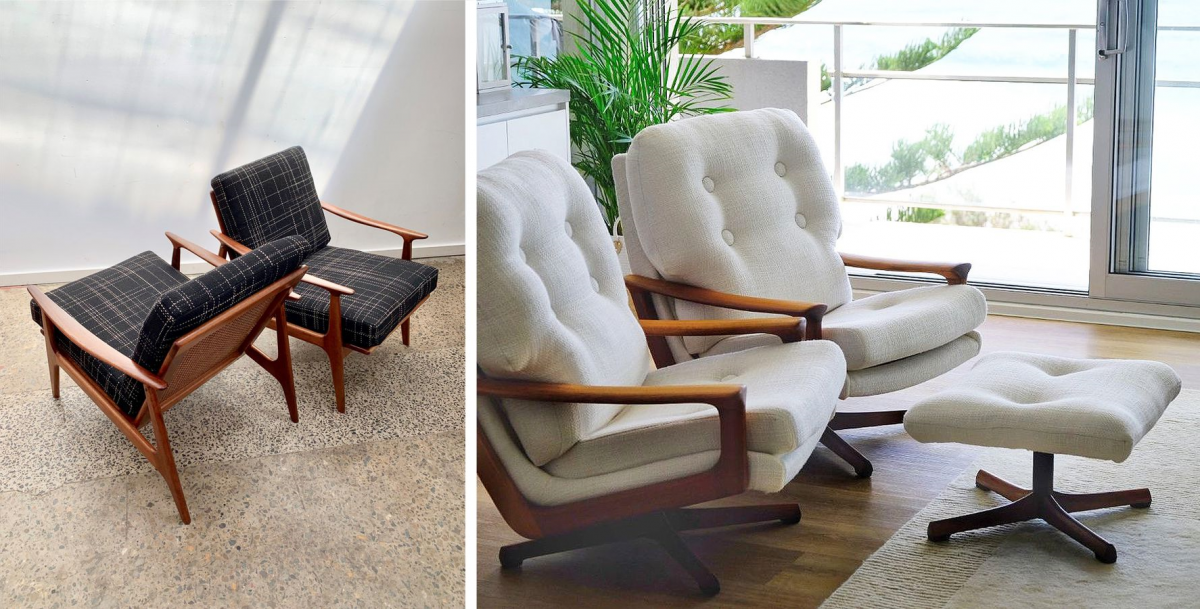
The Mokum Mondrian Noir was selected for the pair of Parker furniture armchairs, originally these 60s chairs were always produced with wool cushion covers so the construction was a good fit. The Mondarian style black and white pattern is synonymous with the era and compliments the simple lines of the chairs.
The Piet Blanc was selected by our clients to reupholster their 70s Tessa armchairs. The luxurious soft texture in the white colour suited the stuffed cushions and brought luxury and style to the chairs in their setting overlooking the ocean in the northern beaches.
Quality and good design will stand for as long as we continue to look after and celebrate it. Classic pieces will transcend movements of the moment and will continue to add quirk and personality to your interior.
It also reminds us that new pieces bought now can be considered an investment, a collectible of the future, something to be treasured and enjoyed. As such, it’s important to consider with new furniture, buying pieces that evoke something in you – don’t think about fashion or trend, this is something you will be using and looking at daily for years to come, so compromise should not be an option! It should be a decision you are EXCITED about making.
Buying from reputable manufacturers, designer/makers and brands who stand by their quality and craftsmanship will ensure longevity – a legacy piece that generations of the future will be able to re-love, refurbish, and be inspired by.

Poll: If we want to reduce speeding, what do you think actually changes driver behaviour? 🛻🚨🚓
In the Post's article on speeding penalties, the question is asked whether speeding fines are truly about road safety, or are they just a way to boost revenue for the Crown?
What do you think? Should speeding motorists receive speeding fines or demerit points?

-
30.2% The sting of a fine (Money talks!)
-
69.8% The threat of demerit points (Nobody wants to lose their license!)

Harrier Hawk 0823
Harrier Hawks seem to have flight routines. It was not uncommon to see one flying southwards over Burn St from the Roslyn Rd area as this one was doing. I often wondered if it was always the same hawk but anyway I've not seen it happen recently.

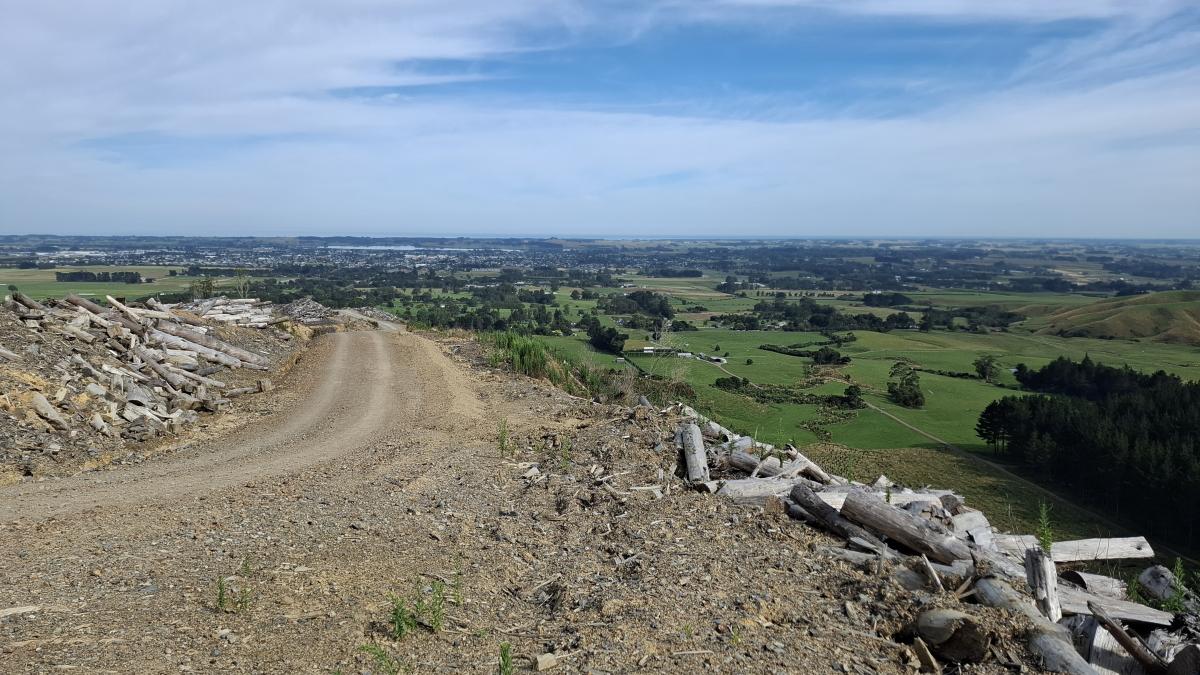
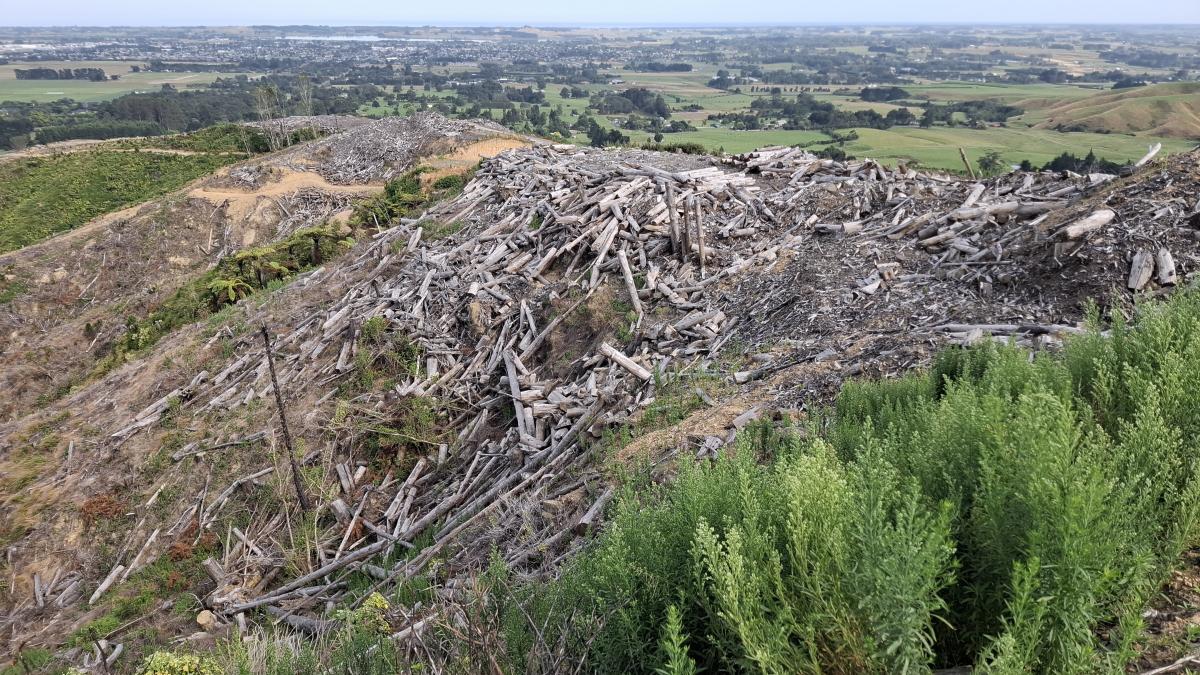
SLASH BESIDE THE TRACK UP TO TRIG
I question the wisdom and the morality of an industry which creates so much waste, waste which is also a cause of widespread and devastating damage. So, I searched the internet for potential uses of slash. It was easy to find.
I recommend a visit to nzbioforestry.co.nz. I quote from the website:
OUR SOLUTION:
NZ Bio Forestry proposes to develop a sustainable renewable forestry model that increases the economic value of the NZ- Aotearoa forestry sector, simply by integrating bio-technologies augmenting the forestry, wood manufacturing, and petrochemistry industries into one model.
Specifically, our strategy is to utilise the whole tree and convert the tree’s sugars into bioenergy, biomaterials, and biochemicals. This means using slash, off cuts, pruning, and wood waste to produce biofuel via bio pellets and biochemicals. It means optimising logs through the whole process….logging, manufacturing freighting, and refining process to serve the many Asia-Pacific markets with high-value products….not just exporting raw logs to one or two large dominant markets! (End of quote)
NZ Bio Forestry then contrasts the financial return from the present exports of raw logs with the potential return from utilising the WHOLE TREE.
In US dollars, the return from exporting logs is between $50 - $140 per log.
Using the whole tree including the slash and other waste for wood processing would return $200 - $800 per tree, and,
Using the bio-refinery process to convert the wood waste into fossil-free biochemicals would return $2,500 - $11,200 per tree.
I can’t help but conclude that our current focus on exporting logs is a pitiful failure of industry and government policy compared with the potential benefits of processing THE WHOLE TREE. And to complete the argument, this not just theory. In Scandinavia, SCA, which owns Europe’s largest private forest with 2.7 million hectares, has built a well-invested value chain that maximises the value of each individual tree and all of the forestry’s resources.
A SUMMARY OF POTENTIAL ADDITIONAL PRODUCTS:
Wood Pellets and Chips: Slash can be collected, dried, and processed into hog fuel or wood pellets for use in industrial boilers, as a replacement for coal, to generate heat and electricity.
Biofuel Production: Research is underway to convert forest residues into marine biofuel to help decarbonize the shipping sector.
Gasification: Advanced, small-scale, on-site processing plants can turn slash into renewable energy products like bio-oil, ethanol, and hydrogen.
Biochemicals: Specialized refineries can convert woody waste into sustainable alternatives to plastics, chemicals, and industrial products.
WAKE UP Aotearoa, New Zealand!!!
 Loading…