





Textile Testing - Seam Slippage
Seam Slippage is one of four key topics (others include Abrasion Resistance, Pilling, and Colourfastness) that we are covering to provide some background as to how we test and why.
Test results provide us with critical information about textile’s durability and suitability for certain applications. We externally test all James Dunlop and Mokum textiles in Melbourne at a highly reputable laboratory who are amongst the most conservative and stringent in the world, due to the extremely harsh environmental conditions we face here in Australia and New Zealand.
We have gathered a number of frequently asked questions relating to seam slippage, so we asked our Mokum Studio designers Stephanie Moffitt and Annie Moir to share their expert knowledge.
Seam slippage is another equally important upholstery test, can you explain what seam slippage actually means?
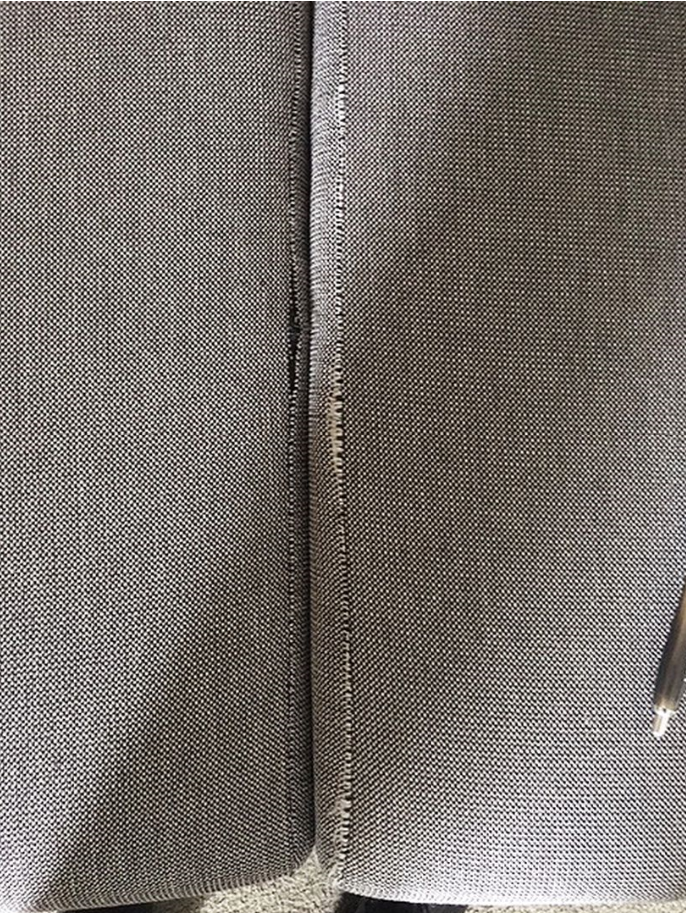
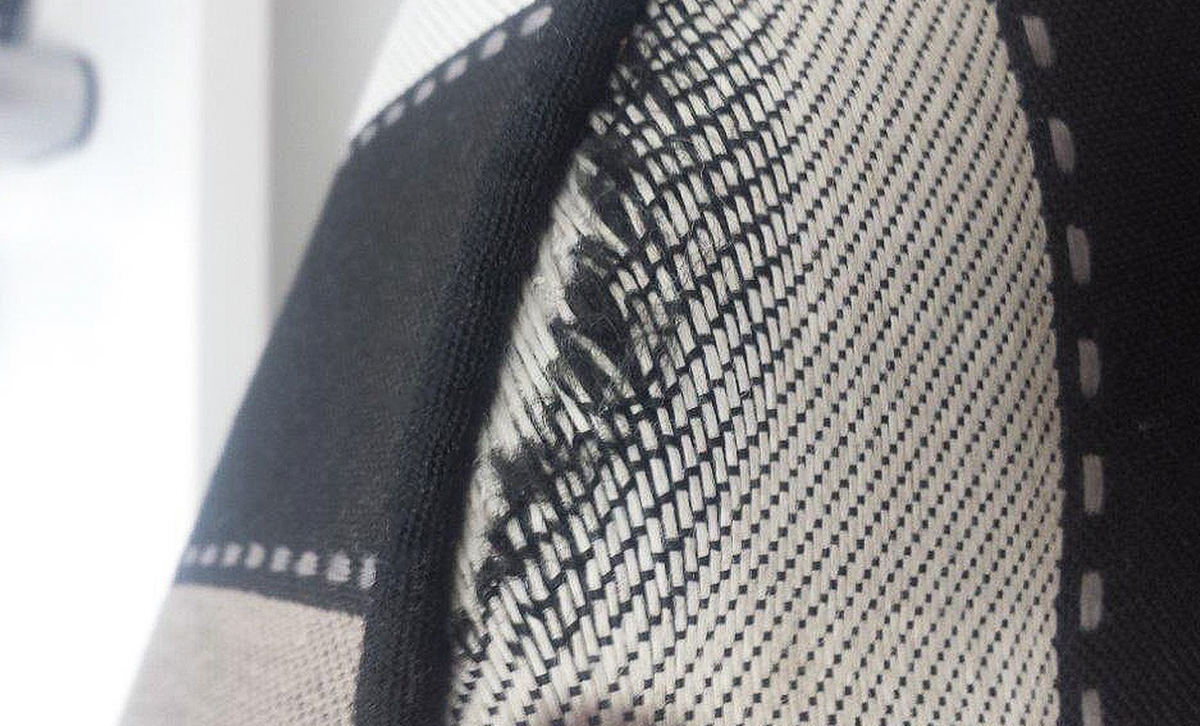
Seam slippage is the separation or pulling apart of yarns in a fabric usually along a sewn seam or join. More often than not, the yarns don’t actually break they just separate and leave an unsightly gap along the fabric join.
What are the most common causes for seam slippage?
Seam slippage may be the result of a poorly constructed textile and /or the use of defective yarns in the fabric. But more commonly it is due to an inadequate standard of upholstery manufacturing i.e. a display of insufficient seam allowance, a deficient number of stitches in the seam or failure to overlock raw edges during the upholstery process – or a combination of all three factors.
Seam slippage usually occurs on joins that are subjected to heavy load and pressure such as seat cushions and arm rests. Certain furniture styles put more stress on fabric seams such as tub chairs and furniture with a fixed back or seat cushions.
Can composition play a part in seam slippage?
Yes, it can, Linen for example is loved for being a smooth lustrous fibre, but this can make it more susceptible to seam slippage with heavy load. For some linen textiles we would recommend discussing the need for reinforcing upholstery seams with your upholstery manufacturer.
The note “reinforce upholstery seams” is sometimes listed on our sampling specifications – what does it actually mean? Should we assume the fabric is inferior quality?
Firstly, no it doesn’t infer inferior quality. If we’ve specified it as being suitable for upholstery then it is fit for purpose, but we recommend additional seam support for that particular textile.
“Reinforce upholstery seams” simply means using an additional safeguard by stitching a tape along the seam to prevent fraying in high load areas, such as the corner back cushions. Overlocking should be used for loose woven fabric and seated cushion seams.
What’s the remedy for seam slippage? Can you fix it once it starts?
It is difficult to repair seam slippage once it starts. In almost all instances of seam slippage, it will require the furniture to be recovered, or re upholstered. It’s important to ascertain the cause of the seam slippage. If the seam slippage can be identified as being a result of inadequate manufacturing, you’ll need to work with the upholsterer to ensure appropriate manufacturing techniques are being used, including reinforcing seams if required. If the seam slippage is clearly related to the fabric, the furniture would need to be recovered, either from a different batch (if it’s an isolated batch issue) or selecting an alternative fabric which is more suitable for that particular frame.
Can you explain how the seam slippage test is performed?
The test measures how resistant a fabric is to yarns opening/ slipping under pressure along a seam line. Two fabric swatches are sewn together with a standardised seam. The swatches are pulled apart with an equal and opposite force. The test is performed in both warp and weft directions. Any seam opening is then measured while the fabric swatches are being pulled apart. According to the Australian standard, a seam opening should be less than 6mm at maximum force. A lower result indicates a smaller opening and thus a better resistance against seam slippage.
Written by: jamesdunloptextiles.com...

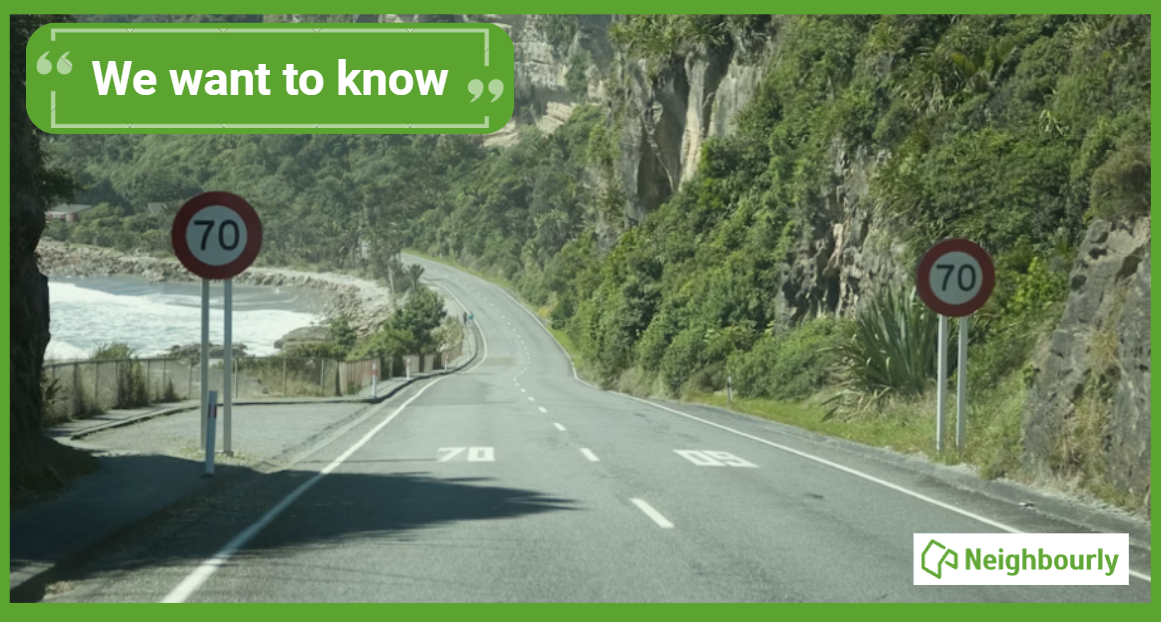
Poll: If we want to reduce speeding, what do you think actually changes driver behaviour? 🛻🚨🚓
In the Post's article on speeding penalties, the question is asked whether speeding fines are truly about road safety, or are they just a way to boost revenue for the Crown?
What do you think? Should speeding motorists receive speeding fines or demerit points?
-
30.2% The sting of a fine (Money talks!)
-
69.8% The threat of demerit points (Nobody wants to lose their license!)

Harrier Hawk 0823
Harrier Hawks seem to have flight routines. It was not uncommon to see one flying southwards over Burn St from the Roslyn Rd area as this one was doing. I often wondered if it was always the same hawk but anyway I've not seen it happen recently.

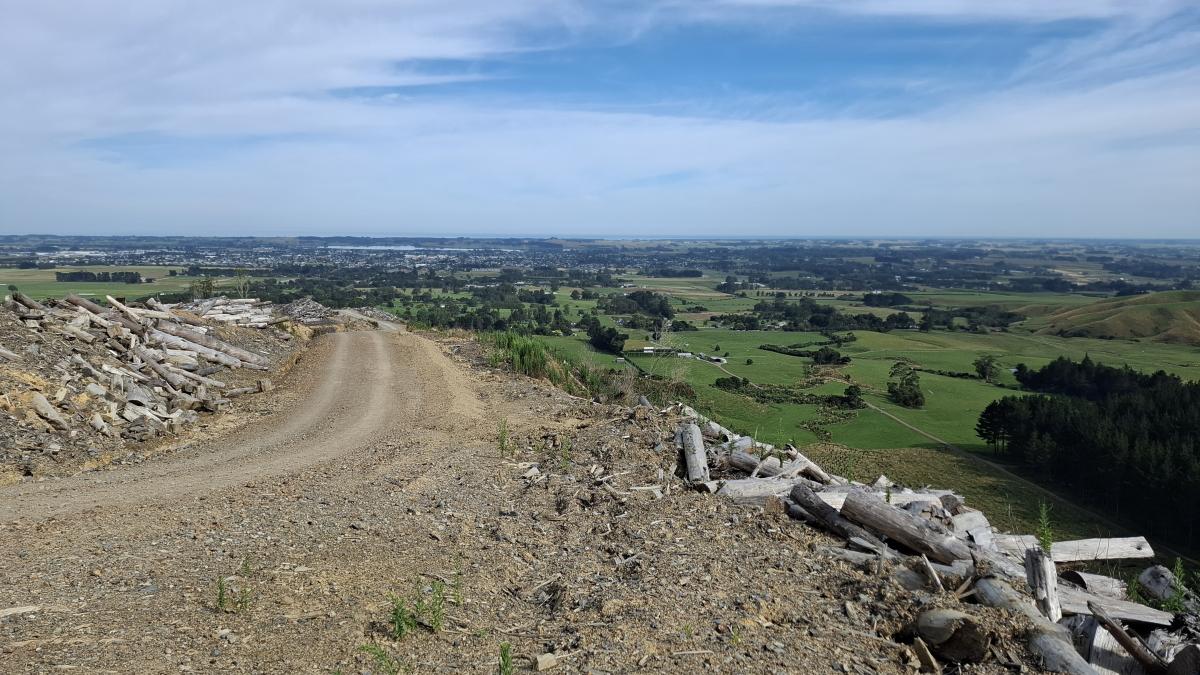
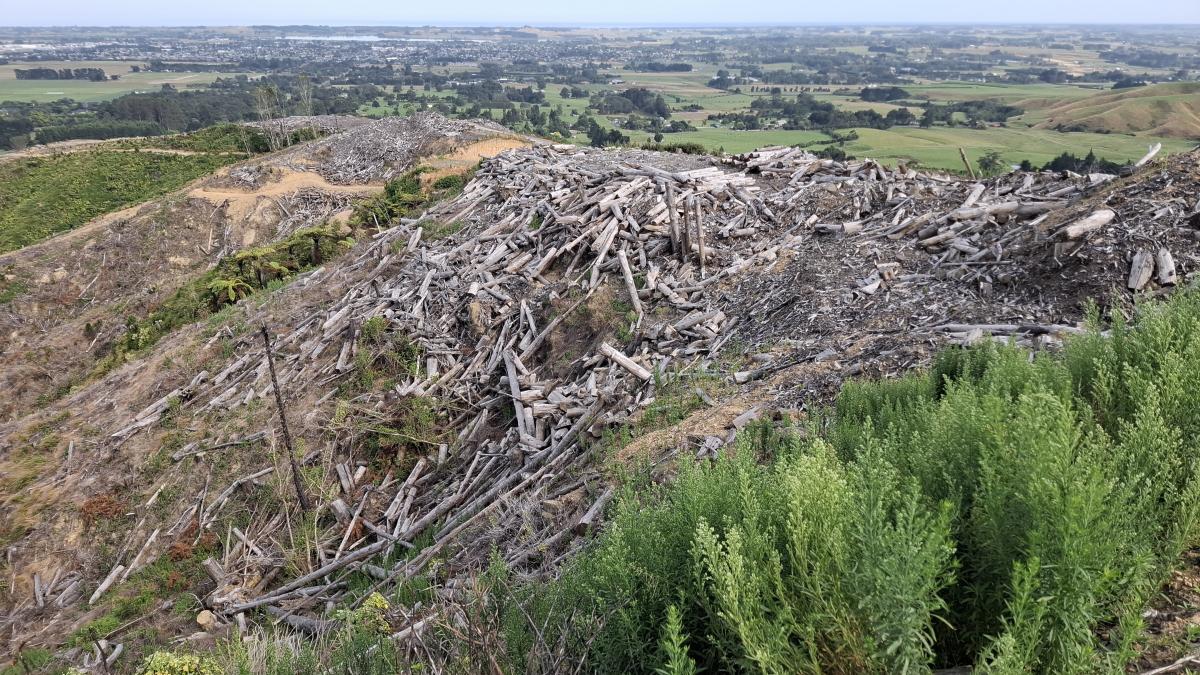
SLASH BESIDE THE TRACK UP TO TRIG
I question the wisdom and the morality of an industry which creates so much waste, waste which is also a cause of widespread and devastating damage. So, I searched the internet for potential uses of slash. It was easy to find.
I recommend a visit to nzbioforestry.co.nz. I quote from the website:
OUR SOLUTION:
NZ Bio Forestry proposes to develop a sustainable renewable forestry model that increases the economic value of the NZ- Aotearoa forestry sector, simply by integrating bio-technologies augmenting the forestry, wood manufacturing, and petrochemistry industries into one model.
Specifically, our strategy is to utilise the whole tree and convert the tree’s sugars into bioenergy, biomaterials, and biochemicals. This means using slash, off cuts, pruning, and wood waste to produce biofuel via bio pellets and biochemicals. It means optimising logs through the whole process….logging, manufacturing freighting, and refining process to serve the many Asia-Pacific markets with high-value products….not just exporting raw logs to one or two large dominant markets! (End of quote)
NZ Bio Forestry then contrasts the financial return from the present exports of raw logs with the potential return from utilising the WHOLE TREE.
In US dollars, the return from exporting logs is between $50 - $140 per log.
Using the whole tree including the slash and other waste for wood processing would return $200 - $800 per tree, and,
Using the bio-refinery process to convert the wood waste into fossil-free biochemicals would return $2,500 - $11,200 per tree.
I can’t help but conclude that our current focus on exporting logs is a pitiful failure of industry and government policy compared with the potential benefits of processing THE WHOLE TREE. And to complete the argument, this not just theory. In Scandinavia, SCA, which owns Europe’s largest private forest with 2.7 million hectares, has built a well-invested value chain that maximises the value of each individual tree and all of the forestry’s resources.
A SUMMARY OF POTENTIAL ADDITIONAL PRODUCTS:
Wood Pellets and Chips: Slash can be collected, dried, and processed into hog fuel or wood pellets for use in industrial boilers, as a replacement for coal, to generate heat and electricity.
Biofuel Production: Research is underway to convert forest residues into marine biofuel to help decarbonize the shipping sector.
Gasification: Advanced, small-scale, on-site processing plants can turn slash into renewable energy products like bio-oil, ethanol, and hydrogen.
Biochemicals: Specialized refineries can convert woody waste into sustainable alternatives to plastics, chemicals, and industrial products.
WAKE UP Aotearoa, New Zealand!!!
 Loading…