





Unravelling textile testing - Colourfastness
Unravelling textile testing - Colourfastness
Colourfastness is one of four key topics (others include Abrasion Resistance, Pilling, Seam Slippage) that we are covering to provide some background as to how we test and why.
Test results provide us with critical information about textile’s durability and suitability for certain applications. We externally test all James Dunlop and Mokum textiles in Melbourne at a highly reputable laboratory who are amongst the most conservative and stringent in the world, due to the extremely harsh environmental conditions we face here in Australia and New Zealand.
We have gathered a number of frequently asked questions relating to colourfastness so we asked our Mokum studio designers Stephanie Moffitt and Annie Moir to share their expert knowledge.
One of the most important textile tests is that of colourfastness.
Simply put, a colourfastness test measures how well a textile will resist or withstand fading. Fading typically means a change in colour which may be a change in hue, depth or brightness of colour. We perform a range of different colourfastness tests when developing a new textile, we test its resistance to fading against UV light, as well as washing / dry cleaning and also rubbing.
Can you briefly outline the colourfastness to washing/ laundering test?
Colourfastness to washing and/or dry cleaning measures a fabrics ability to withstand fading or colour loss from laundering. The test replicates specific cleaning methods then measures any colour loss against a set of five grey scales, creating a result (1 being least colourfast and 5 being most colourfast). In this instance, a result of 4-5 is the result we strive for.
One question pops up a lot, if a product is machine washable can it be spot cleaned?
We would always approach spot cleaning with water or a cleaning product with caution. Most of our washable textiles are rating as delicate or gentle washing which means a delicate setting and we would prefer a delicate washing liquid. Whereas spot clean tends to be more localised and more aggressive. If spot clean is needed always first try a dry white clean cloth, to reduce any colour loss as this often can remove a stain.
Can you briefly outline the colourfastness to rubbing test?
Colourfastness to rubbing, or commonly known as ‘crocking’ measures fabric resistance to colour loss when subjected to rubbing or friction from another fabric. This is particularly relevant for upholstery textiles – you can imagine wearing white pants and sitting on a dark coloured sofa, you’d want to be confident that when you stand up your pants haven’t changed colour.
With this test, a white cloth is used as a standard abradant, and rubbed against the test fabric in both in both dry and wet conditions, with wet being more severe. Any colour transfer onto the white cloth, and colour loss from the test fabric is analysed and measured against a set of 5 grey scales (1 being least colourfast and 5 being most colourfast). The result we receive from the lab helps us to determine the recommended usage for the upholstery fabric.

Poll: If we want to reduce speeding, what do you think actually changes driver behaviour? 🛻🚨🚓
In the Post's article on speeding penalties, the question is asked whether speeding fines are truly about road safety, or are they just a way to boost revenue for the Crown?
What do you think? Should speeding motorists receive speeding fines or demerit points?
-
31.2% The sting of a fine (Money talks!)
-
68.8% The threat of demerit points (Nobody wants to lose their license!)

Harrier Hawk 0823
Harrier Hawks seem to have flight routines. It was not uncommon to see one flying southwards over Burn St from the Roslyn Rd area as this one was doing. I often wondered if it was always the same hawk but anyway I've not seen it happen recently.

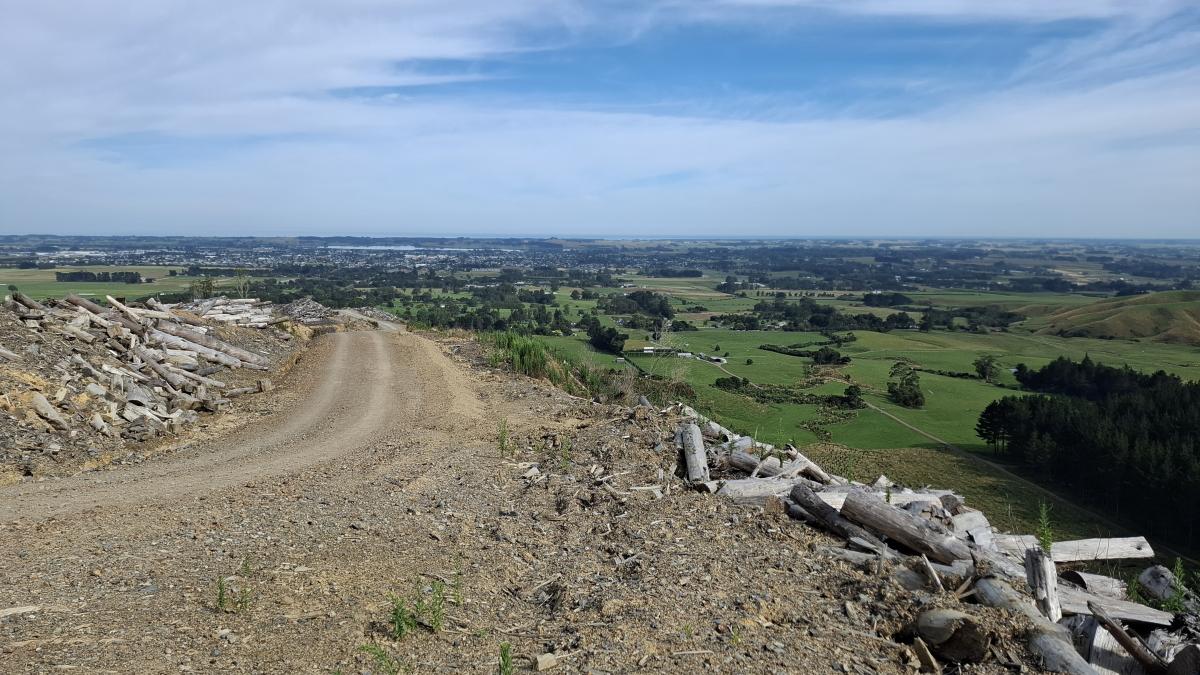
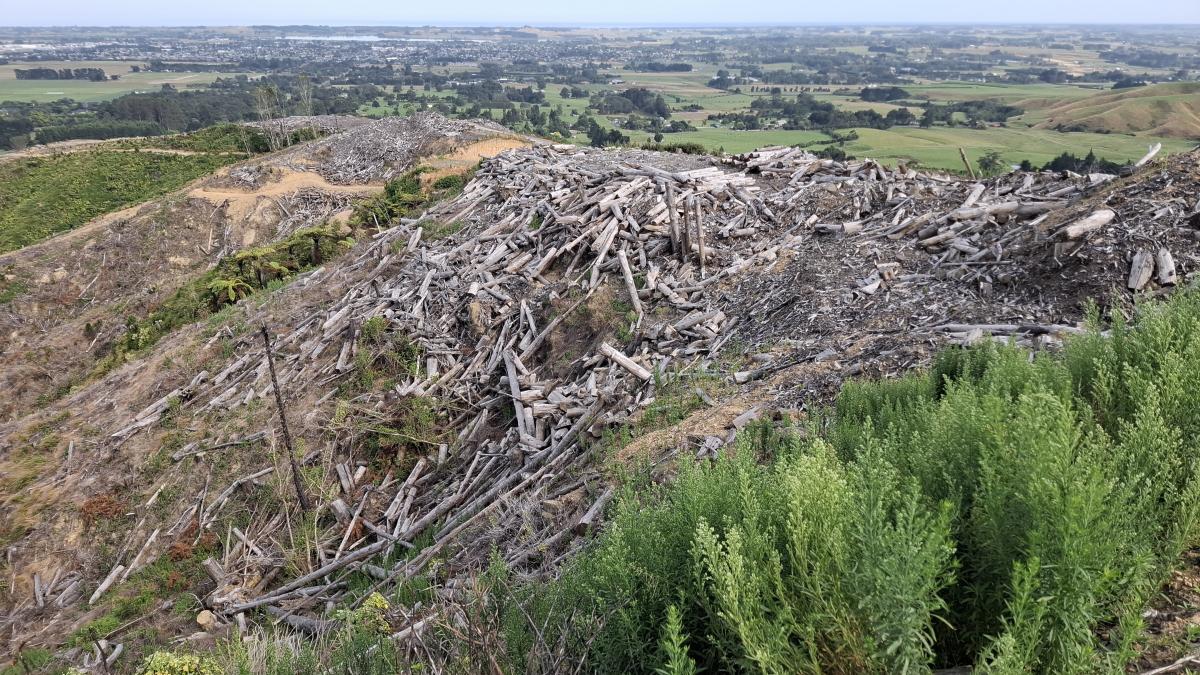
SLASH BESIDE THE TRACK UP TO TRIG
I question the wisdom and the morality of an industry which creates so much waste, waste which is also a cause of widespread and devastating damage. So, I searched the internet for potential uses of slash. It was easy to find.
I recommend a visit to nzbioforestry.co.nz. I quote from the website:
OUR SOLUTION:
NZ Bio Forestry proposes to develop a sustainable renewable forestry model that increases the economic value of the NZ- Aotearoa forestry sector, simply by integrating bio-technologies augmenting the forestry, wood manufacturing, and petrochemistry industries into one model.
Specifically, our strategy is to utilise the whole tree and convert the tree’s sugars into bioenergy, biomaterials, and biochemicals. This means using slash, off cuts, pruning, and wood waste to produce biofuel via bio pellets and biochemicals. It means optimising logs through the whole process….logging, manufacturing freighting, and refining process to serve the many Asia-Pacific markets with high-value products….not just exporting raw logs to one or two large dominant markets! (End of quote)
NZ Bio Forestry then contrasts the financial return from the present exports of raw logs with the potential return from utilising the WHOLE TREE.
In US dollars, the return from exporting logs is between $50 - $140 per log.
Using the whole tree including the slash and other waste for wood processing would return $200 - $800 per tree, and,
Using the bio-refinery process to convert the wood waste into fossil-free biochemicals would return $2,500 - $11,200 per tree.
I can’t help but conclude that our current focus on exporting logs is a pitiful failure of industry and government policy compared with the potential benefits of processing THE WHOLE TREE. And to complete the argument, this not just theory. In Scandinavia, SCA, which owns Europe’s largest private forest with 2.7 million hectares, has built a well-invested value chain that maximises the value of each individual tree and all of the forestry’s resources.
A SUMMARY OF POTENTIAL ADDITIONAL PRODUCTS:
Wood Pellets and Chips: Slash can be collected, dried, and processed into hog fuel or wood pellets for use in industrial boilers, as a replacement for coal, to generate heat and electricity.
Biofuel Production: Research is underway to convert forest residues into marine biofuel to help decarbonize the shipping sector.
Gasification: Advanced, small-scale, on-site processing plants can turn slash into renewable energy products like bio-oil, ethanol, and hydrogen.
Biochemicals: Specialized refineries can convert woody waste into sustainable alternatives to plastics, chemicals, and industrial products.
WAKE UP Aotearoa, New Zealand!!!
 Loading…