




Natural Textile Fibres
Natural, plant-based textile fibres come from seed hair, such as cotton; from foliage, such as sisal; from the stem, such as linen; and some fibres come from shells, such as coconut.
Among the most widely used in the textile industry, important and recognized, we can list the following fibres:
Abaca: Also known as Manila Hemp, abaca comes from leave sheaths around the stem of the plant of abaca, a species of banana. It is a leave fibre valued for its resistance to the damaging effects of salt water, its buoyancy and the length of the fibres, which can be more than 3 meters long. Currently, it is being increasingly used in the manufacturing of garments, household textiles and upholstery thanks to innovations in the process of this fibre. It is certainly still being used to manufacture sailing accessories, in the currency paper industry and automotive sector, and even in the food industry.
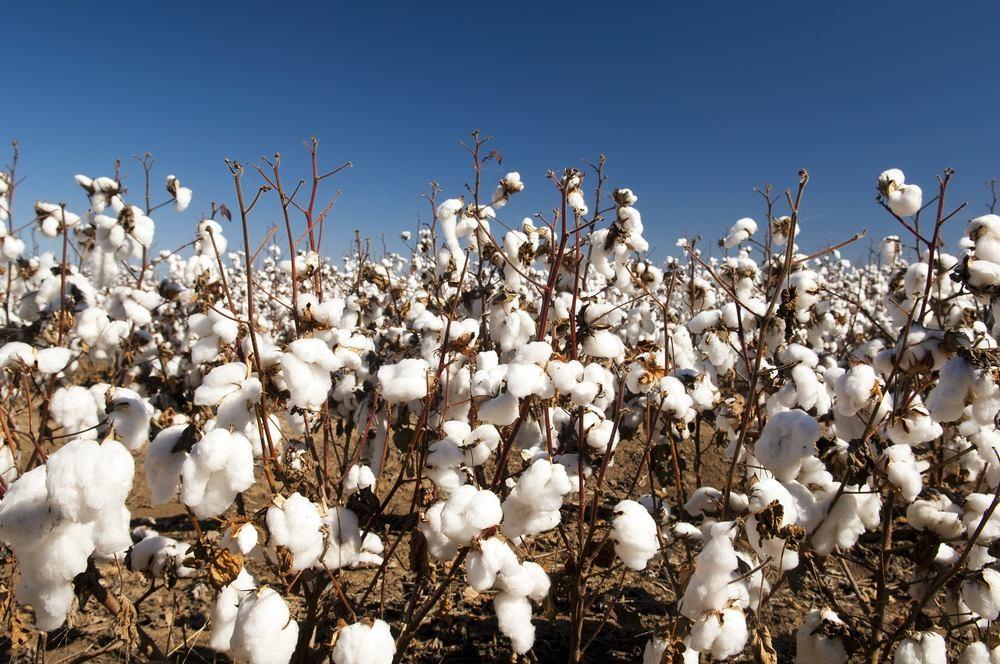
Cotton: Cotton grows in balls around the plant seeds and it is pure cellulose. Cotton is the natural textile fibre most widely used around the world and it is certainly the main protagonist in the global textile industry. There are two exceptional varieties of the highest quality: Egyptian cotton and Peruvian Pima.
It is widely used in the fashion industry, both in flat fabrics and in woven clothing items and household textile products. Cotton is used in combination with other natural and synthetic fibres, such as rayon, polyester, spandex, etc. Cotton fabrics are comfortable, very soft, have good heat conduction and absorbency; these characteristics make it perfect for garments that are in close contact with the skin, both in spring-summer and fall-winter seasons. Cotton tends to shrink; it is prone to wrinkles and fading.
Organic cotton: The biggest bet of sustainability is the use of certified organic cotton. It offers an efficient and sustainable use of natural resources avoiding synthetic or chemical pesticides and genetically modified seeds.
Coir: Coir is a short, hoarse fibre extracted from coconut husk. There are two types of coir: brown fibre, which comes from mature coconuts, and thin, white fibre, which comes from green, immature coconut husks. The white variety of coir fibre is used to manufacture rope and maritime elements because they are resistant to seawater. Brown fibre is employed to produce household textile items and even for the automotive industry. Additionally, geotextiles produced with coir mesh have special characteristics such as resistance to sunlight, great water absorption and they are 100% biodegradable.
Hemp: Hemp fibre is obtained from the stem of the plant. One of the most relevant features of this plant is that it captures large quantities of carbon. With 70% of cellulose, hemp is an excellent heat conductor, it absorbs dyes adequately, it blocks UV rays, it is very resistant to mildew and has natural antibacterial properties.
Recent developments to “cottonize” hemp fibre could open the doors of high-quality fashion market to this fibre. The longest hemp fibres can be woven and knitted to create curly fabrics, similar to linen, used in the textile industry. The mixture of hemp with cotton, linen, silk, and wool give hemp greater softness, while adding strength and durability to the product.
Hemp fibres are also used to manufacture paper and a wide variety of canvasses for different uses. It is also employed in the automotive and construction industries.
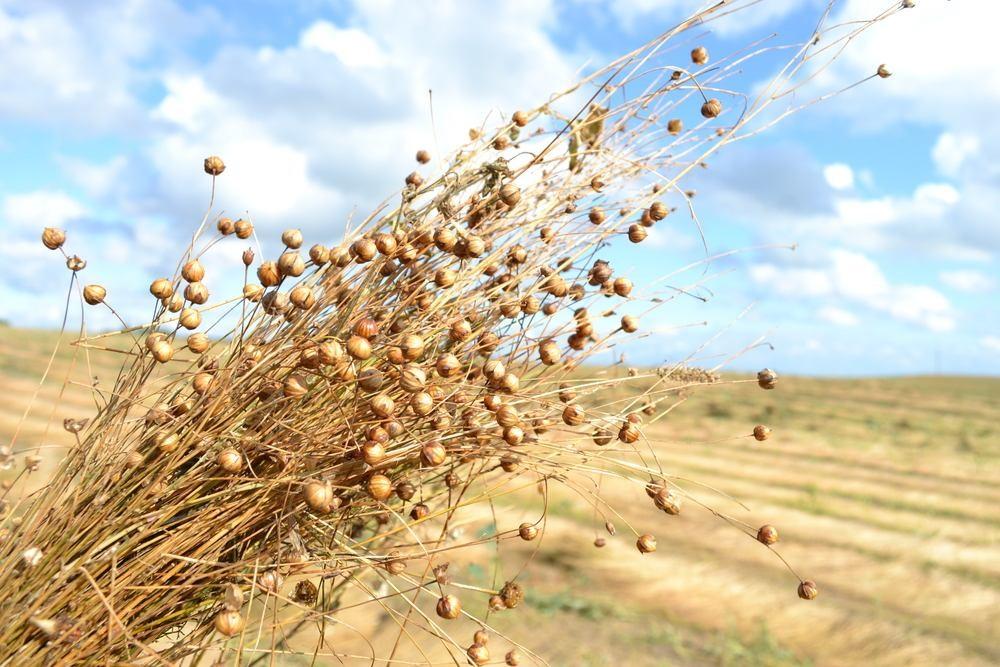
Linen: Linen is one of the strongest plant-based fibres in nature; therefore, it was one of the first to be grown, woven, and knitted to manufacture clothing and accessories. There are different types of linen based on their species. The main types are common flax and perennial flax.
Linen is a fabric with high mechanical resistance and little elasticity; therefore, it wrinkles easily. Its softness increases with washes. As linen quickly absorbs and releases water, and as it is an excellent thermal conductor, the fabric is fresh, highly valued and employed in the production of clothing for warm areas. Linen garments are fresh, comfortable, and they symbolize elegance in summer fashion.
Linen maintains a strong traditional niche among high-quality textiles for household products, beddings, upholstery, and interior design accessories.
Ramie: Ramie fibre is white with gloss similar to silk, and it is one of the strongest natural fibres, close to linen in absorption and density. It has little elasticity and it dyes easily. Ramie fibres have some transverse fissures that make it very fragile, but at the same time promote ventilation. The rugged ramie fibres are used to make ropes and nets. Through threading, they produce thin, very glossy thread that is used for a wide variety of garments.
Fabrics made 100% of ramie are lightweight, silky to the touch but with a linen appearance. Normally, as its elasticity and resistance are quite low, ramie is mixed with other textile fibres or used to improve the characteristics of other textile fibres. For example, ramie is added to wool to reduce shrinking or to cotton to increase strength.
Sisal: Sisal is an excessively hard fibre and inelastic to be used in the fashion industry. It is employed in small proportions and in combination with other fibres for the manufacture of accessories and home decor items. Currently sisal is mainly used in the furniture, automotive and naval industries, always combined with other materials.
Jute: Jute is extracted from the stem of a plant with the same name and it is very easy to grow and harvest. Jute is one of the cheapest fibres to produce. This fibre is also known as “golden fibre” because of its glow. Jute is one of the strongest, plant-based natural fibres, and it is second to cotton in terms of production volume. Jute presents poor absorption, so it deteriorates quickly when exposed to humidity; it has low thermal conduction, but it contains significant insulating and anti-static properties. Jute is used as supplementary material in textile and footwear manufacturing, as well as in household textiles.
Kapoc: It is a white fibre similar to hair that comes from the seeds of a tree called Ceiba Pentandra. Kapok is also known as “silk cotton” because of its gloss that resembles silk. Kapok’s fibre, weak and short, is resistant to moisture and it has a soft, lustrous texture. The largest volume of its production is used for household textiles.
Ramina: Ramina is a ligneous fibre also known as China grass. It is rigid, shiny, and lustrous. Ramina is used for household textiles.

Poll: If we want to reduce speeding, what do you think actually changes driver behaviour? 🛻🚨🚓
In the Post's article on speeding penalties, the question is asked whether speeding fines are truly about road safety, or are they just a way to boost revenue for the Crown?
What do you think? Should speeding motorists receive speeding fines or demerit points?

-
31.7% The sting of a fine (Money talks!)
-
68.3% The threat of demerit points (Nobody wants to lose their license!)

Harrier Hawk 0823
Harrier Hawks seem to have flight routines. It was not uncommon to see one flying southwards over Burn St from the Roslyn Rd area as this one was doing. I often wondered if it was always the same hawk but anyway I've not seen it happen recently.

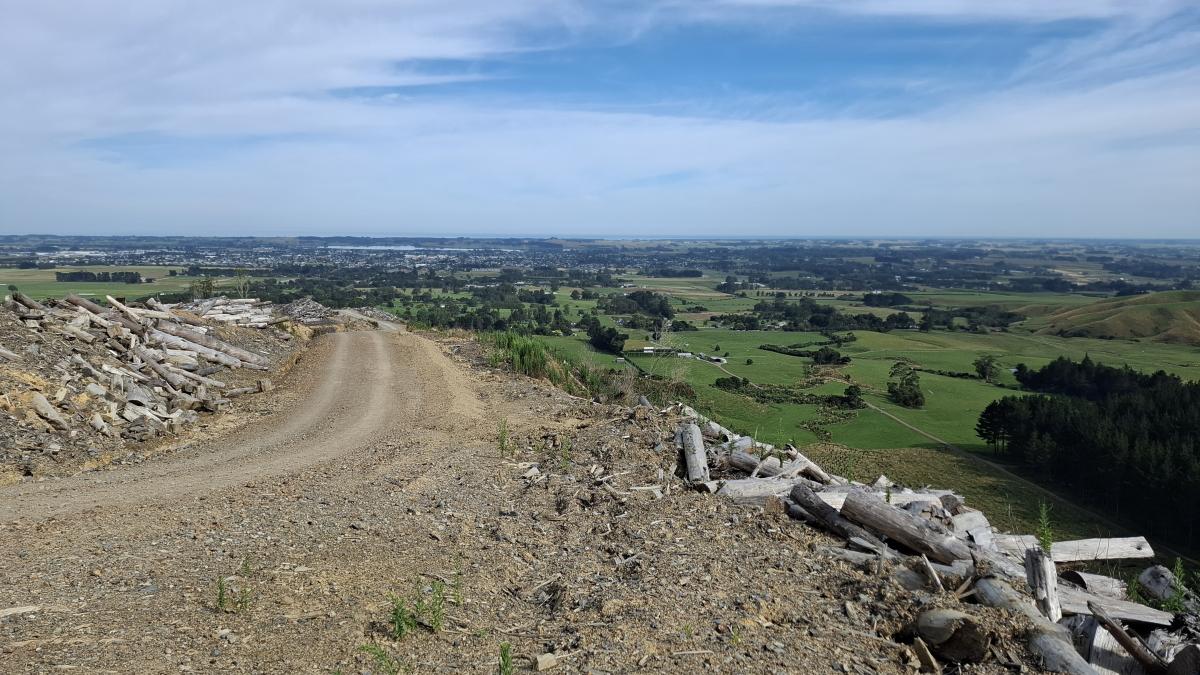
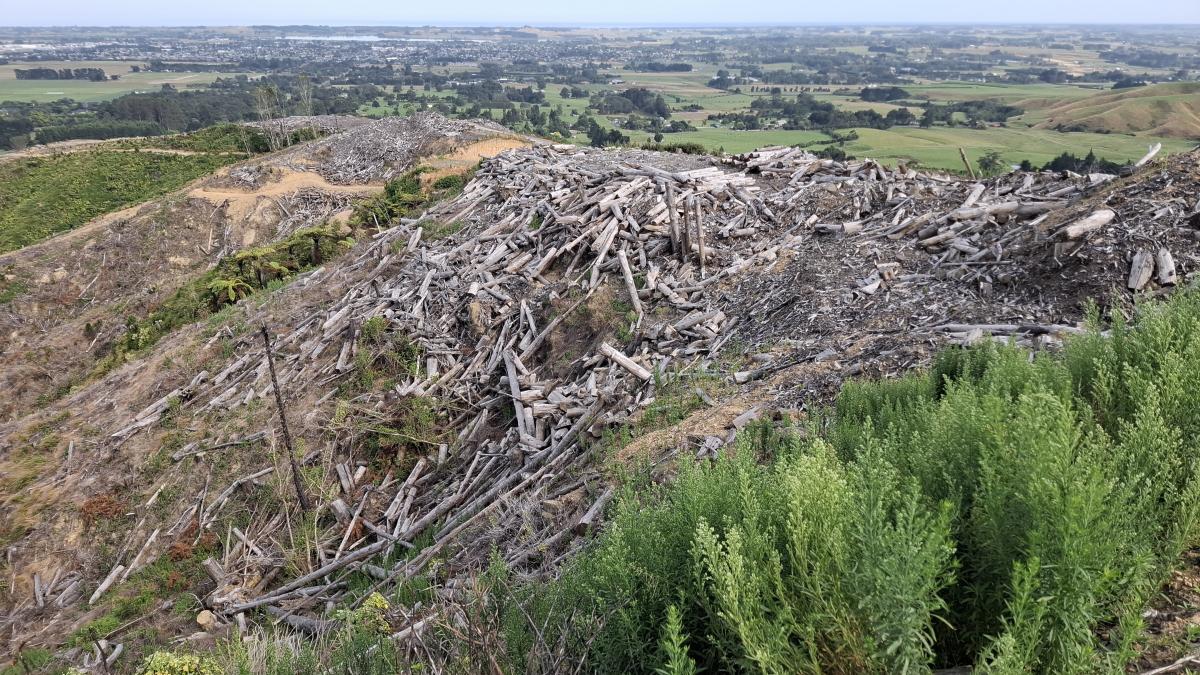
SLASH BESIDE THE TRACK UP TO TRIG
I question the wisdom and the morality of an industry which creates so much waste, waste which is also a cause of widespread and devastating damage. So, I searched the internet for potential uses of slash. It was easy to find.
I recommend a visit to nzbioforestry.co.nz. I quote from the website:
OUR SOLUTION:
NZ Bio Forestry proposes to develop a sustainable renewable forestry model that increases the economic value of the NZ- Aotearoa forestry sector, simply by integrating bio-technologies augmenting the forestry, wood manufacturing, and petrochemistry industries into one model.
Specifically, our strategy is to utilise the whole tree and convert the tree’s sugars into bioenergy, biomaterials, and biochemicals. This means using slash, off cuts, pruning, and wood waste to produce biofuel via bio pellets and biochemicals. It means optimising logs through the whole process….logging, manufacturing freighting, and refining process to serve the many Asia-Pacific markets with high-value products….not just exporting raw logs to one or two large dominant markets! (End of quote)
NZ Bio Forestry then contrasts the financial return from the present exports of raw logs with the potential return from utilising the WHOLE TREE.
In US dollars, the return from exporting logs is between $50 - $140 per log.
Using the whole tree including the slash and other waste for wood processing would return $200 - $800 per tree, and,
Using the bio-refinery process to convert the wood waste into fossil-free biochemicals would return $2,500 - $11,200 per tree.
I can’t help but conclude that our current focus on exporting logs is a pitiful failure of industry and government policy compared with the potential benefits of processing THE WHOLE TREE. And to complete the argument, this not just theory. In Scandinavia, SCA, which owns Europe’s largest private forest with 2.7 million hectares, has built a well-invested value chain that maximises the value of each individual tree and all of the forestry’s resources.
A SUMMARY OF POTENTIAL ADDITIONAL PRODUCTS:
Wood Pellets and Chips: Slash can be collected, dried, and processed into hog fuel or wood pellets for use in industrial boilers, as a replacement for coal, to generate heat and electricity.
Biofuel Production: Research is underway to convert forest residues into marine biofuel to help decarbonize the shipping sector.
Gasification: Advanced, small-scale, on-site processing plants can turn slash into renewable energy products like bio-oil, ethanol, and hydrogen.
Biochemicals: Specialized refineries can convert woody waste into sustainable alternatives to plastics, chemicals, and industrial products.
WAKE UP Aotearoa, New Zealand!!!
 Loading…