




Roman Blinds
Roman blinds are becoming more and more popular every year but have you ever wondered why?
Here are our top 10 reasons for choosing a roman blind over curtains:
1. This type of dressing is perfect for smaller windows, which could be overwhelmed by a pair of curtains. Perfect for cottage windows, a roman blind will sit neatly within the recess without taking up any space either side of the window.
2. If you're a fan of a particular design range but can't decide between two fabrics, then have both! You could use one for the curtains and a co-ordinating fabric for the blind. Choosing two fabrics from the same collection is a guarantee that they will sit well together and compliment each other perfectly.
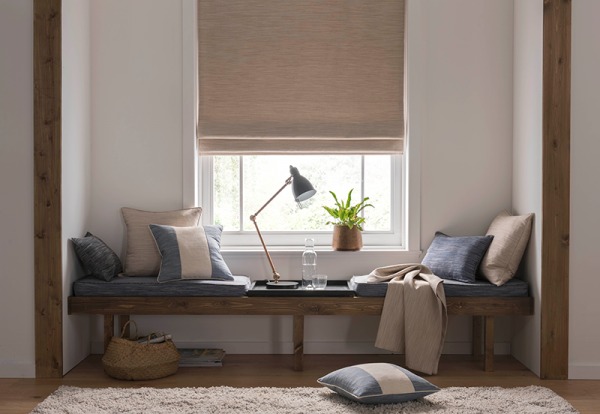
3. Perhaps you favour a clean, contemporary, minimalist look. Roman blinds are the ideal choice for this situation, as they have no fussy frills or extra fabric. A roman blind uses the minimum of material and looks like a flat piece of fabric when closed. It folds up concertina style to create smart, sharp folds.
4. If you have a radiator sitting directly under your window covering it with a pair of curtains will ensure that the majority of the heat produced goes up behind the curtains and sits between them and the window. A blind will cover only the window itself offering protection from draughts whilst still allowing the heat to circulate.
5. If you have a wide window or a bay window then the amount of curtaining needed to cover the window will be considerable. Opening and closing such heavy curtains twice a day can become a real bind. It's much easier to fit a pair of dress curtains and then use one or more roman blinds to swiftly open and close each morning and evening.
6. As a roman blind uses less fabric than a pair of curtains, you can use a large, bold or colourful pattern without fear of overkill.
7. Using a roman blind allows you to lower the blind to protect from the glare of the sun. The pleating style gives plenty of option between open and closed depending on how low the sun is.
8. As blinds site in the recess or just outside the recess of the window then they use considerably less fabric than a pair of curtains would. This means that it can be 25% cheaper to fit a roman blind than a pair of curtains.
9. Roman blinds can be the ideal choice for a kitchen or bathroom in which you don't want lots of bulky fabric hanging over your sink or taking up precious space.
10. A door curtain can become annoying as ease of opening and closing the door can be compromised with lots of bulky fabric in the area. A roman blind can be fixed directly onto a glazed door making life much easier.
So there you have our top ten reasons for choosing a roman blind. If we've converted you to the appeal of a roman blind, click here to view our extensive range:


Poll: If we want to reduce speeding, what do you think actually changes driver behaviour? 🛻🚨🚓
In the Post's article on speeding penalties, the question is asked whether speeding fines are truly about road safety, or are they just a way to boost revenue for the Crown?
What do you think? Should speeding motorists receive speeding fines or demerit points?
-
31.9% The sting of a fine (Money talks!)
-
68.1% The threat of demerit points (Nobody wants to lose their license!)

Harrier Hawk 0823
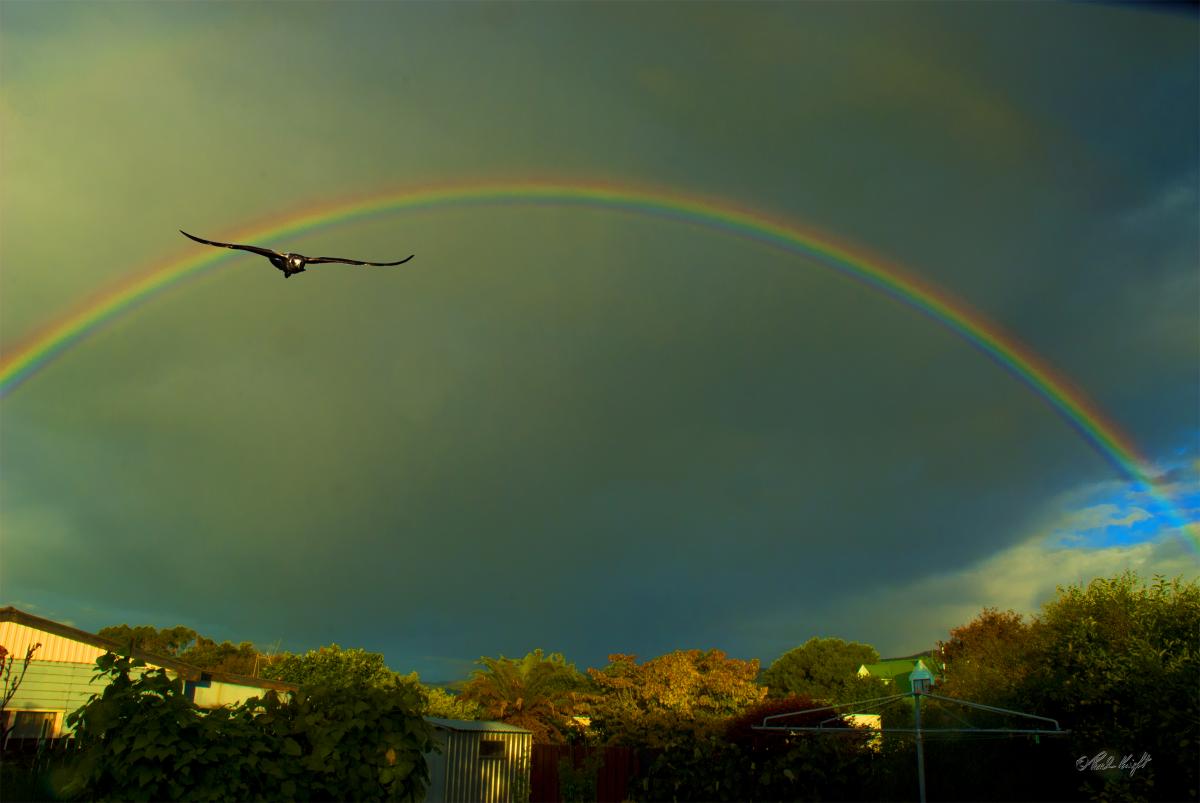
Harrier Hawks seem to have flight routines. It was not uncommon to see one flying southwards over Burn St from the Roslyn Rd area as this one was doing. I often wondered if it was always the same hawk but anyway I've not seen it happen recently.
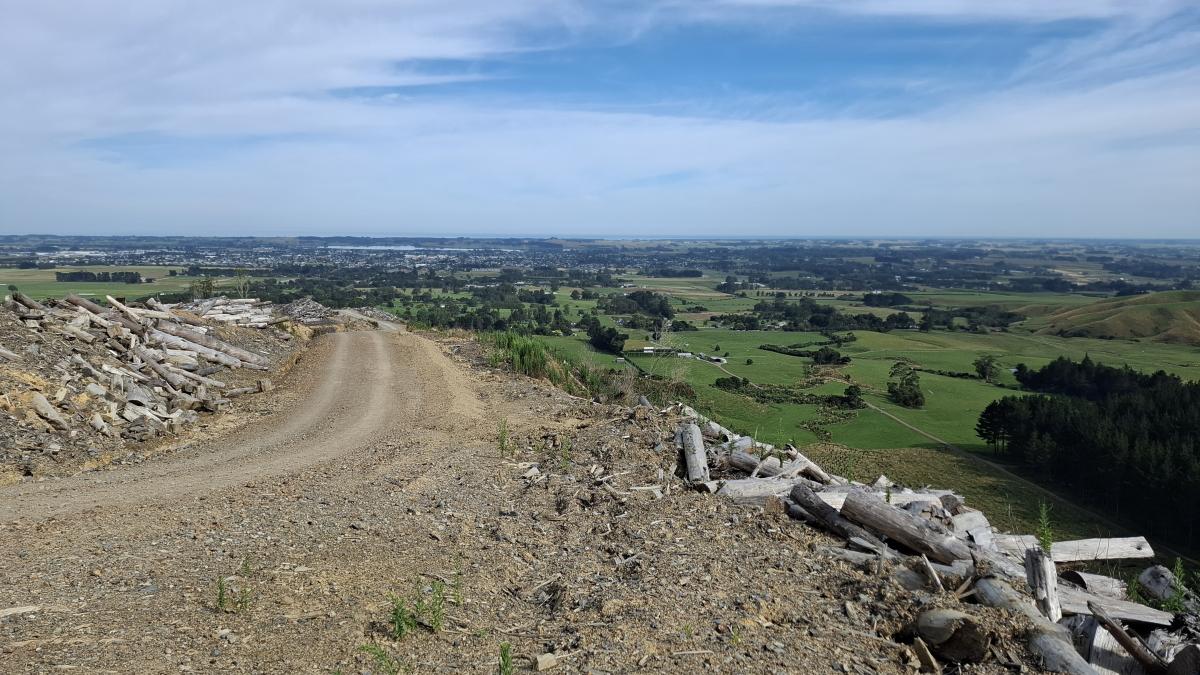
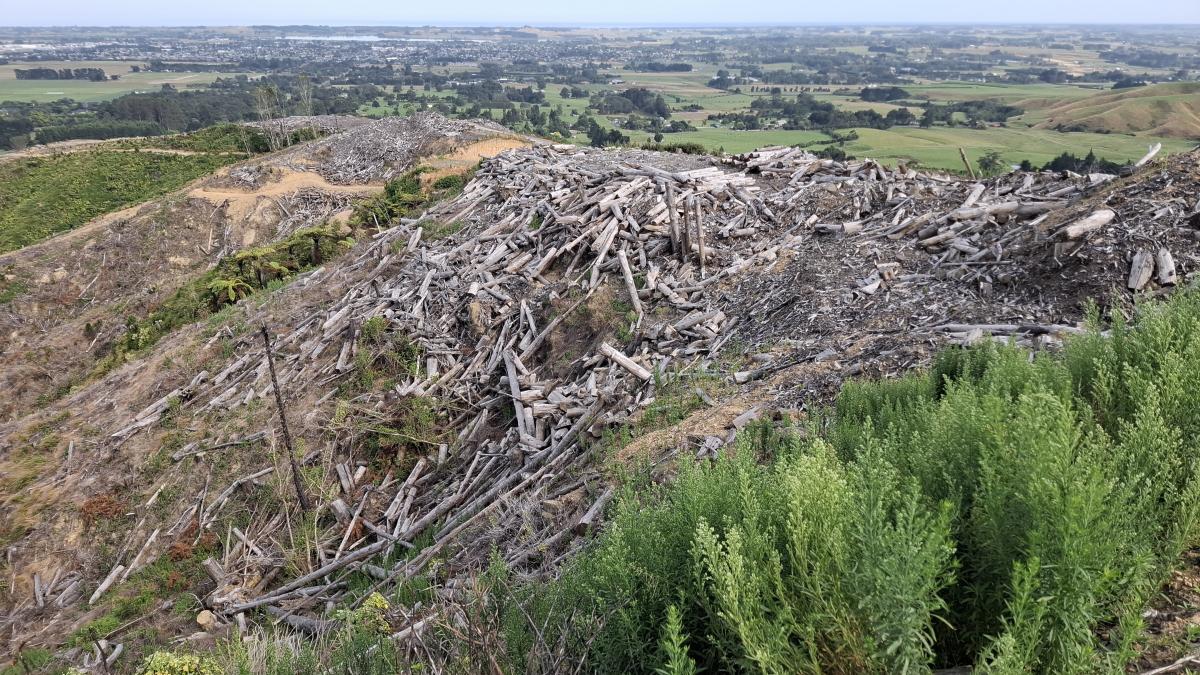
SLASH BESIDE THE TRACK UP TO TRIG
I question the wisdom and the morality of an industry which creates so much waste, waste which is also a cause of widespread and devastating damage. So, I searched the internet for potential uses of slash. It was easy to find.
I recommend a visit to nzbioforestry.co.nz. I quote from the website:
OUR SOLUTION:
NZ Bio Forestry proposes to develop a sustainable renewable forestry model that increases the economic value of the NZ- Aotearoa forestry sector, simply by integrating bio-technologies augmenting the forestry, wood manufacturing, and petrochemistry industries into one model.
Specifically, our strategy is to utilise the whole tree and convert the tree’s sugars into bioenergy, biomaterials, and biochemicals. This means using slash, off cuts, pruning, and wood waste to produce biofuel via bio pellets and biochemicals. It means optimising logs through the whole process….logging, manufacturing freighting, and refining process to serve the many Asia-Pacific markets with high-value products….not just exporting raw logs to one or two large dominant markets! (End of quote)
NZ Bio Forestry then contrasts the financial return from the present exports of raw logs with the potential return from utilising the WHOLE TREE.
In US dollars, the return from exporting logs is between $50 - $140 per log.
Using the whole tree including the slash and other waste for wood processing would return $200 - $800 per tree, and,
Using the bio-refinery process to convert the wood waste into fossil-free biochemicals would return $2,500 - $11,200 per tree.
I can’t help but conclude that our current focus on exporting logs is a pitiful failure of industry and government policy compared with the potential benefits of processing THE WHOLE TREE. And to complete the argument, this not just theory. In Scandinavia, SCA, which owns Europe’s largest private forest with 2.7 million hectares, has built a well-invested value chain that maximises the value of each individual tree and all of the forestry’s resources.
A SUMMARY OF POTENTIAL ADDITIONAL PRODUCTS:
Wood Pellets and Chips: Slash can be collected, dried, and processed into hog fuel or wood pellets for use in industrial boilers, as a replacement for coal, to generate heat and electricity.
Biofuel Production: Research is underway to convert forest residues into marine biofuel to help decarbonize the shipping sector.
Gasification: Advanced, small-scale, on-site processing plants can turn slash into renewable energy products like bio-oil, ethanol, and hydrogen.
Biochemicals: Specialized refineries can convert woody waste into sustainable alternatives to plastics, chemicals, and industrial products.
WAKE UP Aotearoa, New Zealand!!!
 Loading…