






Textile Testing - Seam Slippage
Seam Slippage is one of four key topics (others include Abrasion Resistance, Pilling, and Colourfastness) that we are covering to provide some background as to how we test and why.
Test results provide us with critical information about textile’s durability and suitability for certain applications. We externally test all James Dunlop and Mokum textiles in Melbourne at a highly reputable laboratory who are amongst the most conservative and stringent in the world, due to the extremely harsh environmental conditions we face here in Australia and New Zealand.
We have gathered a number of frequently asked questions relating to seam slippage, so we asked our Mokum Studio designers Stephanie Moffitt and Annie Moir to share their expert knowledge.
Seam slippage is another equally important upholstery test, can you explain what seam slippage actually means?
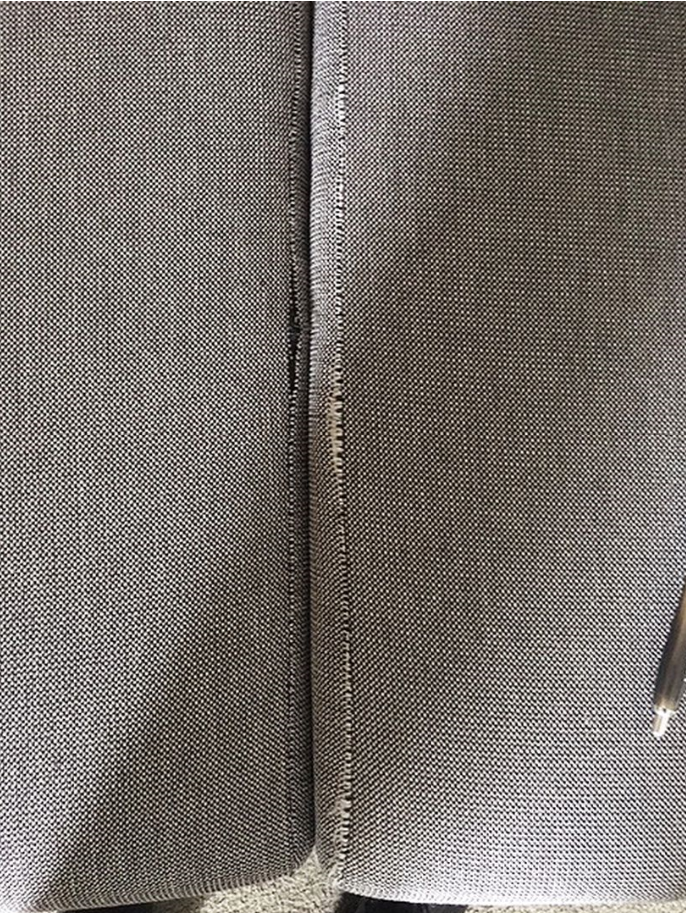
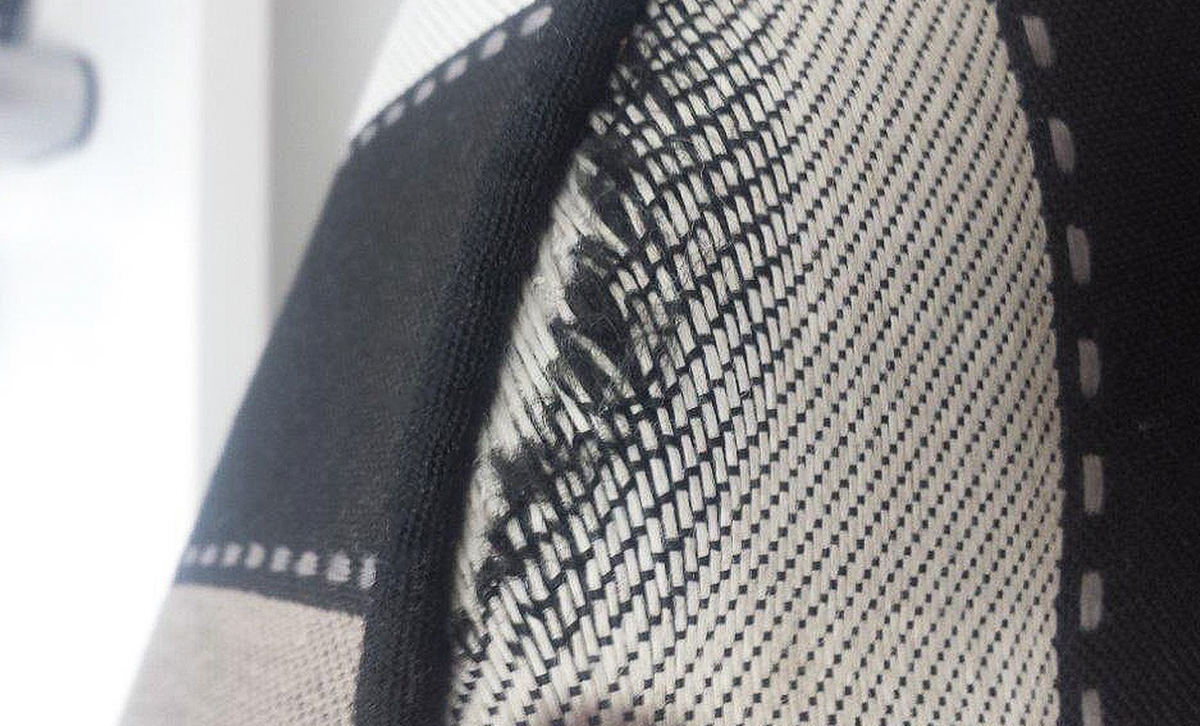
Seam slippage is the separation or pulling apart of yarns in a fabric usually along a sewn seam or join. More often than not, the yarns don’t actually break they just separate and leave an unsightly gap along the fabric join.
What are the most common causes for seam slippage?
Seam slippage may be the result of a poorly constructed textile and /or the use of defective yarns in the fabric. But more commonly it is due to an inadequate standard of upholstery manufacturing i.e. a display of insufficient seam allowance, a deficient number of stitches in the seam or failure to overlock raw edges during the upholstery process – or a combination of all three factors.
Seam slippage usually occurs on joins that are subjected to heavy load and pressure such as seat cushions and arm rests. Certain furniture styles put more stress on fabric seams such as tub chairs and furniture with a fixed back or seat cushions.
Can composition play a part in seam slippage?
Yes, it can, Linen for example is loved for being a smooth lustrous fibre, but this can make it more susceptible to seam slippage with heavy load. For some linen textiles we would recommend discussing the need for reinforcing upholstery seams with your upholstery manufacturer.
The note “reinforce upholstery seams” is sometimes listed on our sampling specifications – what does it actually mean? Should we assume the fabric is inferior quality?
Firstly, no it doesn’t infer inferior quality. If we’ve specified it as being suitable for upholstery then it is fit for purpose, but we recommend additional seam support for that particular textile.
“Reinforce upholstery seams” simply means using an additional safeguard by stitching a tape along the seam to prevent fraying in high load areas, such as the corner back cushions. Overlocking should be used for loose woven fabric and seated cushion seams.
What’s the remedy for seam slippage? Can you fix it once it starts?
It is difficult to repair seam slippage once it starts. In almost all instances of seam slippage, it will require the furniture to be recovered, or re upholstered. It’s important to ascertain the cause of the seam slippage. If the seam slippage can be identified as being a result of inadequate manufacturing, you’ll need to work with the upholsterer to ensure appropriate manufacturing techniques are being used, including reinforcing seams if required. If the seam slippage is clearly related to the fabric, the furniture would need to be recovered, either from a different batch (if it’s an isolated batch issue) or selecting an alternative fabric which is more suitable for that particular frame.
Can you explain how the seam slippage test is performed?
The test measures how resistant a fabric is to yarns opening/ slipping under pressure along a seam line. Two fabric swatches are sewn together with a standardised seam. The swatches are pulled apart with an equal and opposite force. The test is performed in both warp and weft directions. Any seam opening is then measured while the fabric swatches are being pulled apart. According to the Australian standard, a seam opening should be less than 6mm at maximum force. A lower result indicates a smaller opening and thus a better resistance against seam slippage.
Written by: jamesdunloptextiles.com...

Some Choice News!
DOC is rolling out a new tool to help figure out what to tackle first when it comes to protecting our threatened species and the things putting them at risk.
Why does this matter? As Nikki Macdonald from The Post points out, we’re a country with around 4,400 threatened species. With limited time and funding, conservation has always meant making tough calls about what gets attention first.
For the first time, DOC has put real numbers around what it would take to do everything needed to properly safeguard our unique natural environment. The new BioInvest tool shows the scale of the challenge: 310,177 actions across 28,007 sites.
Now that we can see the full picture, it brings the big question into focus: how much do we, as Kiwis, truly value protecting nature — and what are we prepared to invest to make it happen?
We hope this brings a smile!

Poll: 🤖 What skills do you think give a CV the ultimate edge in a robot-filled workplace?
The Reserve Bank has shared some pretty blunt advice: there’s no such thing as a “safe” job anymore 🛟😑
Robots are stepping into repetitive roles in factories, plants and warehouses. AI is taking care of the admin tasks that once filled many mid-level office jobs.
We want to know: As the world evolves, what skills do you think give a CV the ultimate edge in a robot-filled workplace?
Want to read more? The Press has you covered!

-
52.6% Human-centred experience and communication
-
14.7% Critical thinking
-
29.9% Resilience and adaptability
-
2.7% Other - I will share below!

Share your favourite main crop potato recipe and win a copy of our mag!
Love potatoes? We will give away free copies of the May 2026 issue to readers whose potato recipes are used in our magazine. To be in the running, make sure you email your family's favourite way to enjoy potatoes: mailbox@nzgardener.co.nz, by March 1, 2026.

 Loading…