




Luxurious Lotus Silk
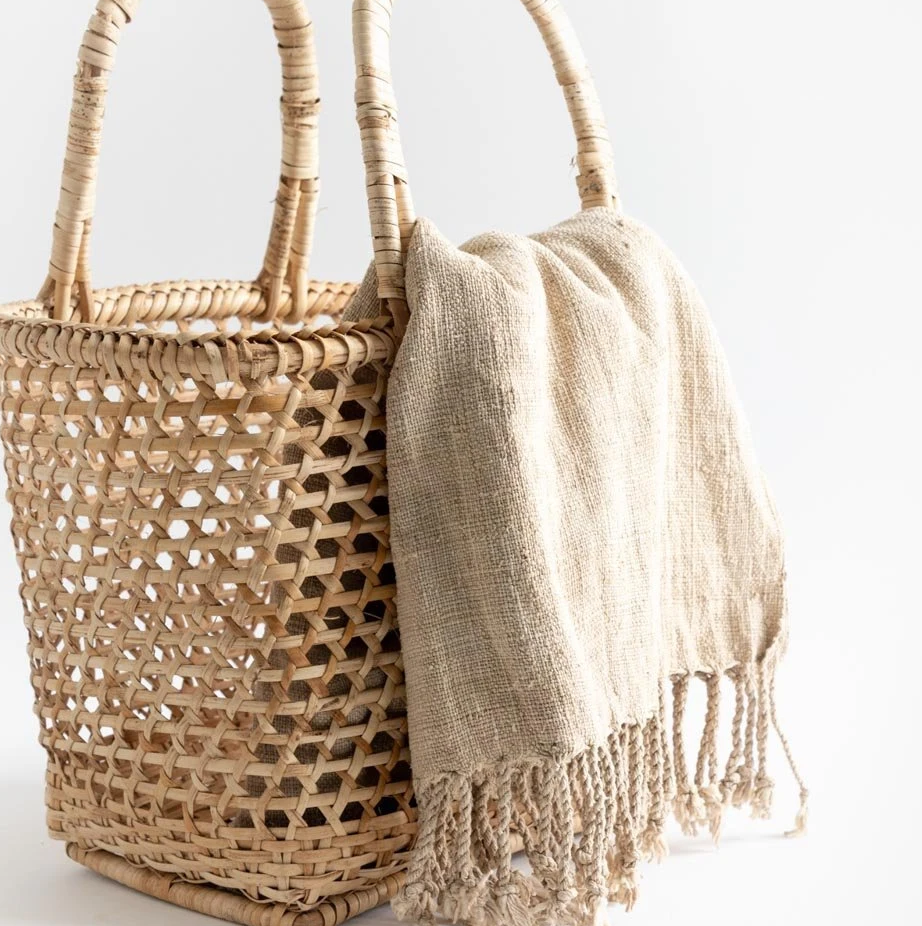
Lotus fibre or lotus silk is a rather rare and exclusive fibre. The silk comes from the stem of the lotus flower which is made up of microfibres.
The stems are snapped off, the fibres are teased out before being rolled into thread. Once the threads are dry, they are weighed down and carefully wound by hand. Then they’re put onto the loom. These fibres are fragile, but once woven, can be as durable as traditional silk.
The entire process of fibre extraction, weaving the fibre, and making the fabric is completely handmade, making the process time-consuming. This also limits the quantity of the fabric produced. A large scarf requires the thread of around 9,200 stems and would take one worker around two months to complete. This is why it is considered luxurious and items made from lotus silk do not go cheap.
The resulting material resembles raw silk or an aged linen, naturally beige in colour and possesses unique qualities. It is waterproof, practically wrinkle proof, washable, lightweight, sweatproof and is soft to the touch.
Most importantly, its key quality is that it is one of the most eco-friendly materials on the planet. The lotus is a water plant. It preserves the eco-system in which it grows including the water as much as the surrounding wildlife.
Not only is it created from waste (lotus stems), but it also leaves little waste behind. In fact, lotus silk been identified as potentially the most ecological fabric in the world, and it is the first natural microfibre in the world. Being a natural fibre, it is biodegradable after its useful life.


Neighbourhood Posts
Would it be possible for people / or admin to remove posts? as some stay there for weeks, and nborly becomes rather static and boring!

Poll: As a customer, what do you think about automation?
The Press investigates the growing reliance on your unpaid labour.
Automation (or the “unpaid shift”) is often described as efficient ... but it tends to benefit employers more than consumers.
We want to know: What do you think about automation?
Are you for, or against?
-
9.5% For. Self-service is less frustrating and convenient.
-
43.4% I want to be able to choose.
-
47.1% Against. I want to deal with people.

Have you got New Zealand's best shed? Show us and win!
Once again, Resene and NZ Gardener are on the hunt for New Zealand’s best shed! Send in the photos and the stories behind your man caves, she sheds, clever upcycled spaces, potty potting sheds and colourful chicken coops. The Resene Shed of the Year 2026 winner receives $1000 Resene ColorShop voucher, a $908 large Vegepod Starter Pack and a one-year subscription to NZ Gardener. To enter, tell us in writing (no more than 500 words) why your garden shed is New Zealand’s best, and send up to five high-quality photos by email to mailbox@nzgardener.co.nz. Entries close February 23, 2026.
 Loading…