





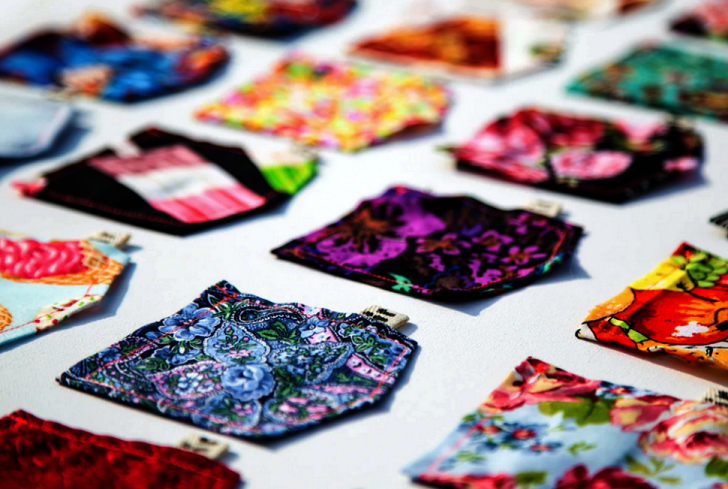
Facts About Fabric
• The average lifetime of a piece of clothing is approximately 3 years.
• Flax is the earliest known natural textile fabric seen used in about 5000 BC. Flax is the material used to make linen which is seeing a huge come back today in drapery and upholstery.
• Nike (with subsidiary Converse) is the largest fashion company in the world, with a market value of $105 billion.
• There is evidence that cotton and wool were used to create natural fabrics in about 3000 BC and evidence of silk use in 2500 BC in China.
• China is the largest maker and exporter of silk in the world and has been for 100’s of years.
• The average person buys 60 percent more items of clothing every year and keeps them for about half as long as 15 years ago, generating a huge amount of waste.
• The earliest evidence of fabric textiles has been found in Turkey, Egypt, and Israel.
• The creation of man-made fibres has only been within the last 100 years. Rayon was the first man-made fibre created in 1910 and it was called ‘artificial silk’. Viscose is the most common form of Rayon.
• More than 70 percent of the world's population uses second-hand clothing. About 50 percent of collected shoes and clothing is used as second-hand products. Meanwhile, 20 percent is used to produce polishing and cleaning cloths for various industrial purposes, and 26 percent is recycled for applications such as fibre for insulation products, upholstery, fibreboard, and mattresses.
• Microfibre or Ultrasuede was invented over 20 years ago in Japan. Microfibre is the thinnest of all man-made fibres, even finer than silk. it is 100 times finer than a human hair.
• Acrylic is a man-made fibre that has a soft, wool-like hand, is machine washable and has excellent colour retention. It is often an additive to textiles to take advantage of these properties.
• Nearly 100 percent of textiles and clothing are recyclable.
• Nylon is also man-made and was first produced in 1938. It has high strength, excellent resilience, and superior abrasion resistance. Nylon replaced silk stockings for women in the early part of the 20th century.
• The highest quality cotton comes from Egypt.
• Textiles and shoes make up 12% of landfill sites.
• Bamboo is a grass that has been used to create a fabric that hangs much like a heavy linen. It has natural wicking ability that pulls moisture away from the skin so it can be useful in reducing moisture related odour. It also has natural anti-bacterial qualities. Bamboo grows quickly and does not need pesticides to thrive, making it one of the more sustainable textile sources.

Poll: Should we ditch daylight saving? 🕰️
First introduced in New Zealand in 1927 with the passing of the Summer Time Act, it's what we know as 'Daylight Saving' and this year it ends on the first Sunday in April.
While we do get to sleep in this time around, some people would like to scrap the clock tinkering for good.
And why? Some evidence suggests the time changes are bad for our health as they mess with sleep patterns leading to short-term fatigue and affecting mood. Meanwhile the hour change is frustrating for farmers and a nightmare for getting the littlies to sleep. But what's your take?

-
38.4% Yes - get rid of the clock changes
-
59.9% No, I enjoy it
-
1.7% Other - I'll share below

Don't overthink this riddle...
I have a silver sole
but no feet,
I make my living by bringing the heat.
What am I?
Do you think you know the answer? Simply 'Like' this post if you know the answer and the big reveal will be posted in the comments at 2pm on the day!
Want to stop seeing these in your newsfeed?
Head here and hover on the Following button on the top right of the page (and it will show Unfollow) and then click it. If it is giving you the option to Follow, then you've successfully unfollowed the Riddles page.

Poll: Does a savoury scone require cheese on top, or folded inside?
Help settle the great kiwi debate ... cheese on top, or folded inside?

-
76.4% Inside!
-
23.6% On top!
 Loading…