






School students as young as 12 the new workforce in Queenstown
From reporter Debbie Jamieson:
Student workers as young as 12 are being snapped up by Queenstown employers facing critical staff shortages.
And despite there being no minimum wage for children under the age of 16, many are being paid over $20 an hour.
Trinity Jones, 14, started working at Joe’s Garage Cafe in Frankton last December and has fast become a valued member of staff, co-owner and Joe’s Garage Five Mile restaurant manager Ryan Churchman said.
He employed about 20 students from nearby Wakatipu High School, and they now make up more than half of his employees – with the youngest 12 years old.
They started on a wage of $16 but many of the students were now above the adult minimum wage of $21.20, he said.
“[Employing students] started out of necessity, but it’s definitely something we would keep doing, even if we didn’t have to, because the students are really good.
“We make sure we’re paying them what they’re worth if they’re doing the same work as older staff.”
Queenstown businesses have been struggling with a critical worker shortage since international borders opened earlier this year, paving the way for the return of overseas visitors.
The key difficulty has been replacing the thousands of migrant workers who worked in hospitality and service industries but left New Zealand during Covid-19.
The pages of local newspapers are filled with hundreds of job vacancies and almost every restaurant, cafe and bar has a “staff wanted” sign in the window.
Most are closed two or three days a week, some are restricting their working hours and others are downsizing their menus to cope with the lack of staff.
For many, employing young people has helped fill that gap.
Skyline Queenstown general manager Wayne Rose said his company had always employed local teenagers but had significantly more students working during school holidays this year as they sought to fill roles.
Fourteen-year-olds were paid the same rate as adult workers, he said.
Queenstown Pak’nSave owner Michelle King said the supermarket had always employed local high school students but had recently noticed an increase in applicants.
“It’s not that we’ve necessarily gone looking for them, but it’s been really great timing.”
In terms of staff numbers, students now make up about 10% of the supermarket’s workforce.
Queenstown’s only secondary school, Wakatipu High School, moved to Frankton, close to the supermarket, in 2018, and that had been an advantage, King said.
The supermarket paid all staff members, including students, above the minimum wage from their start with the company.
Novotel Queenstown Lakeside general manager Jim Moore said he would love to have more students working in housekeeping, and suggested the students had their choice of jobs in the current market.
“If my kids are anything to go by, cleaning their room is not one of their strengths,” he said.
Sharlene Inch said daughter Amber started working in housekeeping at a hotel last year when she was 14, and recently switched to restaurant work.
She was getting at least the adult minimum wage in both jobs.
New Zealand’s employment laws do not provide a minimum wage for children under the age of 16 but do stipulate that their employment cannot interfere with them attending school, and they cannot work between 10pm and 6am on any day.
While most employers respected the importance of school work, one mother said her son had been asked to take a day off school to work in his retail job, to ensure the store could open that day.
Another father said his child left a job because of pressure to work longer hours.
Mother-of-three Nikki Jones said all of her children were working in cafes, including 12-year-old Jett, a year 8 student who recently started work at the Airspresso Cafe at Queenstown Airport, on $16 an hour.
“I always joke that the children are holding up the tourism industry in Queenstown,” she said.
Her daughter, Trinity Jones, said she enjoyed having her own money but also working with the friendly staff at Joe’s Garage.
“My confidence has definitely grown,” she said.
Daniel Davies, 15, was employed at Joe’s Garage after he walked in and asked for a job.
He’s now saving for a car for when he is 16.
“There are a lot of jobs available. You could walk in anywhere,” he said.
Wakatipu High School principal Steve Hall said he had received a lot of positive feedback from the business community after the staff shortage during the July school holidays.
“They were telling me what great employees the students were and talking about their contribution to the community. People have recognised that’s what’s been happening.”
Working students needed to balance their school work, academic goals and extracurricular activities.
“But working is often really good for young people. There’s so much to learn. If the balance is right it’s a fantastic thing for them,” he said.



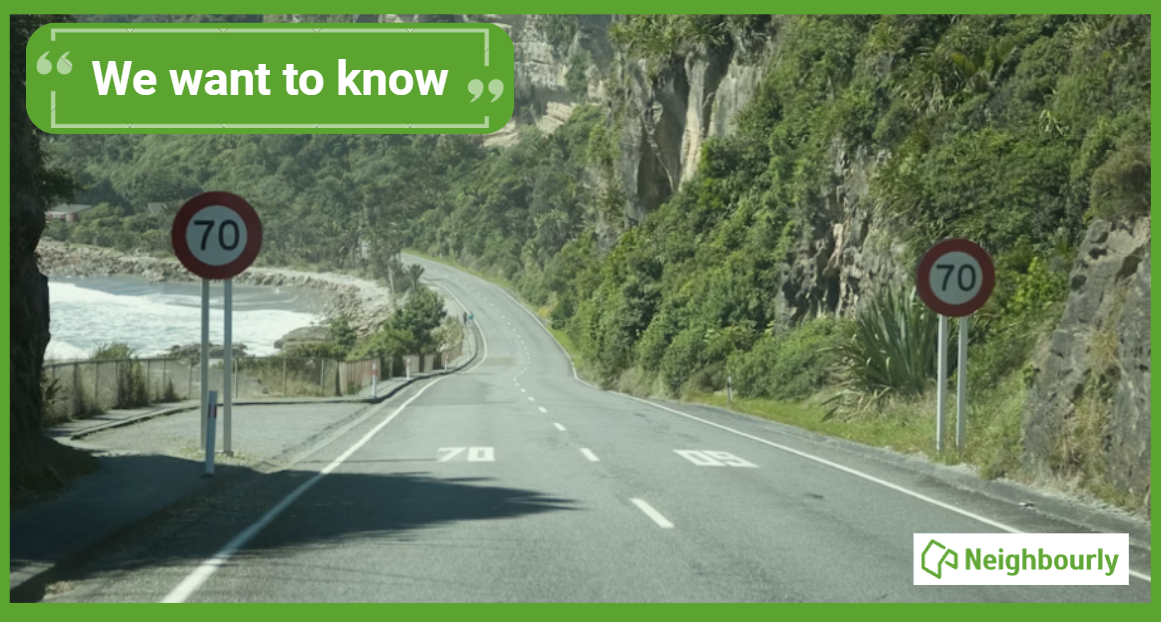
Poll: If we want to reduce speeding, what do you think actually changes driver behaviour? 🛻🚨🚓
In the Post's article on speeding penalties, the question is asked whether speeding fines are truly about road safety, or are they just a way to boost revenue for the Crown?
What do you think? Should speeding motorists receive speeding fines or demerit points?
-
37% The sting of a fine (Money talks!)
-
63% The threat of demerit points (Nobody wants to lose their license!)

Some Choice News!
DOC is rolling out a new tool to help figure out what to tackle first when it comes to protecting our threatened species and the things putting them at risk.
Why does this matter? As Nikki Macdonald from The Post points out, we’re a country with around 4,400 threatened species. With limited time and funding, conservation has always meant making tough calls about what gets attention first.
For the first time, DOC has put real numbers around what it would take to do everything needed to properly safeguard our unique natural environment. The new BioInvest tool shows the scale of the challenge: 310,177 actions across 28,007 sites.
Now that we can see the full picture, it brings the big question into focus: how much do we, as Kiwis, truly value protecting nature — and what are we prepared to invest to make it happen?
We hope this brings a smile!


Share your favourite main crop potato recipe and win a copy of our mag!
Love potatoes? We will give away free copies of the May 2026 issue to readers whose potato recipes are used in our magazine. To be in the running, make sure you email your family's favourite way to enjoy potatoes: mailbox@nzgardener.co.nz, by March 1, 2026.

 Loading…