





How to turn your home into an investment property
Not everyone chooses to sell their current home when they decide to move on. Sometimes, it’s not even an option. If you’re looking to hang on to your personal home and turn it into a rental, there are a few things to consider first.
1. Wear and tear
This is perhaps the biggest thing homeowners need to know. As a rental, your personal home will experience more wear and tear than it otherwise would if you lived in it. Your garden will probably not look as immaculate as it once did, and your walls and floors may acquire new scuff marks. So, if you can’t shake off your emotional attachment to the property, you may be better off selling it rather than renting it.
2. Location
The location of your home can have a major impact on its rentability and how easy it is to find quality tenants. If you’re close to local amenities like schools, Waikato University, Waikato Hospital or public transport routes, you have a better chance of keeping your property tenanted.
3. Maintenance
If your home is high maintenance - perhaps it has a pool, a large garden, or old appliances - know that you’ll need to keep it maintained to a reasonable condition to meet your obligations as a landlord/owner. This may involve extra ongoing costs, or costs to remedy the amount of maintenance required.
4. Family homes do best
In Hamilton, family-sized homes do particularly well on the rental market. Four-bedroom houses in Hamilton fetch, on average, between $450 and $520 per week. As for the strongest performing suburbs, Hamilton East/University, Te Kowhai/St Andrews/Queenwood, Dinsdale South/Frankton, Dinsdale North/Nawton and Flagstaff/Rototuna have recently experienced the strongest rental growth for family-sized properties with three to five (or more) bedrooms.
5. Landlord responsibilities
When you turn your personal home into a rental, you will take on the mantle of landlord, which comes with its own set of responsibilities. This includes finding and screening tenants, conducting or arranging inspections, repairs and maintenance. It’s a lot to manage—especially if you’re no longer living in the region. It’s why so many investors hire professional property managers to take care of the day-to-day running of their properties. Moreover, their fees are tax deductible.
Important note: If you’re leaving the country for more than 21 days, you’ll need to either appoint someone as your landlord in your stead or hire a property manager.
6. Tax implications
If you turn your home into a residential investment, be aware that you may not be able to make tax claims against it. It always pays to talk to a professional accountant to make sure you set up your home-turned-rental properly to avoid issues with tax, ownership and debt allocation.

Time to Tickle Your Thinker 🧠
If a zookeeper had 100 pairs of animals in her zoo, and two pairs of babies are born for each one of the original animals, then (sadly) 23 animals don’t survive, how many animals do you have left in total?
Do you think you know the answer? Simply 'Like' this post and we'll post the answer in the comments below at 2pm on the day!
Want to stop seeing these in your newsfeed? No worries! Simply head here and click once on the Following button.

Poll: As a customer, what do you think about automation?
The Press investigates the growing reliance on your unpaid labour.
Automation (or the “unpaid shift”) is often described as efficient ... but it tends to benefit employers more than consumers.
We want to know: What do you think about automation?
Are you for, or against?
-
9.4% For. Self-service is less frustrating and convenient.
-
43.6% I want to be able to choose.
-
47% Against. I want to deal with people.

Bloom Pukekohe Op Shop
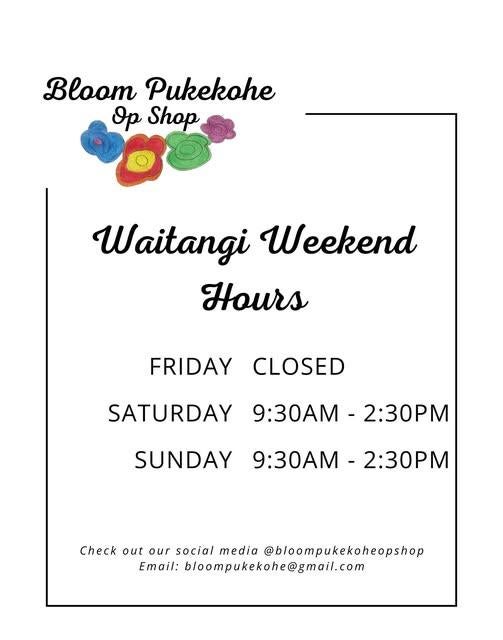
CLOSED WAITANGI DAY 📜 FRIDAY 6th FEBRUARY!
Just a reminder that Friday 6th February is Waitangi Day and we will therefore be closed, as we join the rest of the country in marking the anniversary of the signing of Te Tiriti o Waitangi.
We shop will be open as usual on Saturday and Sunday 9:30am - 2:30pm.
 Loading…