








The Truth About Expectations in Relationships
Many marital therapists tell couples to expect less. If you lower your expectations, the argument goes, then you won’t be disappointed by your partner.
This advice is wrong. Donald Baucom, psychology professor at the University of North Carolina, studied marital expectations for a decade. He found that people get what they expect. People with low expectations tend to be in relationships where they are treated poorly, and people with high expectations tend to be in relationships where they are treated well.
This suggests that by having high standards, you are far more likely to achieve the kind of relationship you want than you are by looking the other way and letting things slide.
The “Good Enough” Relationship
I encourage couples to strive for the “good enough” relationship, which sounds like settling for less than best. Isn’t that contrary to Baucom’s research findings on marital expectations?
Allow me to explain.
In a good enough relationship, people have high expectations for how they’re treated. They expect to be treated with kindness, love, affection, and respect. They do not tolerate emotional or physical abuse. They expect their partner to be loyal.
This does not mean they expect their relationship to be free of conflict. Even happily married couples argue. Conflict is healthy because it leads to greater understanding.
People should not expect to solve all of the problems in their relationship, either. My Love Lab studies found that almost ⅔ of relationship conflict is perpetual. As Dr. Dan Wile says, “When choosing a long-term partner… you will inevitably be choosing a particular set of unsolvable problems.”
Further, it’s unrealistic to expect a relationship to heal childhood wounds, or to become a pathway to spiritual enlightenment or self-actualization. Eli Finkel, psychology professor at Northwestern University, encourages couples to “recalibrate” their marital expectations for these existential needs.
So don’t settle for being treated poorly. As a father, the best way to buffer my daughter from being in a bad relationship in the future is to treat her with love and respect, so she will expect to be treated the same way her partner.
In our empirically-based theory, the Sound Relationship House, we describe what couples in the good enough relationship do and have. They are good friends. They have a satisfying sex life. They trust one another, and are fully committed to one another. They can manage conflict constructively. That means they can arrive at mutual understanding and get to compromises that work. And they can repair effectively when they hurt one another.
They honor one another’s dreams, even if they’re different. They create a shared meaning system with shared values and ethics, beliefs, rituals, and goals.
They agree about fundamental symbols like what a home is, what love is, and how to raise their children.
Expect that.
You deserve it. It’s not unreasonable, and it’s achievable.

Share your favourite main crop potato recipe and win a copy of our mag!
Love potatoes? We will give away free copies of the May 2026 issue to readers whose potato recipes are used in our magazine. To be in the running, make sure you email your family's favourite way to enjoy potatoes: mailbox@nzgardener.co.nz, by March 1, 2026.


🧩😏 Riddle me this, Neighbours…
I am an odd number. Take away a letter and I become even. What number am I?
Do you think you know the answer?
Want to stop seeing these in your newsfeed? No worries! Simply head here and click once on the Following button.

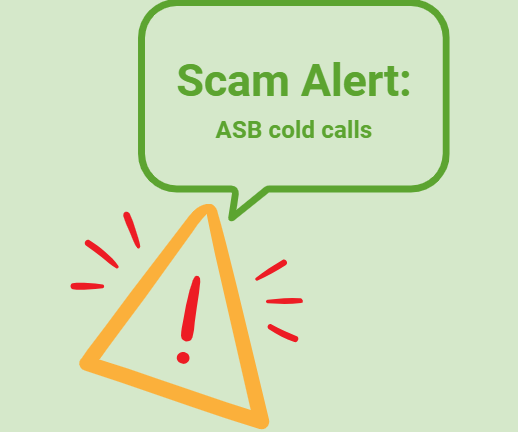
Scam Alert: Bank cold calls
ASB is warning customers about reports of cold calls from scammers claiming to be from ASB. These scammers are trying to obtain personal information, including usernames, dates of birth, and verification codes sent to your mobile phone.
🛡️ The "Caller Check" Test
If you get a call from someone claiming to be from ASB and you’re unsure, just ask them for a Caller Check. You will then be able to verify the call through the app.
Remember, banks will:
❌ Never ask for your banking passwords, PINs, or verification codes
❌ Never need to know your full credit card number – especially the CVC
❌ Never ask you to download software or remotely access your device
❌ Never ask you to purchase gift cards or transfer funds.
If you have received a phone call and think your account has been compromised, call ASB on 0800 ASB FRAUD (0800 272 372), or visit your local branch.
 Loading…