






Some Choice News!
A trailblazing Māori scholar has finally received the recognition she deserves — nearly 100 years after her passing.
Mākereti Papakura, believed to be the first Indigenous woman to study at the University of Oxford, has been awarded a posthumous degree certificate.
Papakura sadly passed away in 1930, just weeks before she was due to present her thesis. Her research was later published as The Old-Time Māori — the first ethnographic study written by a Māori author.
We hope this brings a smile!


💨 Wellington: Is the real summer finally here?
It’s the talk of the town (and every coffee queue): the Wellington "summer" has felt more like a very long, very damp spring! 🌧️ We’ve definitely had our fair share of grey skies and raincoats lately.
In fact, The Post reports that our "pretty average" summer has been tough on the local venues and events that usually thrive under the sun. But don't pack away the sunscreen just yet!
The good news? The next couple of weeks are looking a bit more "settled" (the Wellington word for "not a gale-force downpour"). With autumn officially here, now is the time to squeeze every last drop out of the season! ☀️
Any local hidden spots or activities you’d recommend for a calm Wellington day? Drop them in the comments! 👇

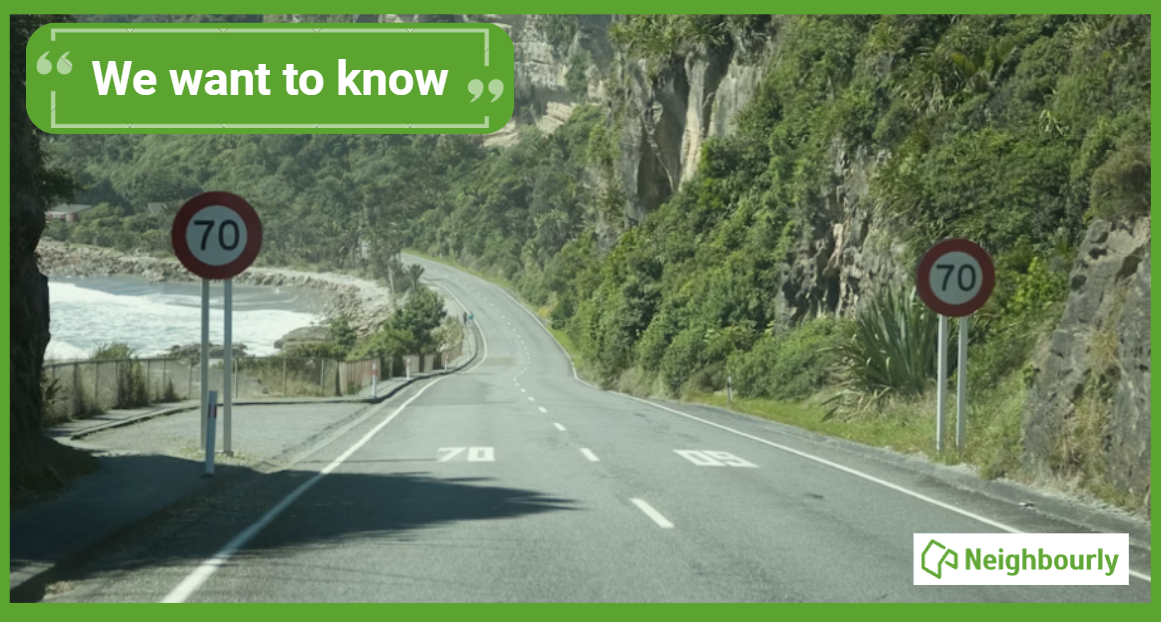
Poll: If we want to reduce speeding, what do you think actually changes driver behaviour? 🛻🚨🚓
In the Post's article on speeding penalties, the question is asked whether speeding fines are truly about road safety, or are they just a way to boost revenue for the Crown?
What do you think? Should speeding motorists receive speeding fines or demerit points?
-
38.2% The sting of a fine (Money talks!)
-
61.8% The threat of demerit points (Nobody wants to lose their license!)
Some Choice News!
DOC is rolling out a new tool to help figure out what to tackle first when it comes to protecting our threatened species and the things putting them at risk.
Why does this matter? As Nikki Macdonald from The Post points out, we’re a country with around 4,400 threatened species. With limited time and funding, conservation has always meant making tough calls about what gets attention first.
For the first time, DOC has put real numbers around what it would take to do everything needed to properly safeguard our unique natural environment. The new BioInvest tool shows the scale of the challenge: 310,177 actions across 28,007 sites.
Now that we can see the full picture, it brings the big question into focus: how much do we, as Kiwis, truly value protecting nature — and what are we prepared to invest to make it happen?
We hope this brings a smile!

 Loading…