





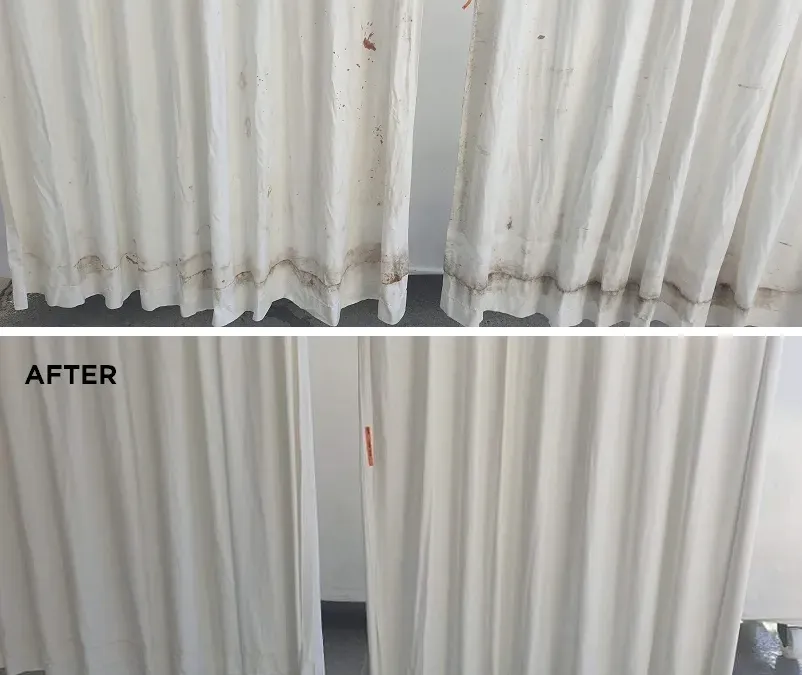
How to Prevent Mouldy Curtains and Blinds
Why does mould appear in the first place?
Mould grows in damp areas where there is a food source such as dust, dirt or organic material. That’s why single glazed or drafty windows, where condensation and dust are common, are often a problem area.
What are some tips for preventing mould growth?
Clean soft furnishings regularly according to the manufacturer’s instructions. This usually involves a regular light vacuum, with less frequent dry cleaning or laundering. Regularly clean windows and wipe down window surrounds and venetian blinds or shutters with a mild detergent in warm water.
Does the material of the curtains affect how much mould will grow?
Yes, consider selecting window coverings manufactured from man-made materials, particularly in damp areas such as the bathroom, kitchen and on south-facing windows. It’s best to use a wipe-able, water-resistant blind or shutter in wet areas like bathrooms and kitchens. Even man-made fabrics don’t cope well in those environments.
How do I remove the mould?
Once mould develops it’s best to nip it in the bud as early as possible with a thorough clean. Some curtains can be hand washed (check the manufacturer’s instructions) but, for best results, we recommend taking them to a specialist cleaner. Curtain Clean services most of the North Island and takes care of all types of curtains and blinds.
Since moisture is the culprit, how can we minimise it in our homes?
- Use lids on pots and pans when cooking.
- Never hang clothes to dry inside and vent your clothes drier to the outside.
Keep reading: www.curtainclean.co.nz...

Poll: Should we ditch daylight saving? 🕰️
First introduced in New Zealand in 1927 with the passing of the Summer Time Act, it's what we know as 'Daylight Saving' and this year it ends on the first Sunday in April.
While we do get to sleep in this time around, some people would like to scrap the clock tinkering for good.
And why? Some evidence suggests the time changes are bad for our health as they mess with sleep patterns leading to short-term fatigue and affecting mood. Meanwhile the hour change is frustrating for farmers and a nightmare for getting the littlies to sleep. But what's your take?

-
39.7% Yes - get rid of the clock changes
-
58.5% No, I enjoy it
-
1.8% Other - I'll share below

Alan and Hazel Kerr share Senior New Zealander of the Year Award 2026
Dr Alan and Hazel Kerr describe themselves as ‘just ordinary old Kiwis’, despite being named as the 2026 Ryman Healthcare Senior New Zealanders of the Year Te Mātāpuputu o te Tau.
The amazing couple prompted a standing ovation at a star-studded Auckland event which recognised their tireless efforts, with Alan travelling to and from Gaza and the West Bank 40 times to help children over 20 years, and Hazel travelling 20 times.
Click read more to find out more.

We're taking the bus!
The number of Wellingtonians taking the bus and train rose by 3% last week compared to the same time last year, according to Metlink.
Not surprising given petrol prices at the moment. But if you're considering giving up your car commute for a leisurely bus ride in the mornings, it would be worth it.
It's about to get even easier: In April, e-pay will be launched, meaning you can tap on with your credit cards as well as smart devices.
It's better on the environment too: With most Metlink trains running on electricity, 25% of the bus fleet being EV’s and the Ika Rere electric ferry, Metlink is able to move more people using less fuel than any other transport option.
With fuel costs so high, it's a good idea to jump on board if you can. If you've become a public transport convert recently, how have you found it?

 Loading…