






Curtain lining: Which type is best for your home?
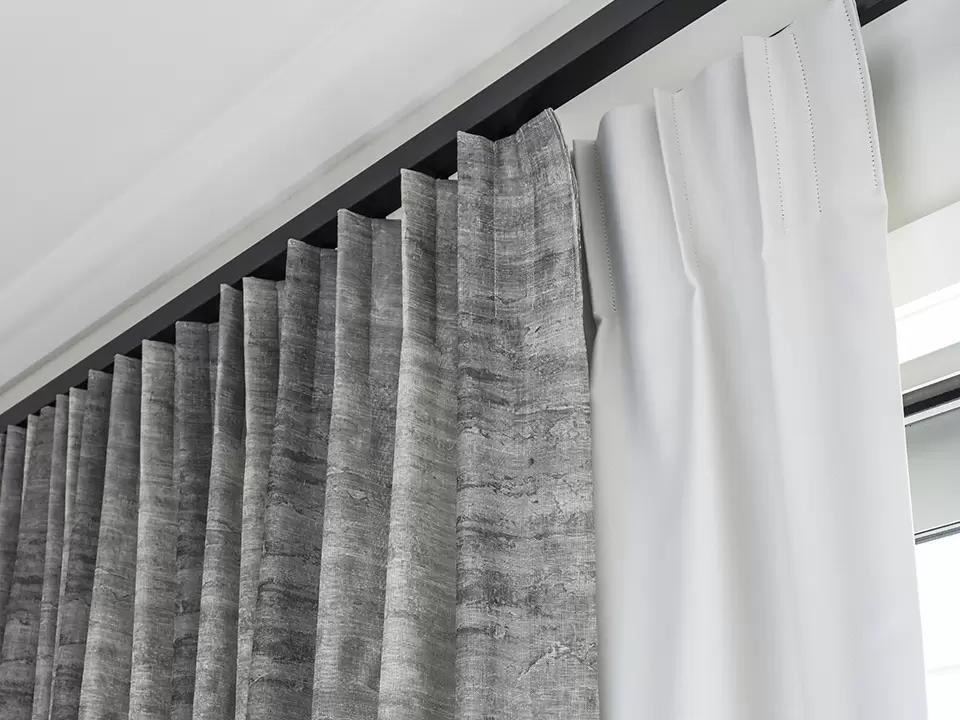
You’ve probably heard of blockout and thermal curtain linings - but do you know the difference between them? In this article, we break down the different lining options so that you can make an informed decision when choosing curtains for your home.
But first… Why line your curtains? Windows play a major role in controlling the temperature in your home – so it’s important to cover them appropriately. Lined drapes create a thermal insulation barrier that will help keep your home warm and cosy.
Thermal lining: Thermal curtain lining consists of one layer (or one pass) of coated acrylic suede. It offers a thermal barrier, increasing energy savings and helping keep your room warmer. It is important to understand that due to the construction of this fabric, some light will still pass through into the room. Another thing to be aware of is this fabric can tend to ‘dust’ at times, which can be an annoyance when particles collect behind your curtains and on your sills.
Blockout lining: Blockout curtain lining comes in several varieties. We’ve outlined three key fabric types below:
1. Silicone-coated: One of the newer products on the market, silicone blockout lining is coated with three layers of silicone to protect against the sun and moisture. This fabric has extremely good blockout properties and, because it’s thicker, it also retains heat better than thermal lining. Unlike acrylic suede lining, it won’t create or hold any loose dust. Another benefit is that the silicone on the back of the lining can easily be wiped clean with a damp cloth, making for easy spot cleaning.
Keep reading: www.curtainclean.co.nz...

🧩😏 Riddle me this, Neighbours…
I am an odd number. Take away a letter and I become even. What number am I?
Do you think you know the answer?
Want to stop seeing these in your newsfeed? No worries! Simply head here and click once on the Following button.


Poll: Are you still heading to your local for your caffeine fix, or has the $$ changed your habits? ☕
Wellington’s identity is built on its cafe culture, but with costs climbing, that culture is under pressure. We’ve seen the headlines about recent closures, and it’s a tough pill to swallow along with a $6+ coffee.
We all want our favourite spots to stay open, but we also have to balance our own budgets ⚖️
We want to know: How are you handling the "coffee math" in 2026? Are you still heading to your local for a chat and a caffeine fix, or has the cost of living changed your habits?
Keen to read more about "coffee math"? The Post has you covered.

-
41% I avoid spending money on coffee
-
47.8% I still indulge at my local cafe
-
11.2% Irrelevant - coffee is not for me
Scam Alert: Bank cold calls
ASB is warning customers about reports of cold calls from scammers claiming to be from ASB. These scammers are trying to obtain personal information, including usernames, dates of birth, and verification codes sent to your mobile phone.
🛡️ The "Caller Check" Test
If you get a call from someone claiming to be from ASB and you’re unsure, just ask them for a Caller Check. You will then be able to verify the call through the app.
Remember, banks will:
❌ Never ask for your banking passwords, PINs, or verification codes
❌ Never need to know your full credit card number – especially the CVC
❌ Never ask you to download software or remotely access your device
❌ Never ask you to purchase gift cards or transfer funds.
If you have received a phone call and think your account has been compromised, call ASB on 0800 ASB FRAUD (0800 272 372), or visit your local branch.
 Loading…