






Stop Your Curtains Getting Damp and Mouldy
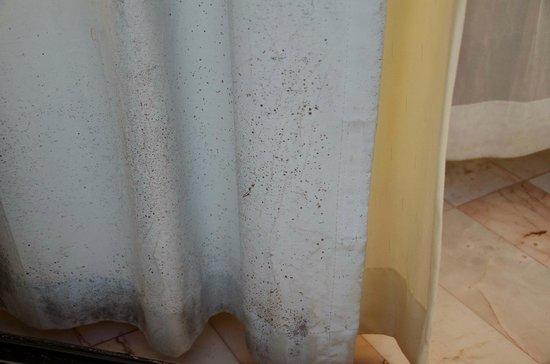
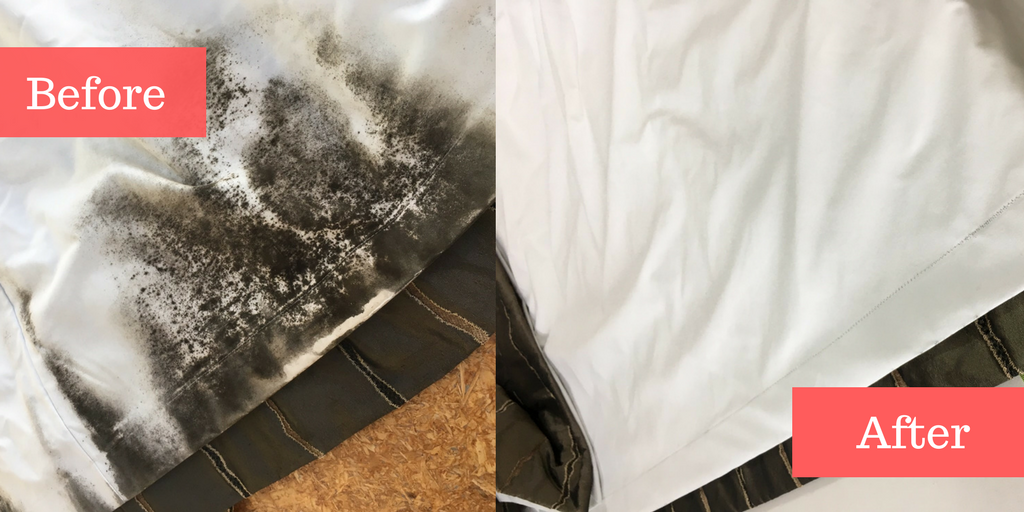
It’s time to bid farewell to summer for another year and start facing the reality that soon it’s going to be cold and damp for a while. As we enter those colder months and condensation appears on the windows, we thought it was a good time to share some tips on preventing mould and mildew growing on your curtains.
What makes mould and mildew grow?
Interestingly, it’s not directly the condensation on your windows that causes mould and mildew because most curtains don’t come into contact with it. Mould and mildew grow when there’s moisture and warmth in the home, which condensation does contribute to.
Just like everything absorbent in your home, as temperatures go up the moisture in the air evaporates and is absorbed into the fabric. As they cool, the moisture changes back from its gaseous state to being closer to its liquid form. In absorbing this moisture, they also take in any bacteria it holds. Repeated over time, this is what causes the nasty growths.
The difference between mould and mildew
Mould is a broad term that encompasses multiple identical nuclei and can grow beneath and penetrate the surface of affected material. Mildew is a type of mould that grows on the surface and can therefore be much more easily treated/removed. When its live, moulds are orangey or reddish in colour. The black patches we see are actually the hibernating mould spores waiting for the sun to warm them up and bring them back to life.
Where does all this moisture come from?
We live in a pretty humid climate in New Zealand at the best of times; in some areas it’s even greater. But it’s not all weather related. Cooking, showering, drying clothes, unflued gas heaters and simply breathing and existing all produce moisture content within our homes.
Preventing moisture build up and/or drying out your home
- Install a home ventilation system of some kind.
- Crack the windows a little during the day to allow a bit of cool air to flow through your home. North facing windows are best....
Keep reading: www.curtainclean.co.nz...

🧩😏 Riddle me this, Neighbours…
I am an odd number. Take away a letter and I become even. What number am I?
Do you think you know the answer?
Want to stop seeing these in your newsfeed? No worries! Simply head here and click once on the Following button.


Some Choice News!
DOC is rolling out a new tool to help figure out what to tackle first when it comes to protecting our threatened species and the things putting them at risk.
Why does this matter? As Nikki Macdonald from The Post points out, we’re a country with around 4,400 threatened species. With limited time and funding, conservation has always meant making tough calls about what gets attention first.
For the first time, DOC has put real numbers around what it would take to do everything needed to properly safeguard our unique natural environment. The new BioInvest tool shows the scale of the challenge: 310,177 actions across 28,007 sites.
Now that we can see the full picture, it brings the big question into focus: how much do we, as Kiwis, truly value protecting nature — and what are we prepared to invest to make it happen?
We hope this brings a smile!


Poll: Are you still heading to your local for your caffeine fix, or has the $$ changed your habits? ☕
Wellington’s identity is built on its cafe culture, but with costs climbing, that culture is under pressure. We’ve seen the headlines about recent closures, and it’s a tough pill to swallow along with a $6+ coffee.
We all want our favourite spots to stay open, but we also have to balance our own budgets ⚖️
We want to know: How are you handling the "coffee math" in 2026? Are you still heading to your local for a chat and a caffeine fix, or has the cost of living changed your habits?
Keen to read more about "coffee math"? The Post has you covered.

-
42.2% I avoid spending money on coffee
-
47.4% I still indulge at my local cafe
-
10.4% Irrelevant - coffee is not for me
 Loading…