







Tips for a Fresher Looking Natural Fibre Rug
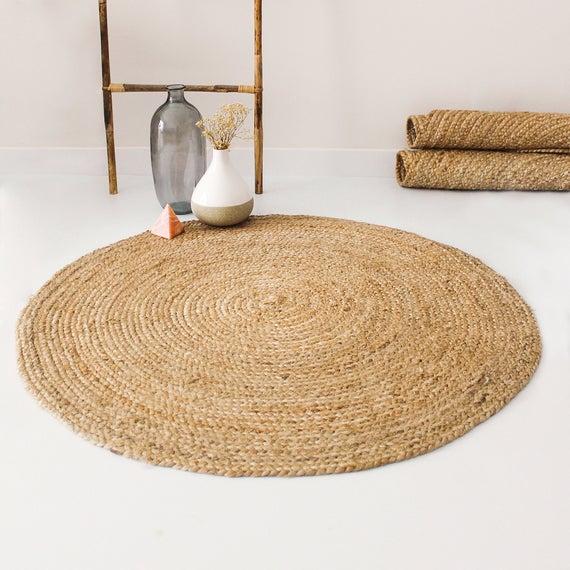
In recent years, more and more people choose to bring natural fibre rugs into their homes due to their cosy warmth, excellent durability, and their eco-friendly manufacturing process. But you probably know all of this already since you bought one yourself. We’ve put together some helpful tips to keep your rug looking fresh.
1) Clean your rug on a regular basis. This may seem like an obvious thing to state, but you should know that it is much easier for dirt particles to become entangled in natural fibre carpeting than it is with their synthetic counterparts. To this end, make sure to regularly vacuum your rug using the appropriate upholstery attachment. Other methods you can try is shaking the rug to remove debris, or hanging it up outside and dusting it with a tennis racket, big stick, etc.
2) Use a damp towel to remedy curled rug corners. If you have been using your natural carpeting as an area rug, especially in high traffic areas, you will sooner or later notice that its corners have started to curl. To fix this, simply dampen the curled area with an evenly spread damp towel, place some weights on top, and leave it overnight. Keep in mind that you may have to repeat this process a few more times, depending on how long your rug had its corners curled.
3) Cut sprouting fibres using shears. Since most natural fibre rugs are braided and sewn by hand, they are very prone to sprouting. This goes double for jute, which has shorter fibres. To remedy this, simply use shears to clip down the fibres that have already stuck out from the rug surface. The good news is that, with time, the fibres will “settle in” and you will no longer have to use your scissors as much.
4) Always contact a manufacturer for advice on cleaning specific stains. If you cannot identify the stain on your rug, or it needs a more thorough cleaning overall, we highly encourage you to seek out the original manufacturer for specific cleaning recommendations, since most companies treat the fibres of their natural products differently.
5) Maintain consistent humidity within your premises. Sisal and other natural fibre rugs should be kept outside of areas with high humidity, since the extra moisture could stain them or even cause them to shrink. Consider purchasing a dehumidifier to maintain optimal humidity in the area where your rug is located.
6) Make sure your rug receives even amounts of sunlight. As mentioned above, sisal and other natural fibres become bleached when exposed to sunlight. So, if your room lets moderate to high amounts of sunlight in, ensure that your rug is either fully exposed to the sunrays or completely hidden in the shadows to maintain a consistent colour. If your rug is half in the sun, rotate it every other week to keep the sun-fade even.
7) Apply a fabric protectant spray. This step is only necessary if your carpet is located in a busy area of the house. Treating the fibres with fabric protectant spray (Scotchgard is pretty cheap at Mitre 10) will ensure that they are well protected against water spills and dirt. Just don’t forget to re-apply the spray regularly as its effect will wear off with time.
We hope you have found something you didn’t know before, please feel free to share with us any tips you have in the comments ?

Some Choice News!
DOC is rolling out a new tool to help figure out what to tackle first when it comes to protecting our threatened species and the things putting them at risk.
Why does this matter? As Nikki Macdonald from The Post points out, we’re a country with around 4,400 threatened species. With limited time and funding, conservation has always meant making tough calls about what gets attention first.
For the first time, DOC has put real numbers around what it would take to do everything needed to properly safeguard our unique natural environment. The new BioInvest tool shows the scale of the challenge: 310,177 actions across 28,007 sites.
Now that we can see the full picture, it brings the big question into focus: how much do we, as Kiwis, truly value protecting nature — and what are we prepared to invest to make it happen?
We hope this brings a smile!


Share your favourite main crop potato recipe and win a copy of our mag!
Love potatoes? We will give away free copies of the May 2026 issue to readers whose potato recipes are used in our magazine. To be in the running, make sure you email your family's favourite way to enjoy potatoes: mailbox@nzgardener.co.nz, by March 1, 2026.

Have you got New Zealand's best shed? Show us and win!
Once again, Resene and NZ Gardener are on the hunt for New Zealand’s best shed! Send in the photos and the stories behind your man caves, she sheds, clever upcycled spaces, potty potting sheds and colourful chicken coops. The Resene Shed of the Year 2026 winner receives $1000 Resene ColorShop voucher, a $908 large Vegepod Starter Pack and a one-year subscription to NZ Gardener. To enter, tell us in writing (no more than 500 words) why your garden shed is New Zealand’s best, and send up to five high-quality photos by email to mailbox@nzgardener.co.nz. Entries close February 23, 2026.

 Loading…