



Council Media Release
In-depth financial report identifies 10-Year Plan challenges
Wednesday 12 July 2017
A proposed approach to measure Hamilton City Council’s financial performance as part of discussions for the city’s 10-Year Plan was presented to councillors in a public briefing session today.
The Financial Strategy Assessment by PwC identified the key financial challenges for Hamilton in coming years. The report took the 2015-25 10-Year Plan as a starting point and looked at the current and future economic landscape and whether the existing financial approach is the best for the city in the new economic environment.
A revised approach was recommended to ensure the annual costs to run the city are met by the annual operating revenue. The new measure excludes vested assets, all capital subsidies (new roads) and 65% of development contribution revenue (DC revenue).
Under this approach, to maintain day to day operations and the community expectations from the last annual plan, the city would have needed to increase base revenue this financial year by 11.7 per cent, or find cost savings of $12.1M, or a combination of both. This adjustment does not take into account inflationary cost increases, new funding requirements in the coming 10-Year Plan, or growth challenges.
Hamilton City Council Chief Executive Richard Briggs says he will be recommending the PwC approach to the Council’s Revenue Task Force.
“The report is consistent with the financial data supplied to councillors in March of this year which identified the Council needs to address a gap between its base revenue sources and the day-to-day costs to run the city.
“In simple terms, the costs of running the city in the future will not be covered by the rates income and user fees and charges we have budgeted,” Mr Briggs says.
“The report also confirms there are significant growth pressures and a number of unfunded plans and strategies which Council and the community will need to consider as Hamilton sets its priorities during the 10-Year Plan process,” he says.
“Hamilton is experiencing growth increases far beyond what was expected in 2012, when we last set the financial strategy. That strategy was appropriate at the time but six years later we have a totally different economic landscape.
“Base costs to provide services to the city have increased and new legislative requirements have resulted in increased maintenance and capital expenditure costs for our existing assets.
“The Housing Infrastructure Fund proposals are a separate issue and are part of the growth picture – today’s PwC report is about base operating costs and revenues,” Mr Briggs says.
“How this funding gap is addressed is one of the challenges facing the Council – no decisions have yet been made – and today is part of a series of briefings to provide councillors with the best information as we develop our long term plan,” Mr Briggs says.
Earlier this year the Council voted to keep rates increases at an average of 3.8% for 2017/18, as originally proposed. How the city funds its activities in the future will be determined through the 2018-2028 10-Year Plan.
The 10-Year Plan is the blueprint for how Hamilton will build a stronger economy and a more attractive city for families. The Plan is about how the city balances three areas: growth, levels of service and the financial strategy, and will go out for public consultation in early 2018.

Poll: If we want to reduce speeding, what do you think actually changes driver behaviour? 🛻🚨🚓
In the Post's article on speeding penalties, the question is asked whether speeding fines are truly about road safety, or are they just a way to boost revenue for the Crown?
What do you think? Should speeding motorists receive speeding fines or demerit points?

-
37.1% The sting of a fine (Money talks!)
-
62.9% The threat of demerit points (Nobody wants to lose their license!)

Some Choice News!
DOC is rolling out a new tool to help figure out what to tackle first when it comes to protecting our threatened species and the things putting them at risk.
Why does this matter? As Nikki Macdonald from The Post points out, we’re a country with around 4,400 threatened species. With limited time and funding, conservation has always meant making tough calls about what gets attention first.
For the first time, DOC has put real numbers around what it would take to do everything needed to properly safeguard our unique natural environment. The new BioInvest tool shows the scale of the challenge: 310,177 actions across 28,007 sites.
Now that we can see the full picture, it brings the big question into focus: how much do we, as Kiwis, truly value protecting nature — and what are we prepared to invest to make it happen?
We hope this brings a smile!


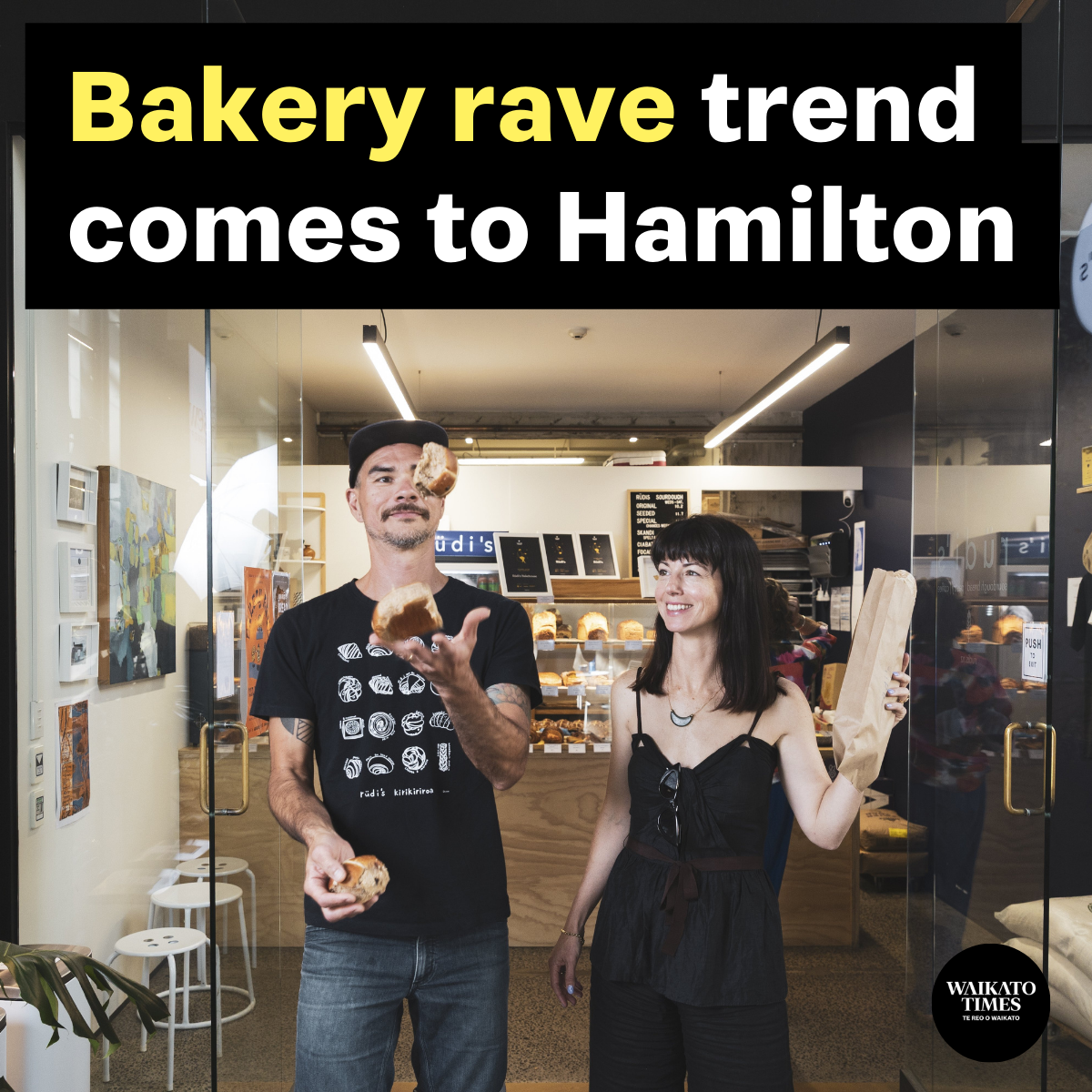
Bakery rave trend comes to Hamilton
An early-morning bakery rave, complete with DJs, dancing, coffee and pastries, is set to take over Riverbank Lane this Saturday.
Rudi’s Bakehouse is swapping bright lights for the Hamilton sunrise and alcohol for espresso as it hosts what it believes to be one of the city’s first “bakery raves”.
 Loading…