







How Curtain Linings Work
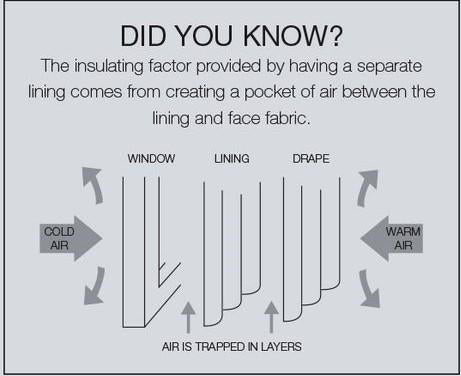
Windows play a major role in controlling the temperature within a home. During winter it is easy to lose heat, and in summer it is easy to overheat a home if windows are not appropriately covered. Lining is a cost-effective addition to help protect your curtain fabric, while providing some added insulation for the home, reducing window heat loss by 40-60% when closed. Working all year round, lined drapery is an important tool in creating a thermal insulation barrier. Lined curtains have an added lining layer on the back of the curtain which can be attached to the curtain or can be hung on a separate track behind the curtain.
Linings help your window furnishings last longer: With a good quality lining, your chosen curtain fabric is shielded from the harsh UV rays of the sun, preventing your fabric from fading.
Linings provide added privacy: A lot of fabrics are only somewhat private, especially at night. Adding a lining to your window furnishings will increase the opacity of the treatment, ensuring complete privacy.
Linings provide increased insulation: Insulated linings trap air in and between the layers of fabric, preventing the heat in your homes escaping out the windows, and offering significant savings on your energy bill.
Linings can provide light control: Ideal for bedrooms and media rooms, block-out linings allows you to block light coming through a window and keep your rooms dark in the middle of the day.
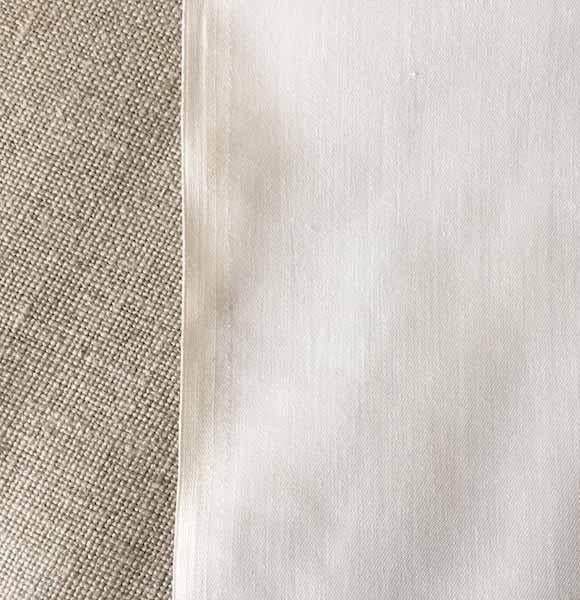
Linings improve the appearance of window furnishings: The colours of your chosen fabric can appear richer when a lining is placed behind them. Without a lining, sunlight coming through a fabric can make the colours appear washed out during the day.
Call us or your local Curtain makers to discuss adding a lining to your current curtains.

Some Choice News!
DOC is rolling out a new tool to help figure out what to tackle first when it comes to protecting our threatened species and the things putting them at risk.
Why does this matter? As Nikki Macdonald from The Post points out, we’re a country with around 4,400 threatened species. With limited time and funding, conservation has always meant making tough calls about what gets attention first.
For the first time, DOC has put real numbers around what it would take to do everything needed to properly safeguard our unique natural environment. The new BioInvest tool shows the scale of the challenge: 310,177 actions across 28,007 sites.
Now that we can see the full picture, it brings the big question into focus: how much do we, as Kiwis, truly value protecting nature — and what are we prepared to invest to make it happen?
We hope this brings a smile!


Have you got New Zealand's best shed? Show us and win!
Once again, Resene and NZ Gardener are on the hunt for New Zealand’s best shed! Send in the photos and the stories behind your man caves, she sheds, clever upcycled spaces, potty potting sheds and colourful chicken coops. The Resene Shed of the Year 2026 winner receives $1000 Resene ColorShop voucher, a $908 large Vegepod Starter Pack and a one-year subscription to NZ Gardener. To enter, tell us in writing (no more than 500 words) why your garden shed is New Zealand’s best, and send up to five high-quality photos by email to mailbox@nzgardener.co.nz. Entries close February 23, 2026.


Will these roadworks affect you?
Don’t expect a quick trip between Cambridge and Tamahere for much of this year, because major roadworks are starting.
Asphalt works on that section of Waikato Expressway will run from March through to late 2026, NZ Transport Agency Waka Kotahi (NZTA) says. Motorists are warned to plan for significant delays.
“Unfortunately the pavement, particularly in the slow lanes, has deteriorated faster than expected,” NZTA’s Roger Brady said.
Will these roadworks affect you? Tell us more in the comments (adding NFP if you don't want your words used in print).

 Loading…