





New EarthDiverse course for Term 4 on the Social History of Disease
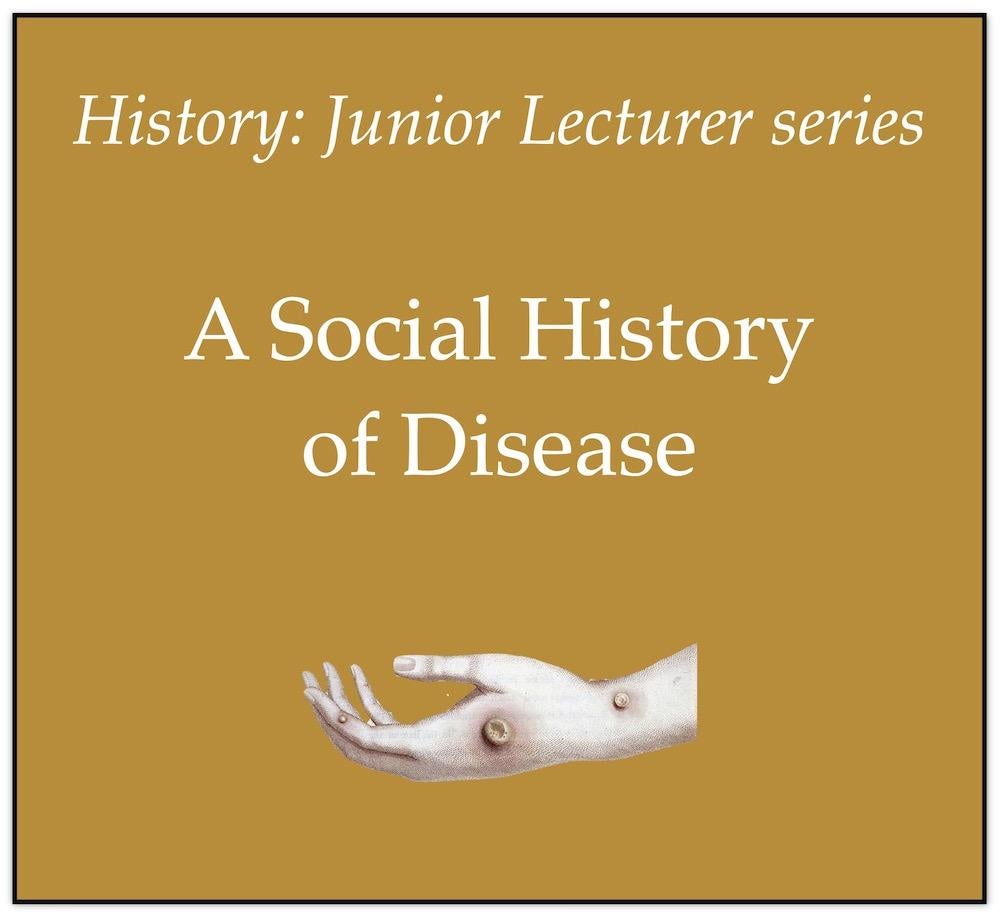
Interested in a social history of infectious diseases? The newest course in our Junior Lecturer series, which gives young people an opportunity to share their passions, experience and knowledge, is entitled “From Plague to Protest: A Social History of Disease.”
This four-session course offers an accessible overview of disease from both biological and social perspectives. We will begin with discovering how the body defends itself against invaders, and then pivot to examining the invaders themselves. Armed with this knowledge, we will be able to explore how diseases have played out in society, from the Middle Ages through to the present day. Along the way, we will examine some fascinating case studies and the individuals who have played pivotal roles in either furthering our understanding in the battle of organisms or in stymying public health efforts.
For more info on this and our other courses in world art & architecture, environment and biodiversity, history, language (Arabic, German, Hebrew, Hindi, Japanese, Portuguese, Spanish, Swahili, Tamil, Thai and Urdu), world literature, philosophy, and world cinema, visit our website at <earthdiverse.org.nz>.
We specialise in hybrid courses with both an in-person and distance learning component via Zoom, so no matter where you live in the world you can take one of our courses!

🍦 A Challenge for the Sweetest Tooth!
We all love a scoop (or three) of ice cream... but the owner at Little Liberty Creamery in Taranaki is taking things to a whole new level for 2026!
Her goal? 52 new flavours this year. That’s one brand-new, experimental creation every single week! 🤯
The Great Flavour Debate: We want to know what the current "Gold Standard" is for you.
What is the crème de la crème of ice cream flavours?
🍦 The Purist: Are you a "perfect vanilla or nothing" kind of person?
🍫 The Chocoholic: The darker and chunkier the better?
🧂 The Salty-Sweet: Is Salted Caramel still the reigning champ?
🌈 The Wildcard: Are you into the experimental stuff—think lavender, chilli, or charcoal?
Tell us your absolute favourite flavour in the comments below! 👇


Some Choice News!
DOC is rolling out a new tool to help figure out what to tackle first when it comes to protecting our threatened species and the things putting them at risk.
Why does this matter? As Nikki Macdonald from The Post points out, we’re a country with around 4,400 threatened species. With limited time and funding, conservation has always meant making tough calls about what gets attention first.
For the first time, DOC has put real numbers around what it would take to do everything needed to properly safeguard our unique natural environment. The new BioInvest tool shows the scale of the challenge: 310,177 actions across 28,007 sites.
Now that we can see the full picture, it brings the big question into focus: how much do we, as Kiwis, truly value protecting nature — and what are we prepared to invest to make it happen?
We hope this brings a smile!


🎉 Riddle me this, legends! 🎉
He/She who makes it, sells it.
He/She who buys it, doesn't use it.
The user doesn't know they are using it.
What is it?
(Shezz from Ngāruawāhia kindly provided this head-scratcher ... thanks, Shezz!)
Do you think you know the answer? Simply 'Like' this post if you know the answer and the big reveal will be posted in the comments at 2pm on the day!
Want to stop seeing these in your newsfeed?
Head here and hover on the Following button on the top right of the page (and it will show Unfollow) and then click it. If it is giving you the option to Follow, then you've successfully unfollowed the Riddles page.

 Loading…