







Jumping for Jute!
Jute is a natural fibre with golden & silky shine, and hence nicknamed as The Golden Fibre.
Jute is one of the most versatile natural fibres that has been used in raw materials for packaging, textiles, non-textile, and agricultural sectors.
Jute is a vegetable plant whose fibres are dried in long strips, and it’s one of the cheapest natural materials available; together with cotton, it is one of the most frequently used.
The plants from which jute is obtained grow mainly in warm and humid regions, such as Bangladesh, China, and India.
Jute can be grown year-round and is harvested every six months. It can take decades to produce the same volume of wood fiber and it requires much larger tracts of land to cultivate.
The woody core of the jute plant, called hurd, has thousands of potential industrial and commercial uses. As an alternative to wood, hurd is capable of meeting most of the world’s demand for wood and wood products. Using hurd and jute fibres means that the level of deforestation to meet the current demand for paper and wood could be significantly decreased if they were used as an alternative.
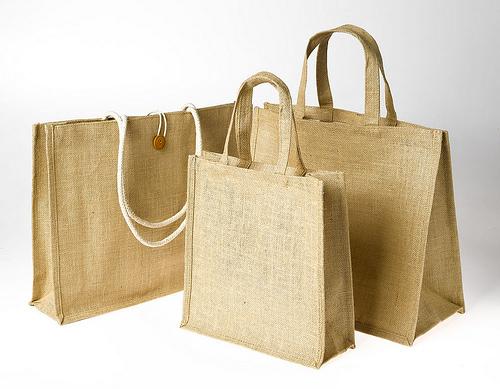
Jute is 100% biodegradable (it degrades biologically in 1 to 2 years), low-energy recyclable, and can even be used as compost for the garden. It is clear in terms of reusability and recyclability that jute bags are one of the best options available nowadays.
Jute fibres are tougher and more resilient than paper made from wood pulp and can withstand prolonged exposure to water and weather. They can be reused many times and are thus very environmentally friendly.
The application of jute is a significant step in combating the use of different materials containing toxic wastes. Jute bags cut down the employment of plastic bags, which have now been effectively banned in many countries due to their harmful components. Jute seems to be one of the best alternatives to it.
We hope you enjoyed learning about Jute as much as we did, we would love to hear your comments!

🪱🐦 When are you the most productive? 🌙🦉
The Post has been diving into our daily habits, and research suggests being an early bird or a night owl isn’t just a choice—it’s biology! We all have that specific time when our brains finally "click" into gear.
This raises a big question for the modern workplace. To get the best out of everyone, should employers accommodate our natural body clocks? This idea is at the heart of the four-day work week and flexible scheduling movements.
We want to hear from you:
1. When does your brain "click" into gear?
2. Would a flexible (or shortened) schedule change the way you work?


Rubbish data leaves $3m hole in Waikato District Council’s refuse budget
It’s still not known how it happened but an accounting cock-up over rubbish stickers has left a $3 million hole in Waikato District Council’s annual budget.
Last month, the council was told it faced a deficit of $3.9m, mainly due to a correction to its user-pay refuse sticker revenue budget - basically, it wrongly estimated how much money it would take in from sales of council rubbish stickers.

Frankton firm Cook and Galloway in receivership
Hamilton firm Cook and Galloway Engineers is for sale after its parent company was placed into receivership.
Receivers say unresolved “financial pressures“ forced the company to go into receivership.

 Loading…