





Luxurious Lotus Silk
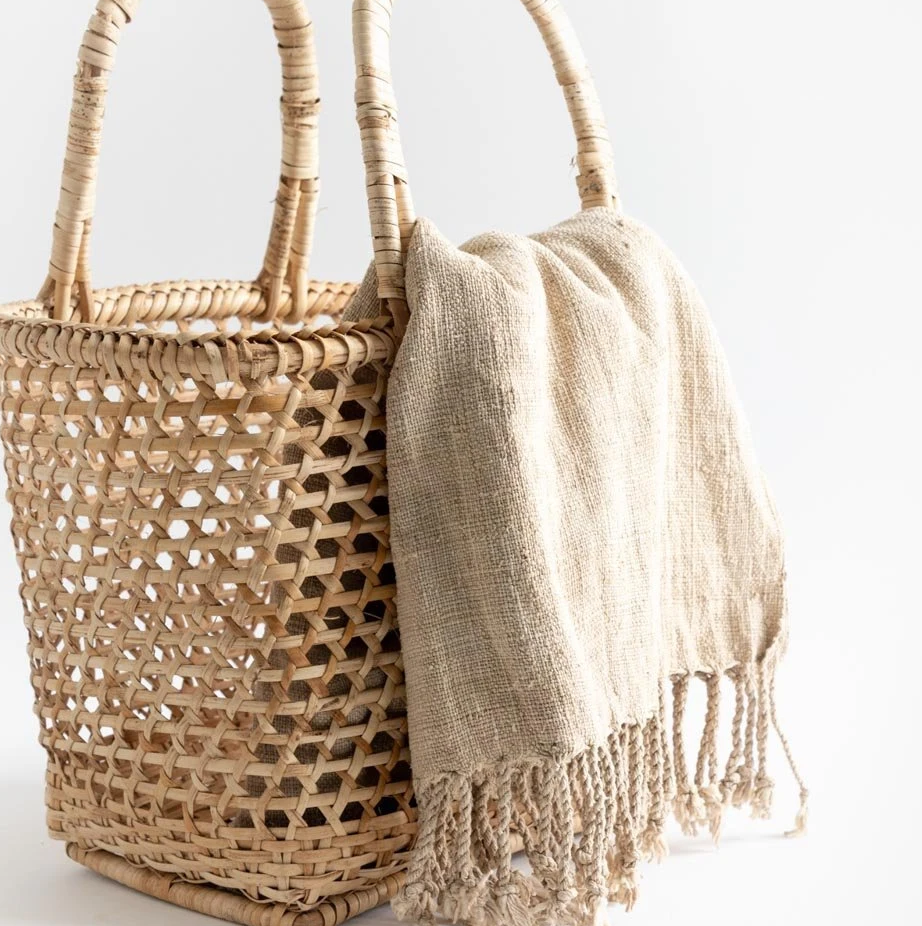
Lotus fibre or lotus silk is a rather rare and exclusive fibre. The silk comes from the stem of the lotus flower which is made up of microfibres.
The stems are snapped off, the fibres are teased out before being rolled into thread. Once the threads are dry, they are weighed down and carefully wound by hand. Then they’re put onto the loom. These fibres are fragile, but once woven, can be as durable as traditional silk.
The entire process of fibre extraction, weaving the fibre, and making the fabric is completely handmade, making the process time-consuming. This also limits the quantity of the fabric produced. A large scarf requires the thread of around 9,200 stems and would take one worker around two months to complete. This is why it is considered luxurious and items made from lotus silk do not go cheap.
The resulting material resembles raw silk or an aged linen, naturally beige in colour and possesses unique qualities. It is waterproof, practically wrinkle proof, washable, lightweight, sweatproof and is soft to the touch.
Most importantly, its key quality is that it is one of the most eco-friendly materials on the planet. The lotus is a water plant. It preserves the eco-system in which it grows including the water as much as the surrounding wildlife.
Not only is it created from waste (lotus stems), but it also leaves little waste behind. In fact, lotus silk been identified as potentially the most ecological fabric in the world, and it is the first natural microfibre in the world. Being a natural fibre, it is biodegradable after its useful life.


A Neighbourly Riddle! Don’t Overthink It… Or Do?😜
Do you think you know the answer? Simply 'Like' this post if you know the answer and the big reveal will be posted in the comments at 2pm on the day!
If you multiply this number by any other number, the answer will always be the same. What number is this?


'Invisible boy' Malachi was failed again and again until his brutal death
The torture and murder of 5-year-old Malachi Subecz is a “national disgrace” but changes made in the wake of his death will not prevent further killings in the future.
The damning view of Coroner Janet Anderson is revealed in a long-awaited 132-page report into one of New Zealand’s most shocking child-killings - the 2021 death of Malachi at the hands of his ‘caregiver’, Michaela Barriball.


Poll: As a customer, what do you think about automation?
The Press investigates the growing reliance on your unpaid labour.
Automation (or the “unpaid shift”) is often described as efficient ... but it tends to benefit employers more than consumers.
We want to know: What do you think about automation?
Are you for, or against?
-
9.6% For. Self-service is less frustrating and convenient.
-
43.5% I want to be able to choose.
-
46.9% Against. I want to deal with people.
 Loading…