







A Woolly Tale
Humans have enjoyed wool for over 10,000 years and it continues to be a coveted textile in both high end fashion and interior design due to its many qualities. Here we deep-dive into the wonderful world of wool, sharing the tale of this ancient fibre’s origin, production and inherent attributes.
ORIGIN
Britain is said to have lead wool manufacturing through spinning and weaving pre 1900 BC, a skill highly prized beyond their shores. Sheep were first exported beyond Europe to South Africa, New Zealand and Australia toward the very end of the 1700s. We have had a long time to accustom ourselves to the incredible natural qualities of wool and it is quite literally woven in to our trading, cultural and farming histories.
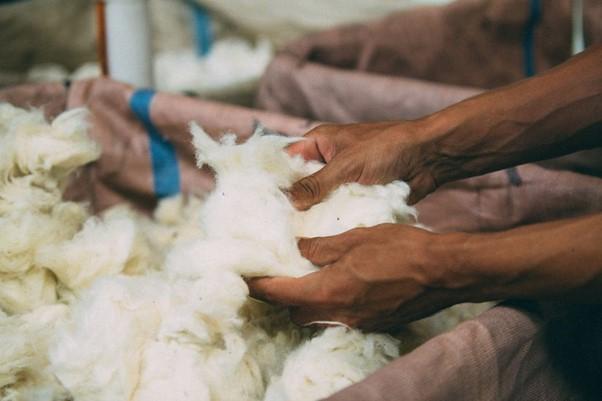
How does wool come to be? Fleece is shorn from sheep annually with a new fleece produced every year (unless you are Shrek the Sheep, who avoided shearing for 6 years – once finally caught in 2004 he produced enough wool for 20 large men’s suits, or 27 kg… blimey!). Once shorn, fleeces are thrown clean side down onto a wool table, skirted (a process to remove undesirable parts of the fleece), folded and rolled to determine class by a qualified wool classer. Bales of wool are then sent to be scoured, a bathing/cleaning process to remove dirt and impurities such as sweat and vegetable matter. Quality is determined by diameter, crimp, yield, colour and staple strength. Finer wools are used for apparel manufacture and heavier for soft furnishing textiles and carpets/rugs.
There are a wide variety of ways to process wool in to differing yarns, including worsted – a very fine yarn spun from carded wool producing a lustrous and smooth product especially suited to apparel. You may also be familiar with felted wools which are produced with heat, pressure and moisture compressing the fibres, entangling them together into a matted textile with a dense, ‘foamy’ or almost spongy appearance and feel. The woollen system of preparing carded wool for spinning ensures short fibres are retained, sometimes requiring combing. Wool can be spun to yarn on its own, or in conjunction with other fibres which can add desirable qualities and attributes to the finished fabric.
Despite a reputation as a land of sheep, New Zealand is actually the 4th largest producer of wool, with the top spot being taken out by Australia, responsible for 25% of global wool-clip. International wool production is about 2 million tonnes, 60% of which is apparel. Approximately 3% of the international textile trade is comprised of wool. We would like that number to be a little higher!
RENEWABILITY
A natural fibre similar to human hair, wool is made of keratin and therefore readily biodegradable. As long as there is grass to graze on, sheep will continue to produce fleece, making it an ideal renewable fibre. Safeguarding the environment is part of the important work undertaken by woolgrowers to guarantee future production and industry longevity. Due to the high quality and durability of wool, woollen products have wonderful longevity and it is also excellent for re-use and recycling. In some instances, wool products can be returned from the interior and fashion sectors to be carded and re-spun in to yarn for re-weaving – an excellent way to reduce waste and extend the life of the material. Because of its hardy nature, when properly looked after, wool has a longer lifespan than many other fibres - if you have ever visited an antique/vintage/mid-century furniture trader, you will often find original wool and wool blend upholsteries still going strong even after a few lifetimes, albeit in need of a good clean!
Keep reading: www.curtainclean.co.nz...


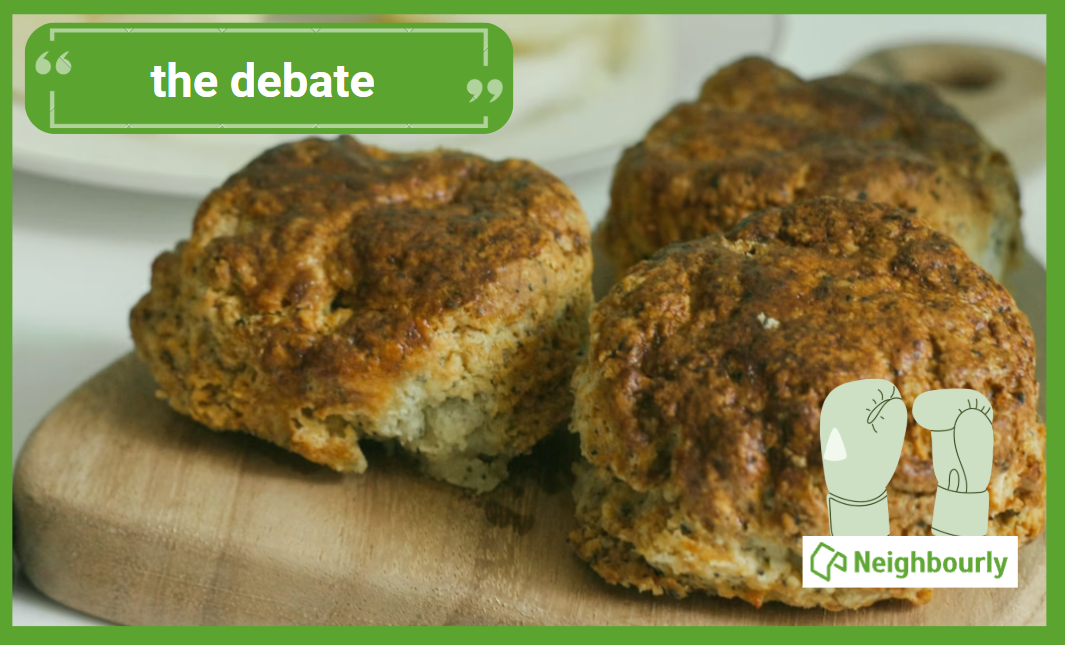
Poll: Does a savoury scone require cheese on top, or folded inside?
Help settle the great kiwi debate ... cheese on top, or folded inside?
-
76.3% Inside!
-
23.7% On top!
Mr Minit in Chartwell: Be wary
Hi all,
Just sharing my experience. I had the battery for my car key replaced in March 2025 at Mr. Minit in Chartwell. I was given a one‑year warranty, which seemed impressive at the time.
However, the battery stopped working early Mar 26. With the warranty card, I brought the key back to have it checked and replaced. What I didn’t realise was that the battery was *not* actually replaced. He only tested it with a meter. When I asked whether he had replaced the battery, he said “yes,” but that wasn’t true. He then said he had tested the battery level and there was no need to replace it. When I asked to see the meter, it showed the battery was in the green zone which means it was ok.
I was then advised that I might need to replace the entire key unit. I asked whether he had properly troubleshot the issue to confirm it was the battery and not the key itself. His reply was that he normally doesn’t do that, but I was a “special case.” That means, the warranty card was a misrepresentation and there was no real intention of replacing the battery when it was faulty.
After he finally replaced the battery with a new one, my key worked perfectly again.
**Lesson learned:**
Make sure you take a photo of your warranty card. I feel like the warranty is mostly for show — if I had lost it, I would have been charged another $20+ for a battery. Worst still, I would have to pay more to change the key unit unnecessarily.
Make sure you witness that they replace your old battery with a new one if it's still under warranty.
Got more greens than you know what to do with? 🥦🌱🥕
Whether it’s a courgette takeover or a feijoa frenzy, don’t let those garden gems go to waste!
Our suggestion to you: Did you know you can grate and freeze excess courgettes to use in chocolate cake later? It sounds a bit dodgy, but it makes the cake incredibly moist ... and hey, it counts as a serving of veg, right? 🍫
What’s your go-to move for a bumper harvest? Drop your best "glut" recipes or preservation hacks in the comments below! 👇
 Loading…