





Textile Fibres and Their Characteristics
We are passionate about fabrics and finding the right solutions for our customers. With over 110 years of experience in the textile industry we have compiled some of this knowledge and look forward to sharing it with you over the next year through our blog series – An Educational Yarn. Our first topic explores the different characteristics of textile fibres.
Textile fibres are natural or synthetic structures that can be spun into yarn. Yarns are then woven, knitted or bonded into fabric. The inherent characteristics of fibre properties directly relate to the performance and required care and maintenance of the finished fabric, therefore understanding fibres and yarns will in turn help you to understand the how to apply specific fabrics within your interior schemes.
Natural Fibres: Occurring in nature; which are of animal, vegetable/plant or mineral origin.
COTTON (Plant Origin)
• A strong fibre, even stronger when wet, cotton has good natural durability.
• Can be affected by mildew however a mildew resistant finish can be applied to reduce this issue.
• Generally has reasonable sunlight resistance but should be protected with a quality lining when used as a drapery and protected from direct sunlight when used as an upholstery.
• It is an absorbent fibre which means it can move with changing humidity levels.
• May shrink with laundering but this can be reduced through a finishing process on the fabric known as sanforising.
Sunlight resistance can be greatly reduced in acidic polluted conditions.
SILK (Animal origin; an animal fibre that comes from the silkworm. The silkworm creates its cocoon from very long silk fibres which are harvested from mulberry trees.)
• It is naturally fine in texture, and colours beautifully.
• Its biggest disadvantage in furnishing is its sensitivity to UV light degradation (direct and reflected). Due to its sensitivity, it should not be used in direct sunlight or even bright light.
• An absorbent fibre, it has the potential to move in humid environments.
• Silk is a relatively strong fibre and can withstand a certain amount of abrasion, particularly when used in conjunction with
• a backing fabric.
• Unrivalled in splendour and smoothness, silk is regarded the most exclusive of all natural fibres.
LINEN
Plant origin; derived from cellulose fibres that grow inside the stalks of the flax plant.
• As with cotton it is affected by acidic pollution.
• Can be affected by mildew which will likely cause the fibre to deteriorate over time.
• Considered to be the strongest of the natural fibres; if constructed for upholstery it is very durable, particularly when blended with up to 10% nylon.
• Is regarded as a luxury fibre because of its lustre and texture.
• It is an absorbent fibre which means it can move with changing humidity levels
• Linen has moderate sunlight resistance and should be protected by a quality lining when used as a drapery and protected from direct sunlight when used as an upholstery.
Keep reading: www.curtainclean.co.nz...


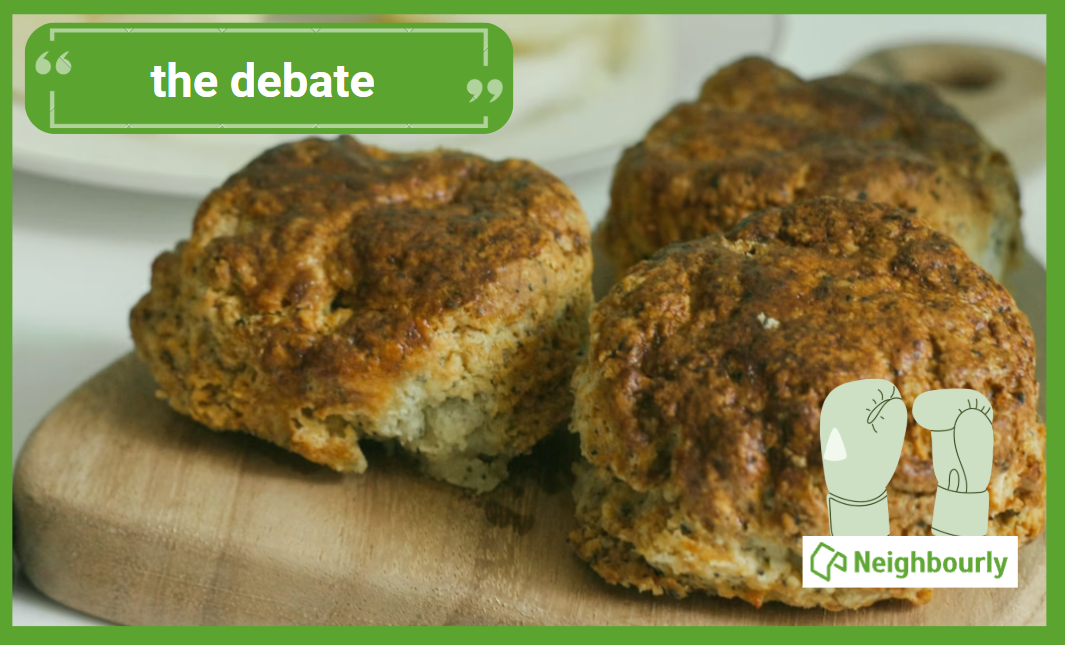
Poll: Does a savoury scone require cheese on top, or folded inside?
Help settle the great kiwi debate ... cheese on top, or folded inside?
-
76.1% Inside!
-
23.9% On top!
Mr Minit in Chartwell: Be wary
Hi all,
Just sharing my experience. I had the battery for my car key replaced in March 2025 at Mr. Minit in Chartwell. I was given a one‑year warranty, which seemed impressive at the time.
However, the battery stopped working early Mar 26. With the warranty card, I brought the key back to have it checked and replaced. What I didn’t realise was that the battery was *not* actually replaced. He only tested it with a meter. When I asked whether he had replaced the battery, he said “yes,” but that wasn’t true. He then said he had tested the battery level and there was no need to replace it. When I asked to see the meter, it showed the battery was in the green zone which means it was ok.
I was then advised that I might need to replace the entire key unit. I asked whether he had properly troubleshot the issue to confirm it was the battery and not the key itself. His reply was that he normally doesn’t do that, but I was a “special case.” That means, the warranty card was a misrepresentation and there was no real intention of replacing the battery when it was faulty.
After he finally replaced the battery with a new one, my key worked perfectly again.
**Lesson learned:**
Make sure you take a photo of your warranty card. I feel like the warranty is mostly for show — if I had lost it, I would have been charged another $20+ for a battery. Worst still, I would have to pay more to change the key unit unnecessarily.
Make sure you witness that they replace your old battery with a new one if it's still under warranty.
Got more greens than you know what to do with? 🥦🌱🥕
Whether it’s a courgette takeover or a feijoa frenzy, don’t let those garden gems go to waste!
Our suggestion to you: Did you know you can grate and freeze excess courgettes to use in chocolate cake later? It sounds a bit dodgy, but it makes the cake incredibly moist ... and hey, it counts as a serving of veg, right? 🍫
What’s your go-to move for a bumper harvest? Drop your best "glut" recipes or preservation hacks in the comments below! 👇

 Loading…