






Curtains in rentals
Curtains are essential for a warm, healthy home. Here's what to know as a renter to get the most out of your curtains.
Whether a green paisley swirl or a modern muted linen, curtains are essential for a healthy home. More important than the material is the way they’re installed.
When warm air hits cold glass, two things happen: the warm air escapes and the newly cooled air forms condensation on the window pane.
The best way of dealing with this is by keeping warm air away from the window with curtains and blinds, which creates a pocket of air between the window and the window covering.
Getting the most out of curtains:
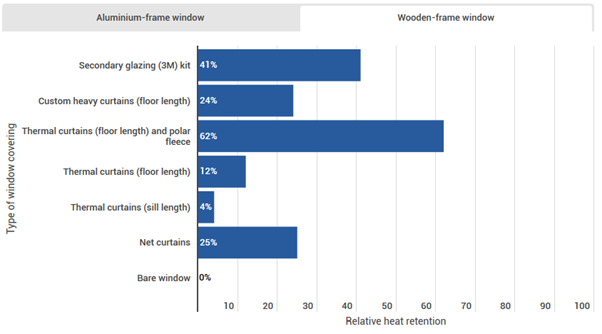
• Ideally, they should touch the floor and the track and curtain should be wider than the window frame. The most important part is to cover the whole window and create a seal against the cold air.
• They should fit tightly against the wall or window frame. Sometimes changing the type of track they’re hung on can close a gap between the window and the curtain. For example, rods and rails are often installed a few centimetres out from the window, which means there can be big gaps and no seal created.
• Pelmets can help to decrease heat loss, but won’t stop it completely.
• Curtains with two layers can increase heat retention, but how they’re fitted is most important.
• Net curtains, installed very close to the window and in contact with the window frame, can be effective.
• Blinds need to be installed snugly inside the window frame to be effective. If they sit out from the window, or if there are gaps between the blind and the frame, they’re not going to keep the heat in.
• Remember to open curtains every morning to make the most of the sun’s heat, and close them at sundown to keep that heat in.
Keep reading: www.curtainclean.co.nz...

Toon Trees 7221-1
Toon Trees which I photographed in 2015 from the top of a ladder so as to avoid various fences and other distractions lower down. The Toona sinensis species is native to Australia and Asia.


Some Choice News!
DOC is rolling out a new tool to help figure out what to tackle first when it comes to protecting our threatened species and the things putting them at risk.
Why does this matter? As Nikki Macdonald from The Post points out, we’re a country with around 4,400 threatened species. With limited time and funding, conservation has always meant making tough calls about what gets attention first.
For the first time, DOC has put real numbers around what it would take to do everything needed to properly safeguard our unique natural environment. The new BioInvest tool shows the scale of the challenge: 310,177 actions across 28,007 sites.
Now that we can see the full picture, it brings the big question into focus: how much do we, as Kiwis, truly value protecting nature — and what are we prepared to invest to make it happen?
We hope this brings a smile!

 Loading…