






No grounds to "keep secrets" from beneficiaries of Lake Horowhenua Trust
Lawyers acting in a Maori Land Court case spoke of difficulties in securing full and frank financial disclosure from Lake Horowhenua Trust.
Philip Taueki and Charles Rudd have filed an injunction with the Maori Land Court on the grounds the trust is not complying with its trust order.
At a hearing on 21 November last year lawyer Linda Thornton who acts for Charles Rudd said, "It is difficult for us at this point to conceive of a fair process that doesn't expose that information to us."
Judge Harvey agreed and said, "I cannot imagine where a trust of this kind would be involved in anything that must be kept secret, I don't understand that."
Mr Taueki’s lawyer Leo Watson said he understood, “all documents to be disclosed…with no exceptions.”
Lawyer for the former trustees Damien Stone argued that legal privilege and commercial sensitivity should be applied to determine, “what ought to be excluded and what should be disclosed.”
Judge Harvey said, “As I stress, Mr Stone, with a trust of this nature I would need to be persuaded very strongly that there could be anything that is secret from the beneficiaries of the trust.”
"Can I add that it's important for the former trustees own self-protection that they are forthcoming with their disclosures to you as to what activities they are involved with in a voluntary or paid capacity in connection with the lake."
He said it was, "really an issue of transparency to make sure that all relevant information including bank accounts are known."
Clinton Hemana who has been appointed sole responsible trustee of Lake Horowhenua Trust by Judge Harvey said, "There are four bank accounts, it is an older account so it’s not within the anti-money laundering system for ensuring the correct entity names."
"So, there is, if you like a nickname to the account known as the Lake Horowhenua Trust and there are four subsidiary accounts to the lead account."
In reference to at least $2.3 million Government funding provided by the Environment Ministry for lake restoration projects Mr Hemana said, "those projects may be being managed by co-funding partners such as Horowhenua District Council, so the funds might have been received...and then managed by the Council."
Mr Hemana was appointed sole responsible trustee by Judge Harvey after the Maori Appellate Court quashed the appointment of former trustees due to a conflict of interest by Judge Doogan who appointed them.
Judge Doogan formerly acted for the Muaūpoko Tribal Authority; the judge’s instructing solicitor at that time Matthew Sword had become chair of the Lake Horowhenua Trust and persons active in the Muaūpoko Tribal Authority were seeking appointment as trustees of the Lake Horowhenua Trust.
The case continues.

Share your favourite main crop potato recipe and win a copy of our mag!
Love potatoes? We will give away free copies of the May 2026 issue to readers whose potato recipes are used in our magazine. To be in the running, make sure you email your family's favourite way to enjoy potatoes: mailbox@nzgardener.co.nz, by March 1, 2026.

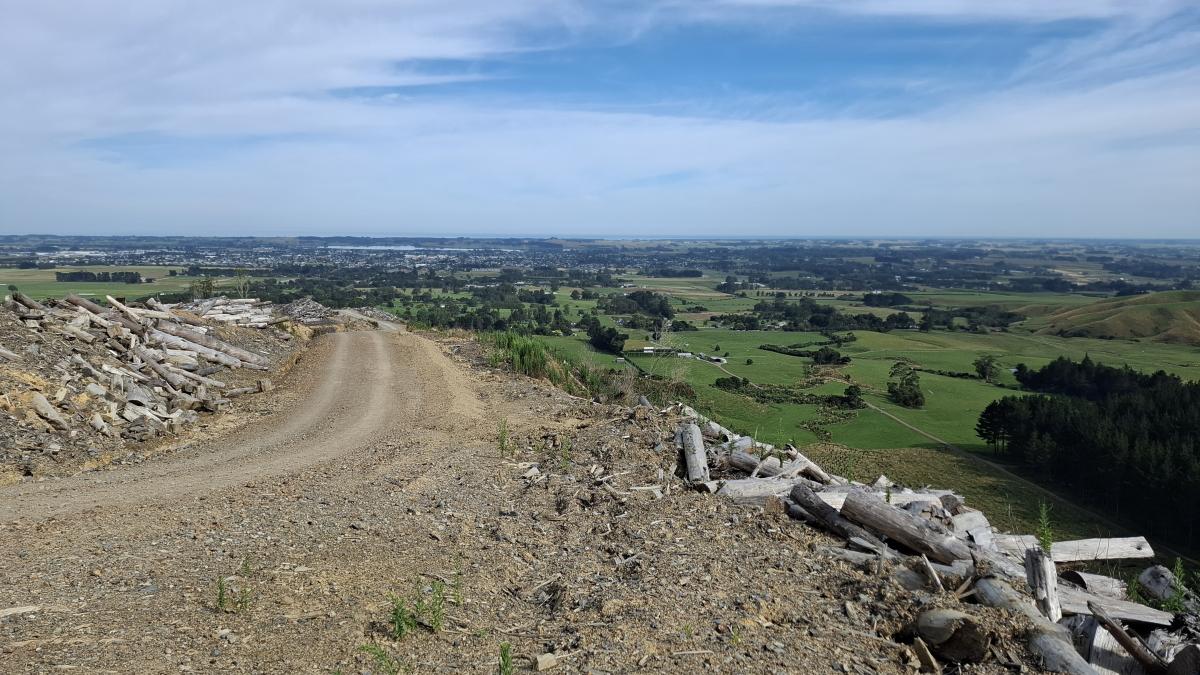
SLASH BESIDE THE TRACK UP TO TRIG
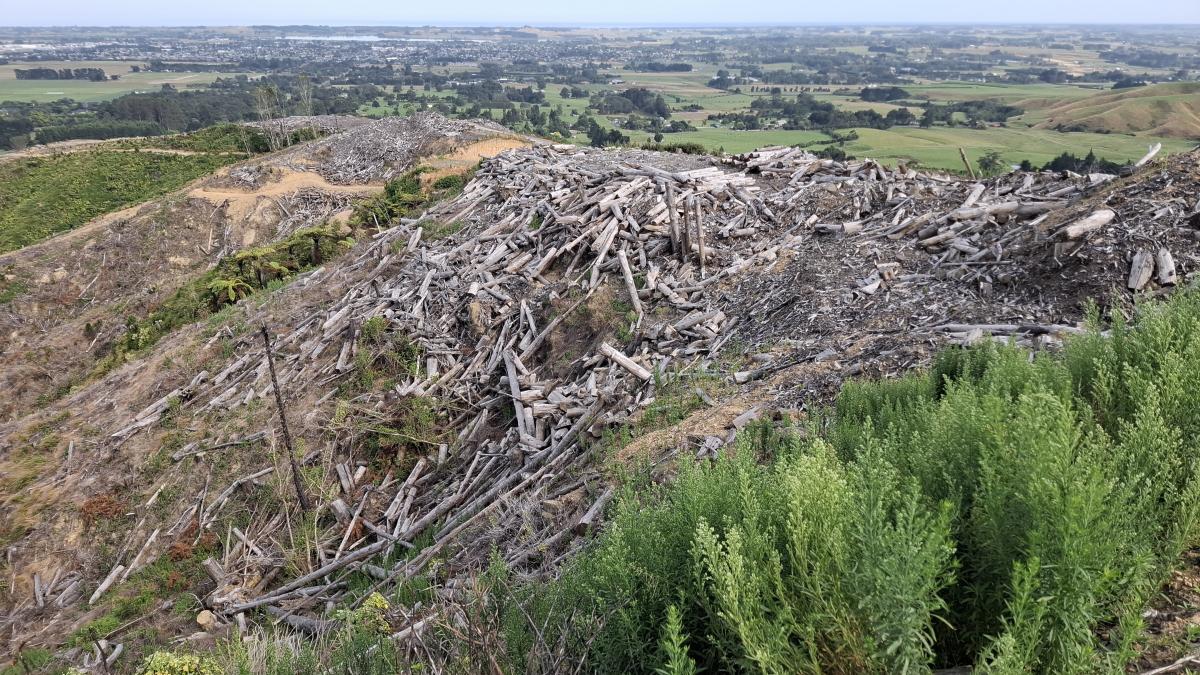
I question the wisdom and the morality of an industry which creates so much waste, waste which is also a cause of widespread and devastating damage. So, I searched the internet for potential uses of slash. It was easy to find.
I recommend a visit to nzbioforestry.co.nz. I quote from the website:
OUR SOLUTION:
NZ Bio Forestry proposes to develop a sustainable renewable forestry model that increases the economic value of the NZ- Aotearoa forestry sector, simply by integrating bio-technologies augmenting the forestry, wood manufacturing, and petrochemistry industries into one model.
Specifically, our strategy is to utilise the whole tree and convert the tree’s sugars into bioenergy, biomaterials, and biochemicals. This means using slash, off cuts, pruning, and wood waste to produce biofuel via bio pellets and biochemicals. It means optimising logs through the whole process….logging, manufacturing freighting, and refining process to serve the many Asia-Pacific markets with high-value products….not just exporting raw logs to one or two large dominant markets! (End of quote)
NZ Bio Forestry then contrasts the financial return from the present exports of raw logs with the potential return from utilising the WHOLE TREE.
In US dollars, the return from exporting logs is between $50 - $140 per log.
Using the whole tree including the slash and other waste for wood processing would return $200 - $800 per tree, and,
Using the bio-refinery process to convert the wood waste into fossil-free biochemicals would return $2,500 - $11,200 per tree.
I can’t help but conclude that our current focus on exporting logs is a pitiful failure of industry and government policy compared with the potential benefits of processing THE WHOLE TREE. And to complete the argument, this not just theory. In Scandinavia, SCA, which owns Europe’s largest private forest with 2.7 million hectares, has built a well-invested value chain that maximises the value of each individual tree and all of the forestry’s resources.
A SUMMARY OF POTENTIAL ADDITIONAL PRODUCTS:
Wood Pellets and Chips: Slash can be collected, dried, and processed into hog fuel or wood pellets for use in industrial boilers, as a replacement for coal, to generate heat and electricity.
Biofuel Production: Research is underway to convert forest residues into marine biofuel to help decarbonize the shipping sector.
Gasification: Advanced, small-scale, on-site processing plants can turn slash into renewable energy products like bio-oil, ethanol, and hydrogen.
Biochemicals: Specialized refineries can convert woody waste into sustainable alternatives to plastics, chemicals, and industrial products.
WAKE UP Aotearoa, New Zealand!!!

🧩😏 Riddle me this, Neighbours…
I am an odd number. Take away a letter and I become even. What number am I?
Do you think you know the answer?
Want to stop seeing these in your newsfeed? No worries! Simply head here and click once on the Following button.

 Loading…