






Secret meetings to keep Levin landfill open
MuaUpoko are private owners of the bed of Lake Horowhenua and Hokio Stream but have been excluded by Horowhenua District Council from consultation over Levin's infamous landfill in a secret deal that could see the tip remain open for another 35 years
Instead Council's chief executive David Clapperton initiated meetings with Environment Court applicant Horowhenua Environmental Kaitiaki Association (HEKA) and parties to the application including Ngati Raukawa hapu Ngati Pareraukawa to ensure the landfill can stay open.
A draft copy of a press release prepared by the Council states both HEKA and Pareraukawa have agreed to end their Environment Court appeal over odour and leachate concerns once the agreement is signed.
Tamarangi hapu representative Vivienne Taueki of MuaUpoko Co-operative Society said the Council, “are aware of - but refuse to” consult with the MuaUpoko owners, “regarding serious adverse effects and consent from the owners for the discharge of contaminants onto our private land.”
She said Tamarangi do acknowledge Pareraukawa as being an affected party because Pareraukawa marae, Ngatokowaru, is close to the Levin landfill 4 km west of Levin on Hokio Beach Road but MuaUpoko hold mana whenua over the bed of Lake Horowhenua and Hokio Stream.
“This is acknowledged in the Lake Horowhenua Accord documents and was confirmed in the recent Muaupoko Priority Report released by the Waitangi Tribunal,” she said.
The 2017 MuaUpoko Priority Report defines mana whenua as, “customary rights and prestige and authority over land.”
She described the lack of acknowledgement by Mr Clapperton and the Council of the serious actual and potential adverse cultural effects caused by discharge of leachate into groundwater and surface water from the landfill to the ‘Tatana drain’ that enters Hokio stream, “of greatest concern.”
“The discharge of contaminants into the Hokio stream via surface water from the Tatana drain should be dealt with by a new resource consent application because there is no consent to discharge surface water.”
“Many of our hapu members are also private owners of the bed of the stream and assert that there is a requirement by Council to apply for consent for the discharge of contaminants by surface water to land which is the bed of the stream,” Ms Taueki said.
Council’s Long Term Plan 2018-2038 states, “A key negative effect…is the presence of both ground and airborne contaminants produced by the Landfill and their potential harm to the immediate environment. This effect is mitigated by strict adherence to Horizons Regional Council’s resource consent conditions. Council also facilitates a neighbourhood group and monitors the airborne effects associated with the Landfill.”

Share your favourite main crop potato recipe and win a copy of our mag!
Love potatoes? We will give away free copies of the May 2026 issue to readers whose potato recipes are used in our magazine. To be in the running, make sure you email your family's favourite way to enjoy potatoes: mailbox@nzgardener.co.nz, by March 1, 2026.

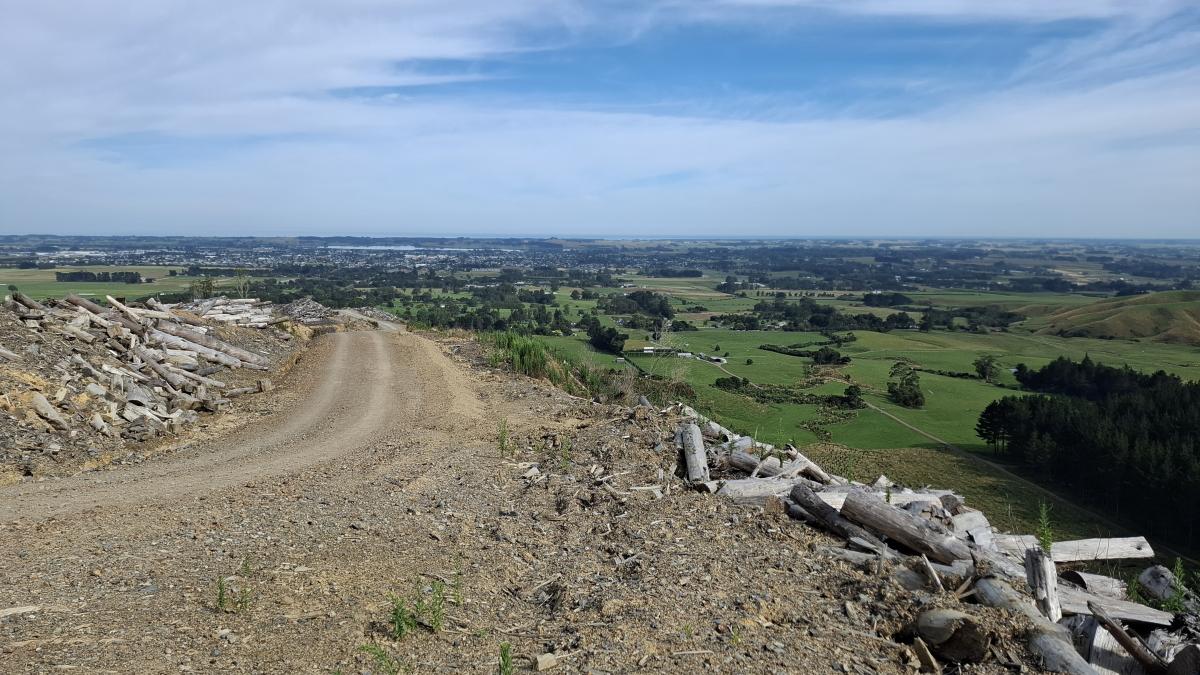
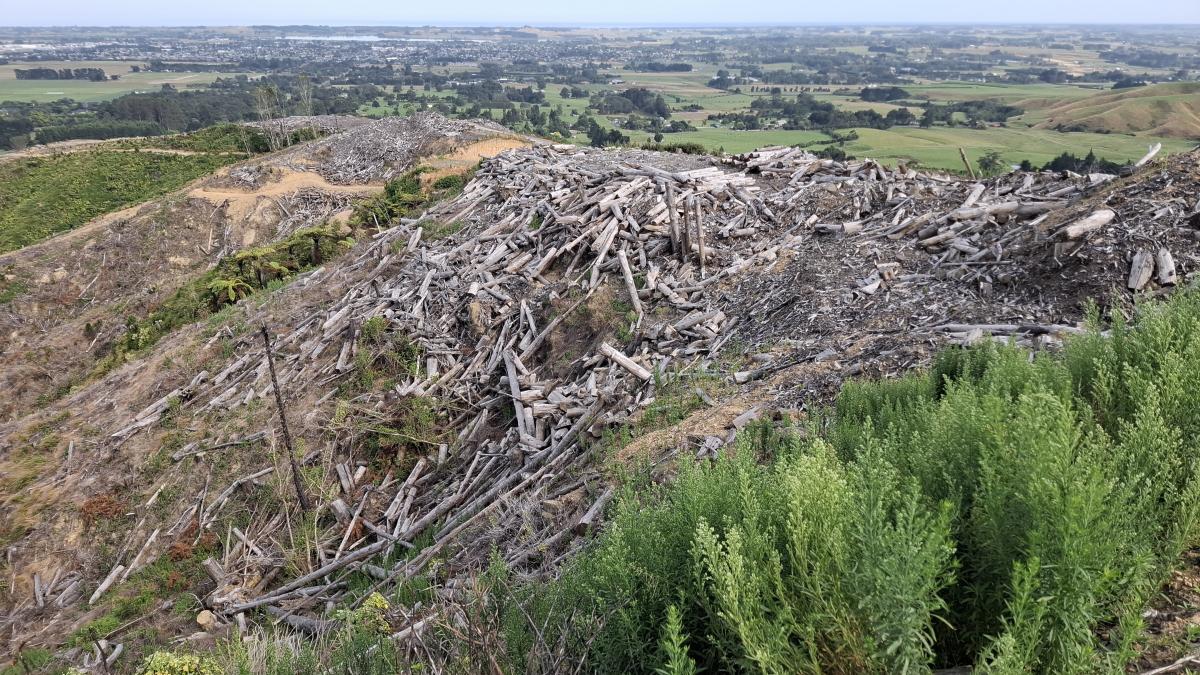
SLASH BESIDE THE TRACK UP TO TRIG
I question the wisdom and the morality of an industry which creates so much waste, waste which is also a cause of widespread and devastating damage. So, I searched the internet for potential uses of slash. It was easy to find.
I recommend a visit to nzbioforestry.co.nz. I quote from the website:
OUR SOLUTION:
NZ Bio Forestry proposes to develop a sustainable renewable forestry model that increases the economic value of the NZ- Aotearoa forestry sector, simply by integrating bio-technologies augmenting the forestry, wood manufacturing, and petrochemistry industries into one model.
Specifically, our strategy is to utilise the whole tree and convert the tree’s sugars into bioenergy, biomaterials, and biochemicals. This means using slash, off cuts, pruning, and wood waste to produce biofuel via bio pellets and biochemicals. It means optimising logs through the whole process….logging, manufacturing freighting, and refining process to serve the many Asia-Pacific markets with high-value products….not just exporting raw logs to one or two large dominant markets! (End of quote)
NZ Bio Forestry then contrasts the financial return from the present exports of raw logs with the potential return from utilising the WHOLE TREE.
In US dollars, the return from exporting logs is between $50 - $140 per log.
Using the whole tree including the slash and other waste for wood processing would return $200 - $800 per tree, and,
Using the bio-refinery process to convert the wood waste into fossil-free biochemicals would return $2,500 - $11,200 per tree.
I can’t help but conclude that our current focus on exporting logs is a pitiful failure of industry and government policy compared with the potential benefits of processing THE WHOLE TREE. And to complete the argument, this not just theory. In Scandinavia, SCA, which owns Europe’s largest private forest with 2.7 million hectares, has built a well-invested value chain that maximises the value of each individual tree and all of the forestry’s resources.
A SUMMARY OF POTENTIAL ADDITIONAL PRODUCTS:
Wood Pellets and Chips: Slash can be collected, dried, and processed into hog fuel or wood pellets for use in industrial boilers, as a replacement for coal, to generate heat and electricity.
Biofuel Production: Research is underway to convert forest residues into marine biofuel to help decarbonize the shipping sector.
Gasification: Advanced, small-scale, on-site processing plants can turn slash into renewable energy products like bio-oil, ethanol, and hydrogen.
Biochemicals: Specialized refineries can convert woody waste into sustainable alternatives to plastics, chemicals, and industrial products.
WAKE UP Aotearoa, New Zealand!!!

🧩😏 Riddle me this, Neighbours…
I am an odd number. Take away a letter and I become even. What number am I?
Do you think you know the answer?
Want to stop seeing these in your newsfeed? No worries! Simply head here and click once on the Following button.

 Loading…