






Storm water application "full of holes"
An unprecedented number of new sub-divisions won’t increase the amount of storm water being discharged to Lake Horowhenua, according to Horowhenua District Council.
This is just one of the claims made by the Council in its five year stormwater resource consent application for Levin that Lake Horowhenua advocate Anne Hunt says is long overdue and has, "so many holes in it that Horizons asked for a response to 19 queries."
"The Council resorts to its usual procrastination by providing a time line until October 2019" to answer the questions, said Ms Hunt who was recently awarded a Mayoral civic award for her volunteer role.
HDC says it needs until October to do monitoring and consult with tangata whenua before it can demonstrate how the storm water discharges, "does not contribute to further decline of water quality in Lake Horowhenua and will improve water quality."
Vivienne Taueki of MuaUpoko Cooperative Society (MCS) sent an email to Council's chief executive David Clapperton on 10 February requesting to be included in consultation because Council indicated in its application it would only consult with Muaupoko Tribal Authority and Te Runanga o Raukawa.
"Please be advised again, the Muaupoko Tribal Authority does not represent the interests of Tamarangi hapu and I would be grateful if you would adjust your records accordingly," said Ms Taueki who was also a recipient of the Mayoral civic award for her volunteer role working towards maintaining ancestral lands and waterways.
In the Finance, Audit and Risk sub-committee agenda for 26 February Council still had not included MCS as one of the groups it would consult with about the cultural effects of storm water on the waterways.
"It is intended to consult with MuaUpoko Tribal Authority, Kohuturoa Marae, Lake Horowhenua Trust, Ngati Pareraukawa" and the report states, "Council will be guided by iwi as to parties for consultation."
This is despite Mr Clapperton saying in a past interview the Council recognises the importance and standing of Muaupoko Cooperative Society. “This is evidenced in the many meetings and consultation hui which Council officers are involved in with members of the Cooperative."
Consenting authority Horizons has also asked HDC to provide information on, "how additional roads and public areas (managed by HDC) will not result in an increase in [storm water] flows" which HDC will answer in May 2019.
Horowhenua does not provide storm water services to private properties but services, "roads, footpaths, berms and hard-standing areas in any connected residential and commercial properties.”
"Council's approach is...for private property storm water to be managed on-property...The [land] developer shall provide a satisfactory system for the collection and containment of contaminates and disposal of surface water on site."

Share your favourite main crop potato recipe and win a copy of our mag!
Love potatoes? We will give away free copies of the May 2026 issue to readers whose potato recipes are used in our magazine. To be in the running, make sure you email your family's favourite way to enjoy potatoes: mailbox@nzgardener.co.nz, by March 1, 2026.

Scam Alert: Bank cold calls
ASB is warning customers about reports of cold calls from scammers claiming to be from ASB. These scammers are trying to obtain personal information, including usernames, dates of birth, and verification codes sent to your mobile phone.
🛡️ The "Caller Check" Test
If you get a call from someone claiming to be from ASB and you’re unsure, just ask them for a Caller Check. You will then be able to verify the call through the app.
Remember, banks will:
❌ Never ask for your banking passwords, PINs, or verification codes
❌ Never need to know your full credit card number – especially the CVC
❌ Never ask you to download software or remotely access your device
❌ Never ask you to purchase gift cards or transfer funds.
If you have received a phone call and think your account has been compromised, call ASB on 0800 ASB FRAUD (0800 272 372), or visit your local branch.


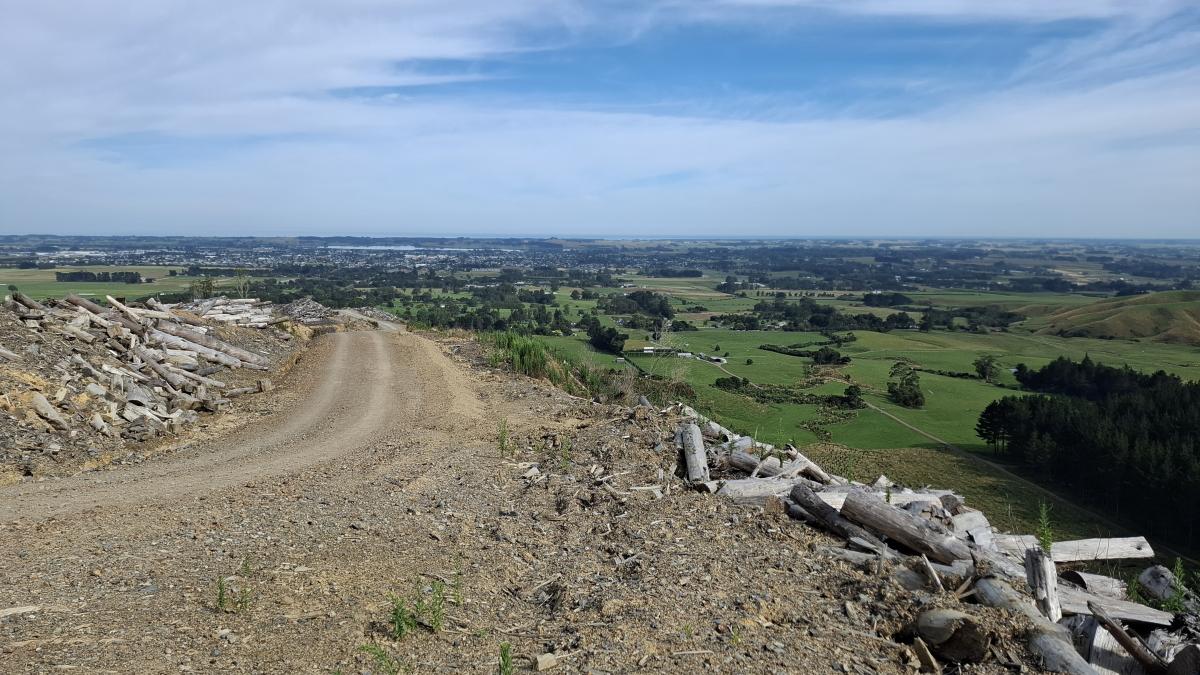
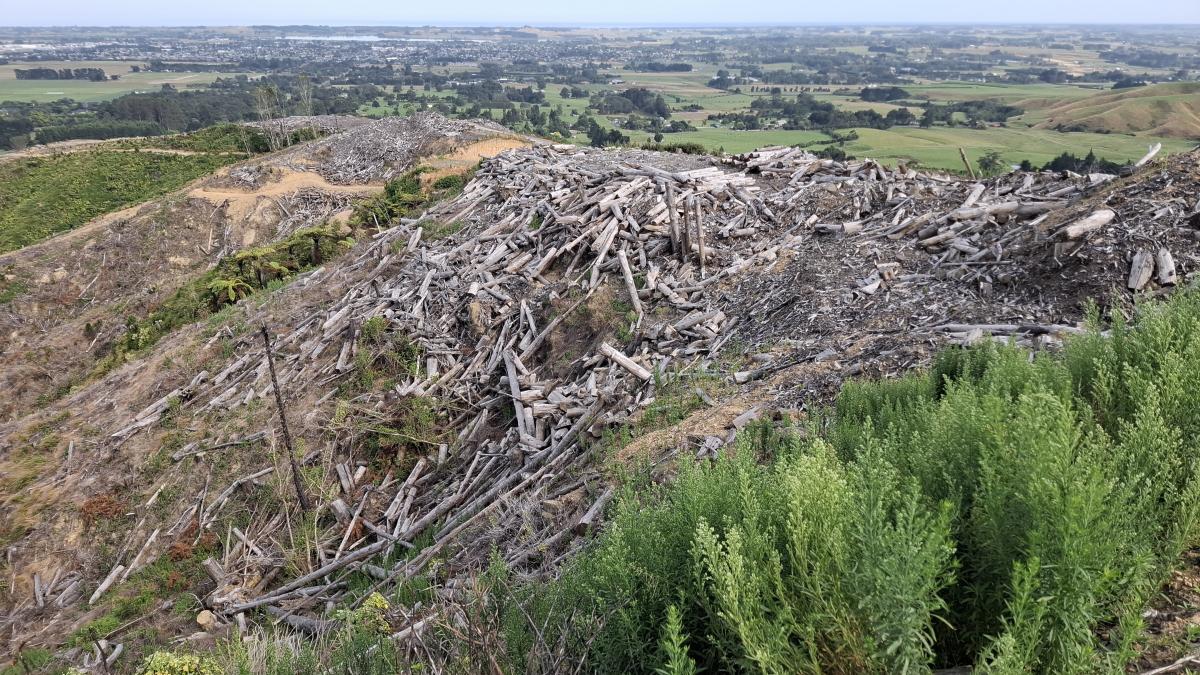
SLASH BESIDE THE TRACK UP TO TRIG
I question the wisdom and the morality of an industry which creates so much waste, waste which is also a cause of widespread and devastating damage. So, I searched the internet for potential uses of slash. It was easy to find.
I recommend a visit to nzbioforestry.co.nz. I quote from the website:
OUR SOLUTION:
NZ Bio Forestry proposes to develop a sustainable renewable forestry model that increases the economic value of the NZ- Aotearoa forestry sector, simply by integrating bio-technologies augmenting the forestry, wood manufacturing, and petrochemistry industries into one model.
Specifically, our strategy is to utilise the whole tree and convert the tree’s sugars into bioenergy, biomaterials, and biochemicals. This means using slash, off cuts, pruning, and wood waste to produce biofuel via bio pellets and biochemicals. It means optimising logs through the whole process….logging, manufacturing freighting, and refining process to serve the many Asia-Pacific markets with high-value products….not just exporting raw logs to one or two large dominant markets! (End of quote)
NZ Bio Forestry then contrasts the financial return from the present exports of raw logs with the potential return from utilising the WHOLE TREE.
In US dollars, the return from exporting logs is between $50 - $140 per log.
Using the whole tree including the slash and other waste for wood processing would return $200 - $800 per tree, and,
Using the bio-refinery process to convert the wood waste into fossil-free biochemicals would return $2,500 - $11,200 per tree.
I can’t help but conclude that our current focus on exporting logs is a pitiful failure of industry and government policy compared with the potential benefits of processing THE WHOLE TREE. And to complete the argument, this not just theory. In Scandinavia, SCA, which owns Europe’s largest private forest with 2.7 million hectares, has built a well-invested value chain that maximises the value of each individual tree and all of the forestry’s resources.
A SUMMARY OF POTENTIAL ADDITIONAL PRODUCTS:
Wood Pellets and Chips: Slash can be collected, dried, and processed into hog fuel or wood pellets for use in industrial boilers, as a replacement for coal, to generate heat and electricity.
Biofuel Production: Research is underway to convert forest residues into marine biofuel to help decarbonize the shipping sector.
Gasification: Advanced, small-scale, on-site processing plants can turn slash into renewable energy products like bio-oil, ethanol, and hydrogen.
Biochemicals: Specialized refineries can convert woody waste into sustainable alternatives to plastics, chemicals, and industrial products.
WAKE UP Aotearoa, New Zealand!!!
 Loading…