






Land, the deputy mayor and Council
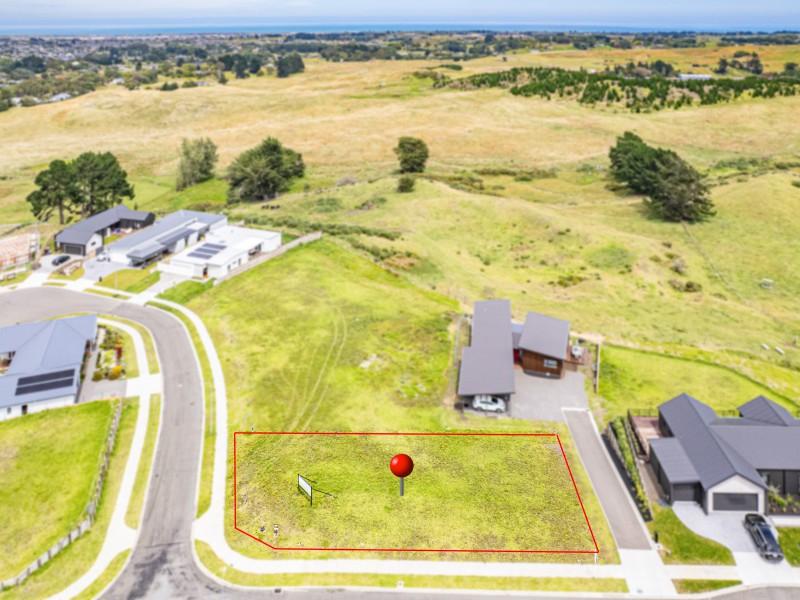
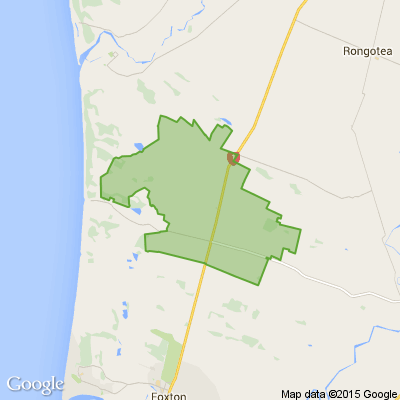
Horowhenua District Council failed to notify property valuations company Quotable Value of the correct physical address for 2.7 hectares of land in Levin purchased by deputy mayor Wayne Bishop's land and property development company.
When asked why the Council stated the 2.7 hectares purchased by Wayne Bishop Investments Ltd was in "5 Bush Street", Levin when the QV database listed the 2.7 hectares as "Cambridge Street" Council's group manager corporate services Mark Lester said, "when the error was later picked up in our system and correctly numbered as 5 Bush Street Levin, it looks as though QV had not been notified of the situation to reflect this."
Mr Lester explained the error had occurred after a sub division in 1985 when the 2.7 hectare lot was created, "there was no number allocation just the street reference attached" to the parent lot of the 2.7 hectares situated at 56-62 Cambridge Street.
Wayne Bishop Investment Ltd purchased the 2.7 hectare block on 2 November, 2018 the same day he also purchased its parent lot situated at 56-62 Cambridge Street South which has a rateable value of $480,000.
QV updated its own records after receiving the correct information.
Local authorities are required to keep and maintain a rating information database. To keep this information up to date, valuations must be reviewed at least once every three years.
The 2.7 hectares was sub-divided by the previous owners, formerly known as Colyer Mair Assets Ltd before a change name to Lowe Corporation Pacific Ltd, and has a rateable value of $360,000.
The 2.7 hecatre lot purchased by Mr Bishop's company is beside land earmarked for transfer to the Horowhenua New Zealand Trust. All six trustees are self-appointed former Economic Development Board (EDB) members. Cr Bishop was deputy chair of the EDB.
Mr Lester said as at 20 December 2018, “no land has been transferred or sold to the Horowhenua New Zealand Trust.”

Share your favourite main crop potato recipe and win a copy of our mag!
Love potatoes? We will give away free copies of the May 2026 issue to readers whose potato recipes are used in our magazine. To be in the running, make sure you email your family's favourite way to enjoy potatoes: mailbox@nzgardener.co.nz, by March 1, 2026.

Scam Alert: Bank cold calls
ASB is warning customers about reports of cold calls from scammers claiming to be from ASB. These scammers are trying to obtain personal information, including usernames, dates of birth, and verification codes sent to your mobile phone.
🛡️ The "Caller Check" Test
If you get a call from someone claiming to be from ASB and you’re unsure, just ask them for a Caller Check. You will then be able to verify the call through the app.
Remember, banks will:
❌ Never ask for your banking passwords, PINs, or verification codes
❌ Never need to know your full credit card number – especially the CVC
❌ Never ask you to download software or remotely access your device
❌ Never ask you to purchase gift cards or transfer funds.
If you have received a phone call and think your account has been compromised, call ASB on 0800 ASB FRAUD (0800 272 372), or visit your local branch.

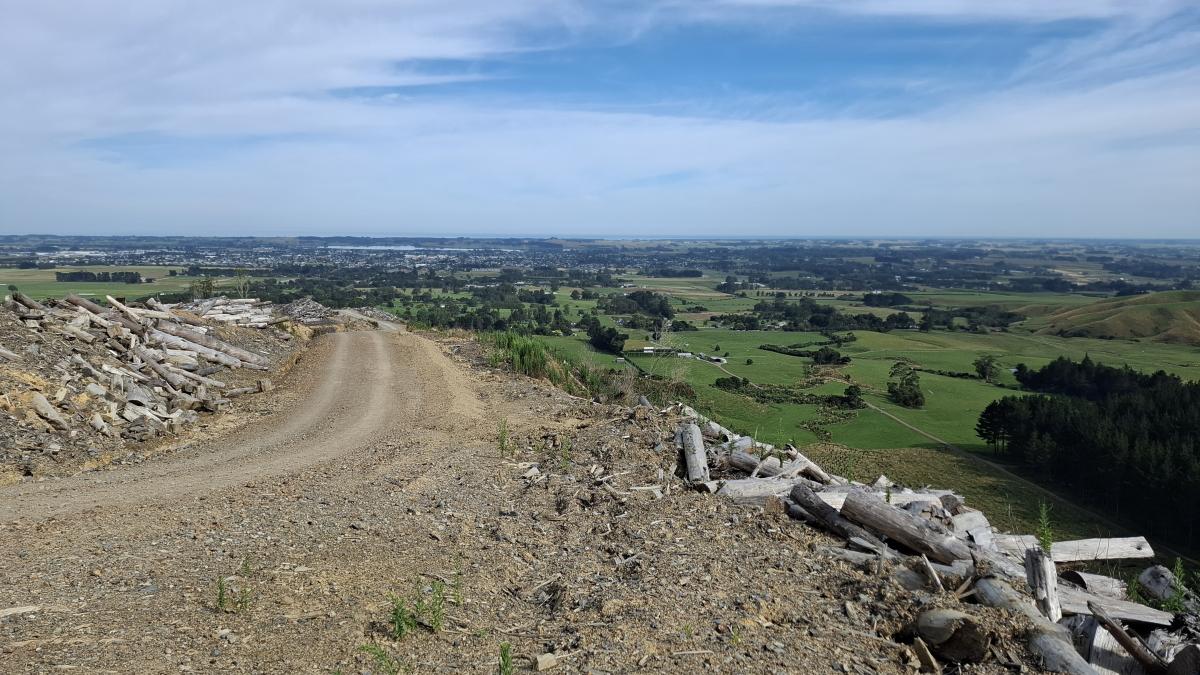
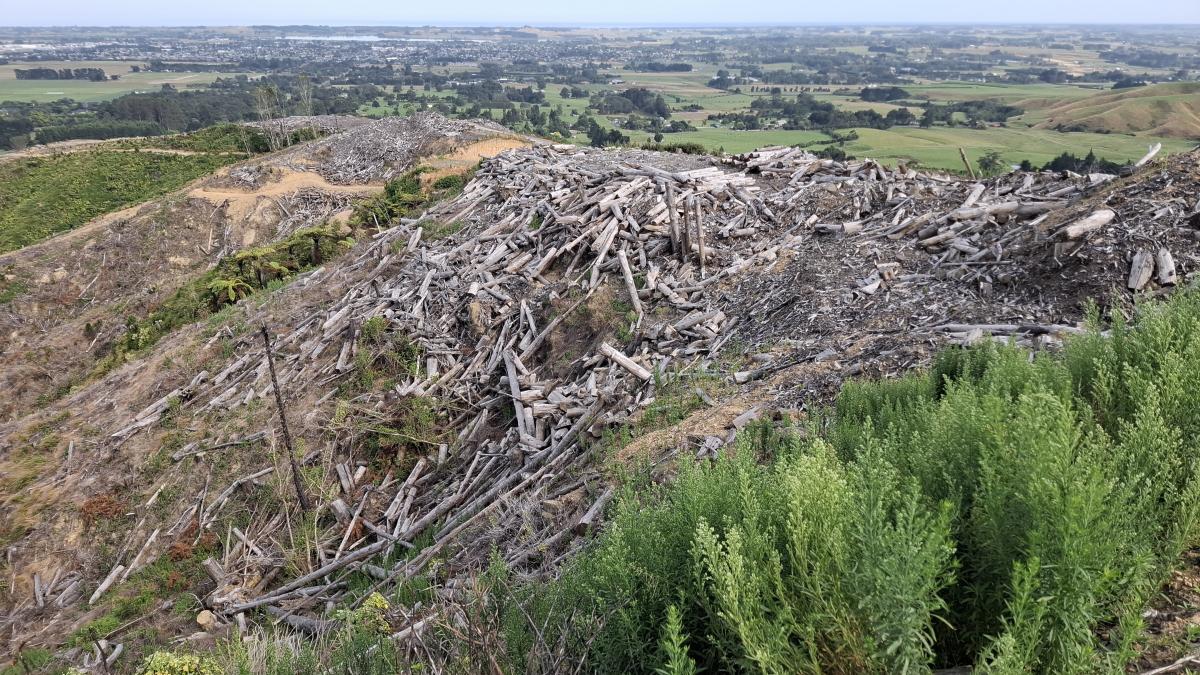
SLASH BESIDE THE TRACK UP TO TRIG
I question the wisdom and the morality of an industry which creates so much waste, waste which is also a cause of widespread and devastating damage. So, I searched the internet for potential uses of slash. It was easy to find.
I recommend a visit to nzbioforestry.co.nz. I quote from the website:
OUR SOLUTION:
NZ Bio Forestry proposes to develop a sustainable renewable forestry model that increases the economic value of the NZ- Aotearoa forestry sector, simply by integrating bio-technologies augmenting the forestry, wood manufacturing, and petrochemistry industries into one model.
Specifically, our strategy is to utilise the whole tree and convert the tree’s sugars into bioenergy, biomaterials, and biochemicals. This means using slash, off cuts, pruning, and wood waste to produce biofuel via bio pellets and biochemicals. It means optimising logs through the whole process….logging, manufacturing freighting, and refining process to serve the many Asia-Pacific markets with high-value products….not just exporting raw logs to one or two large dominant markets! (End of quote)
NZ Bio Forestry then contrasts the financial return from the present exports of raw logs with the potential return from utilising the WHOLE TREE.
In US dollars, the return from exporting logs is between $50 - $140 per log.
Using the whole tree including the slash and other waste for wood processing would return $200 - $800 per tree, and,
Using the bio-refinery process to convert the wood waste into fossil-free biochemicals would return $2,500 - $11,200 per tree.
I can’t help but conclude that our current focus on exporting logs is a pitiful failure of industry and government policy compared with the potential benefits of processing THE WHOLE TREE. And to complete the argument, this not just theory. In Scandinavia, SCA, which owns Europe’s largest private forest with 2.7 million hectares, has built a well-invested value chain that maximises the value of each individual tree and all of the forestry’s resources.
A SUMMARY OF POTENTIAL ADDITIONAL PRODUCTS:
Wood Pellets and Chips: Slash can be collected, dried, and processed into hog fuel or wood pellets for use in industrial boilers, as a replacement for coal, to generate heat and electricity.
Biofuel Production: Research is underway to convert forest residues into marine biofuel to help decarbonize the shipping sector.
Gasification: Advanced, small-scale, on-site processing plants can turn slash into renewable energy products like bio-oil, ethanol, and hydrogen.
Biochemicals: Specialized refineries can convert woody waste into sustainable alternatives to plastics, chemicals, and industrial products.
WAKE UP Aotearoa, New Zealand!!!
 Loading…