






Economic disparity at the end of a relationship
How might this impact you?
As much as we like to think we are living in the modern day, there are still a large number of relationships that follow the more ‘traditional’ practice of having one party act as the ‘homemaker’, while the other acts as the ‘breadwinner’. If the relationship breaks up, economic disparity is likely to be an issue.
With the divorce rate in New Zealand sitting at around 50%, chances are you have friends and family members who have structured their relationship in this more traditional sense and have now separated. The result is often that the ‘homemaker’ is left in a worse position financially because they have been out of the workforce for a long time and will struggle to get back into their career. The breadwinner, meanwhile, who could focus on their career during the relationship, is now earning at their full potential. This is economic disparity – one party is advantaged over the other.
One of the principles of the Property (Relationships) Act 1976 (PRA) is that a de facto relationship, civil union or marriage is a partnership of equals and that financial and non-financial contributions to that relationship are equal; the homemaker’s contributions are equal to the breadwinner’s. There is also a presumption of equal sharing of relationship property; but what about the earning potential of one party over the other? If that earning potential has increased during the relationship, should that be considered an asset of the relationship or relationship property?
Can we ‘fix’ disparity?
Section 15 of the PRA allows for one party to be compensated if the income and living standards of the other party are likely to be significantly higher due to the ‘division of functions’ within the relationship – the role of breadwinner and homemaker.
Parliament acknowledged that an equal division of relationship property doesn’t always achieve fairness if one party is able to walk away with not only half the assets, but also a considerable income-earning ability, while the other has foregone theirs and supported the breadwinner in the process. While statistically the party left worse off after separation is almost always female, as the Prime Minister, Jacinda Ardern and her partner, Clarke Gayford have recently shown us, women can be breadwinners too and economic disparity can affect men.
Same-sex couples can also be vulnerable to economic disparity, which can arise in any relationship where one party has been able to progress their career while the other looks after the home.
The Law Commission recently reported that s15 has had limited success in achieving its objective. It found that sharing property equally doesn’t always result in an equal outcome. Following a separation, on average, mothers who are caring for children have their household income reduced by 19% while men in employment increase their household income by 16%. Economic disparity and how to address the issues arising from the more ‘traditional’ relationship roles is a significant focus of the Law Commission in its current review of the PRA.
Recent boost to claims
Economic disparity claims have been given a boost by the recent Supreme Court decision of Scott v Williams. This case involved a couple who structured their relationship in the ‘traditional sense’. Ms Scott, who had accounting and law degrees, put her career on hold to look after the couple’s children while Mr Williams built up a successful legal practice. When they separated after more than 25 years of marriage their incomes were vastly different.
The court ultimately found (after eight years of court battles) that in a long-term relationship, where there is the traditional split of roles between homemaker and breadwinner, and a significant disparity in income, an economic disparity claim can be presumed and compensation should be paid. The amount of compensation is determined on a case-by-case basis. There is no set method for determining the compensation, which does make it difficult for parties to agree.
Since s15 made its way into law in 2001, there have been about 100 cases go through the courts on this point, with only around 40% having been successful. Economic disparity remains a difficult, complicated and emotional topic for separating couples to discuss and on which to agree.
If you have separated and believe economic disparity is an issue, please talk with us to discuss whether this is a claim that may affect you, and how you either negotiate or defend such a claim. A contracting out agreement (colloquially known as a ‘pre-nup’) may assist, if prepared properly from the outset. If you wish to achieve some level of certainty, it would pay to contact us.

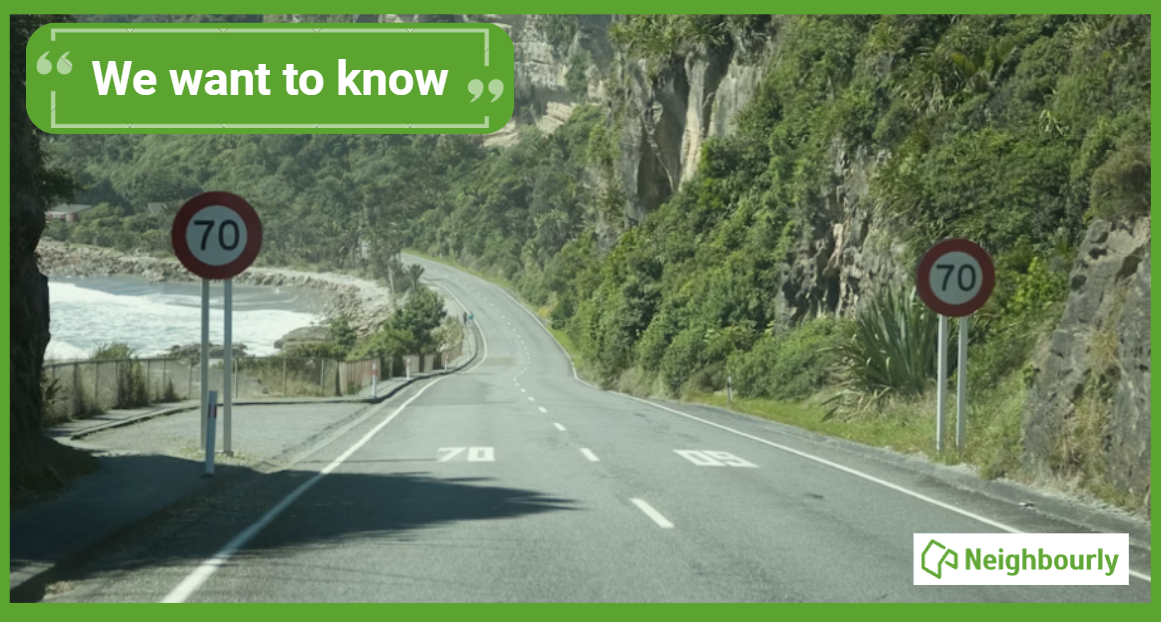
Poll: If we want to reduce speeding, what do you think actually changes driver behaviour? 🛻🚨🚓
In the Post's article on speeding penalties, the question is asked whether speeding fines are truly about road safety, or are they just a way to boost revenue for the Crown?
What do you think? Should speeding motorists receive speeding fines or demerit points?
-
36.5% The sting of a fine (Money talks!)
-
63.5% The threat of demerit points (Nobody wants to lose their license!)
Scam Alert: Bank cold calls
ASB is warning customers about reports of cold calls from scammers claiming to be from ASB. These scammers are trying to obtain personal information, including usernames, dates of birth, and verification codes sent to your mobile phone.
🛡️ The "Caller Check" Test
If you get a call from someone claiming to be from ASB and you’re unsure, just ask them for a Caller Check. You will then be able to verify the call through the app.
Remember, banks will:
❌ Never ask for your banking passwords, PINs, or verification codes
❌ Never need to know your full credit card number – especially the CVC
❌ Never ask you to download software or remotely access your device
❌ Never ask you to purchase gift cards or transfer funds.
If you have received a phone call and think your account has been compromised, call ASB on 0800 ASB FRAUD (0800 272 372), or visit your local branch.


Some Choice News!
DOC is rolling out a new tool to help figure out what to tackle first when it comes to protecting our threatened species and the things putting them at risk.
Why does this matter? As Nikki Macdonald from The Post points out, we’re a country with around 4,400 threatened species. With limited time and funding, conservation has always meant making tough calls about what gets attention first.
For the first time, DOC has put real numbers around what it would take to do everything needed to properly safeguard our unique natural environment. The new BioInvest tool shows the scale of the challenge: 310,177 actions across 28,007 sites.
Now that we can see the full picture, it brings the big question into focus: how much do we, as Kiwis, truly value protecting nature — and what are we prepared to invest to make it happen?
We hope this brings a smile!

 Loading…