





Jobless pilots becoming train drivers in Auckland
Hundreds of New Zealand pilots have been laid off since airlines were grounded during the global pandemic - and now a group are looking to the railways for employment. So far, 34 pilots have applied to switch wings for the tracks and become train drivers for the city's rail network.
Transdev operates Auckland's commuter rail service, and employs 200 train drivers in the city. Its managing director, Peter Lensink, said he was pleased to be able to offer employment to pilots, whose skills were ideal for driving trains. "I really feel for the pilots who are in this position and I'm really pleased we have an alternative and hope they will adapt to driving a train on a piece of metal instead of flying free up in the air," he said. "We only hire highly skilled people and airline pilots have got similarities to the skills and competencies required as a train driver."
Lensink said both the airline and rail sectors had a strong safety culture and required specific skills, including concentration. A qualified train driver earns just more than $40 an hour. "While it might be more exciting for some people to see Auckland from the air, I think it's even more exciting to see Auckland up close and unfolding in front of you," Lensink said. Although there is one helicopter pilot among Auckland's train drivers, Lensink said this was the first time pilots were being recruited.
"We've got a great opportunity because we are growing and gearing up here in Auckland for the City Rail Link. That will double the amount of services here in four to five years time. We're therefore able to recruit a large number of train drivers for the future." He said there had been a lot of contact between leaders in the airline and railway sectors, including Air New Zealand. "Once the word is out and people see the link between the roles and opportunities the railways have, I expect to see more [pilots] coming into the recruitment process." Lensink said the pilots would go through "intense" recruitment scrutiny - including having eyesight tests - before training in June. Training will be held at the Wiri depot - a stone's throw from Auckland Airport.
========================================================

🧩😏 Riddle me this, Neighbours…
I am an odd number. Take away a letter and I become even. What number am I?
Do you think you know the answer?
Want to stop seeing these in your newsfeed? No worries! Simply head here and click once on the Following button.


Scam Alert: Bank cold calls
ASB is warning customers about reports of cold calls from scammers claiming to be from ASB. These scammers are trying to obtain personal information, including usernames, dates of birth, and verification codes sent to your mobile phone.
🛡️ The "Caller Check" Test
If you get a call from someone claiming to be from ASB and you’re unsure, just ask them for a Caller Check. You will then be able to verify the call through the app.
Remember, banks will:
❌ Never ask for your banking passwords, PINs, or verification codes
❌ Never need to know your full credit card number – especially the CVC
❌ Never ask you to download software or remotely access your device
❌ Never ask you to purchase gift cards or transfer funds.
If you have received a phone call and think your account has been compromised, call ASB on 0800 ASB FRAUD (0800 272 372), or visit your local branch.

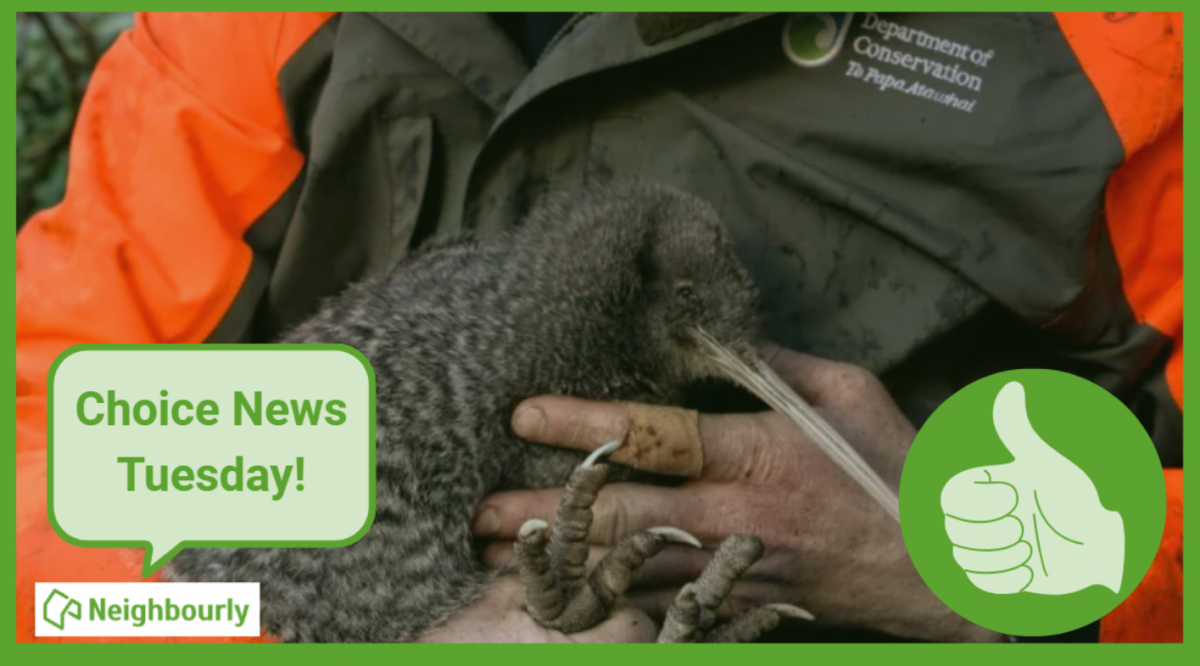
Some Choice News!
DOC is rolling out a new tool to help figure out what to tackle first when it comes to protecting our threatened species and the things putting them at risk.
Why does this matter? As Nikki Macdonald from The Post points out, we’re a country with around 4,400 threatened species. With limited time and funding, conservation has always meant making tough calls about what gets attention first.
For the first time, DOC has put real numbers around what it would take to do everything needed to properly safeguard our unique natural environment. The new BioInvest tool shows the scale of the challenge: 310,177 actions across 28,007 sites.
Now that we can see the full picture, it brings the big question into focus: how much do we, as Kiwis, truly value protecting nature — and what are we prepared to invest to make it happen?
We hope this brings a smile!
 Loading…