





Retirement: coming ready or not
One million Kiwis will hit 65 in the next decade. It’s a strange in-between: the end of work, the start of… what exactly?
Research has shown that New Zealand faces some persistent challenges when it comes to retirement readiness, says Jeff Ruscoe, AMP Managing Director. These hurdles often lead to feelings of being unprepared, particularly for those in their 50s.
Your money needs to keep up
========================
It’s well known that we’re simply not saving enough in New Zealand. That, coupled with the rising cost of living, means that building a substantial nest egg requires more focused effort and planning.
A less well-known, but significant, concern is the widespread lack of a clear plan for funding lifestyle in retirement. It’s one thing to have some savings. It’s another to know exactly how those savings will translate into a sustainable income. “Many Kiwis have no idea where to start with that. They’re unsure whether they’ve got enough savings or how to make it last,” says Ruscoe.
Sorted has recently launched its online Retirement Navigator tool. It’s a great start, says Ruscoe. “A calculator will often give you a scenario based on averages. Where we add value is by tailoring the advice to our customer’s individual scenario and creating something that works precisely for them. This gives our customers clarity so they can turn what they’ve saved into an income they can rely on.”
An alternative to leaving your money on idle
===================================
Retirement isn’t the finish line; it’s the beginning of keeping your money active and growing. Your money needs to keep up with inflation and generate an income that can serve your lifestyle goals.
Without advice, Kiwis can make mistakes, despite having saved diligently for decades. These mistakes often stem from a desire to “play it safe” or a lack of understanding about how money should behave once they say goodbye to a regular income.
Too often, for example, people cash out long-term growth investments such as KiwiSaver and park that money in term deposits, which rarely keep pace with inflation. “There’s a perception that we should become immensely conservative during retirement, but the timeframe for when they’ll need to spend their savings is often 20 years or more, giving Kiwis plenty of time to grow their wealth further,” says Ruscoe.
What about financial advice
======================
Many Kiwis who should get financial advice, don’t. Sometimes they think financial advice is something reserved for the wealthy or those right on the cusp of retirement.
“Whether you’re just starting your career, planning for a major life event, or nearing retirement, it’s always a good time to seek financial advice,” says Ruscoe. “There are no wrong answers to the ‘when’ question.”
Don’t fall into the trap of thinking you need to have a significant amount of wealth already accumulated to warrant advice. Advice is precisely what helps you build that wealth.
Navigating retirement challenges: why many Kiwis feel unprepared
=====================================================
While recent adjustments to KiwiSaver settings, such as increased contribution rates, are a positive step in the right direction, they won’t solve the problem entirely.
For many, historical under-saving, coupled with the rising cost of living, means that building a substantial nest egg requires more focused effort and strategic planning, especially with New Zealanders’ reliance on property, and that works best when coupled with financial advice, says Ruscoe.
Once Kiwis hit retirement, they face another issue, ready or not. That’s the widespread lack of a clear plan for funding lifestyle in retirement. It’s one thing to have some savings; it’s another to know exactly how those savings will translate into an ongoing income once they stop working.
It’s clear that there’s a significant gap between the aspiration for a comfortable retirement and the practical planning required to achieve it.
The power of professional financial advice: it pays to be prepared
The 2020 Money and You Survey found that New Zealanders who received professional financial advice had about 52% more in their KiwiSaver than those who didn’t. That advice led to:
Higher investment returns: beyond simply having more saved, those who sought advice also reported enjoying higher investment returns on their savings.
Greater satisfaction and wellbeing: it’s not just about the numbers. The survey also found that advised Kiwis experienced higher satisfaction with their KiwiSaver and better overall wellbeing. Having a clear plan and understanding of your financial situation, guided by an expert, can significantly alleviate this financial stress, leading to greater confidence and peace of mind.
“[This research] underscores the immense value that a conversation with a qualified financial adviser can bring to your financial future,” says Ruscoe.
AMP’s retirement advice service
===========================
Financial advice is often readily available for employees, and KiwiSaver members still growing their savings, whether through Employee Assistance Programmes (EAPs) or complimentary advice from KiwiSaver providers. Numerous online calculators also support those still growing their money.
When it comes to retirement and spending down your savings, there are far fewer opportunities to access financial advice. That’s why AMP has launched its new retirement advice service.
The service is designed to help Kiwis build a comprehensive plan that fits their life. “It’s not a generic template, it’s a personalised plan built around your specific circumstances, your desired retirement lifestyle and your financial goals,” says Ruscoe. “[The] service is designed to demystify the process and offer tailored support, keeping your money working, growing, and paying you for years to come.”
The goal is to empower Kiwis using AMP’s service to stop second-guessing their spending and feel confident using the nest egg they’ve built, so they can enjoy their after-work years with peace of mind and spend with confidence.
=====================================================

Poll: Should we ditch daylight saving? 🕰️
First introduced in New Zealand in 1927 with the passing of the Summer Time Act, it's what we know as 'Daylight Saving' and this year it ends on the first Sunday in April.
While we do get to sleep in this time around, some people would like to scrap the clock tinkering for good.
And why? Some evidence suggests the time changes are bad for our health as they mess with sleep patterns leading to short-term fatigue and affecting mood. Meanwhile the hour change is frustrating for farmers and a nightmare for getting the littlies to sleep. But what's your take?

-
39.3% Yes - get rid of the clock changes
-
58.7% No, I enjoy it
-
2% Other - I'll share below

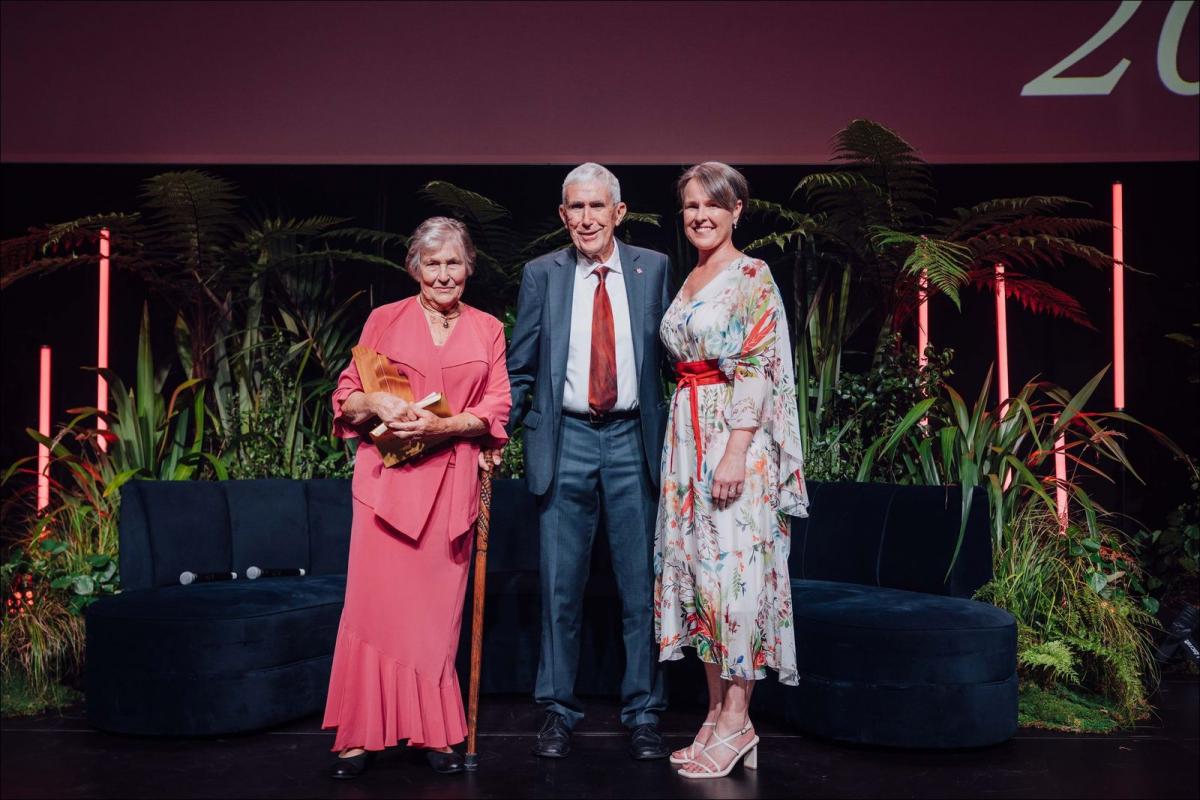
Alan and Hazel Kerr share Senior New Zealander of the Year Award 2026
Dr Alan and Hazel Kerr describe themselves as ‘just ordinary old Kiwis’, despite being named as the 2026 Ryman Healthcare Senior New Zealanders of the Year Te Mātāpuputu o te Tau.
The amazing couple prompted a standing ovation at a star-studded Auckland event which recognised their tireless efforts, with Alan travelling to and from Gaza and the West Bank 40 times to help children over 20 years, and Hazel travelling 20 times.
Click read more to find out more.
Poll: Are you still heading to your local for your caffeine fix, or has the $$ changed your habits? ☕
Auckland has a thriving cafe culture, but with costs climbing, that culture is under pressure. We’ve seen the headlines about recent closures across the country, and it’s a tough pill to swallow along with a $6+ coffee.
We all want our favourite spots to stay open, but we also have to balance our own budgets ⚖️
We want to know: How are you handling the "coffee math" in 2026? Are you still heading to your local for a chat and a caffeine fix, or has the cost of living changed your habits?
Keen to read more about "coffee math"? The Post has you covered.

-
42.9% I avoid spending money on coffee
-
40.9% I still indulge at my local cafe
-
16.2% Irrelevant - coffee is not for me
 Loading…