





Food shock: Prices soar in June as fruit and veges follow butter and cheese spike
New stats show food prices rose 4.6% in the year to June – the largest rate of increase since late 2023.
That was up from a 4.4% increase in the year to May, Stats NZ’s latest Selected Price Indexes show.
Rising prices for fruit and vegetables in June have added to already elevated pricing for dairy products to push costs higher.
Higher prices for the fruit and vegetables group and the grocery foods group drove the increase in food prices for June 2025, Stats NZ said.
They were up 5% and 0.8% respectively for the month.
“More expensive tomatoes, capsicum, and broccoli drove the increase for fruit and vegetables, while higher prices for boxed chocolates and eggs drove the increase for grocery foods,” Stats NZ said.
Meanwhile, dairy and meat prices remain elevated, reflecting strong export prices on global markets.
“Dairy products continue to drive the higher cost in food prices,” said prices and deflators spokeswoman Nicola Growden.
==============================
The average milk price was $4.57 for 2 litres, up 14.3% annually. Butter was $8.60 per 500g, up 46.5% annually, and cheese was $13.04 for a 1kg block, up 30% annually.
===============================
“Butter prices are nearly five dollars more expensive than 10 years ago, an increase of over 120%,” Growden said.
The increase in the meat, poultry, and fish group was driven by higher prices for beef steak and beef mince, up 22.3% and 15.6%, respectively.
“The average cost for 1kg of beef mince was $21.73 in June 2025, up from $18.80 a year ago,” Growden said.
The increase in food prices was higher than expected, said ASB senior economist Mark Smith.
Meanwhile, rental prices continue to moderate.
Rent prices increased 2.6% in the 12 months to June 2025, following a 2.8% rise in the year to May.
The 2.6% increase is the lowest lift for rent prices since October 2011, when they rose 2.5%, Stats NZ said.
On a monthly basis, rents were flat, rising just 0.1%.
ASB’s Smith is forecasting it to land at an annual rate of 2.8% and rising above 3% in the third quarter.
That would be above the Reserve Bank’s target range of 1-3%. Elevated inflation concerns prompted the RBNZ to pause its cycle of interest rate cuts last week.
But Smith noted that there were good reasons to expect inflation to move lower by the end of the year and into 2026.
Reduced demand due to weak economic conditions should be disinflationary forces for the service sector and other non-tradable parts of the economy.
“We expect a further 25bp OCR cut in August but acknowledge that weak activity data and the downward skew to global risks could see a sub 3% OCR emerge by year-end,” he said.
But this outlook was not without risk, Smith said.
There was a possibility that the uptick in inflation proved to be more persistent than transitory, “providing an unwelcome lift to inflation expectations that central banks have worked arduously to re-anchor post-Covid”.
==================================================

Poll: Should we ditch daylight saving? 🕰️
First introduced in New Zealand in 1927 with the passing of the Summer Time Act, it's what we know as 'Daylight Saving' and this year it ends on the first Sunday in April.
While we do get to sleep in this time around, some people would like to scrap the clock tinkering for good.
And why? Some evidence suggests the time changes are bad for our health as they mess with sleep patterns leading to short-term fatigue and affecting mood. Meanwhile the hour change is frustrating for farmers and a nightmare for getting the littlies to sleep. But what's your take?

-
39.7% Yes - get rid of the clock changes
-
58.5% No, I enjoy it
-
1.8% Other - I'll share below

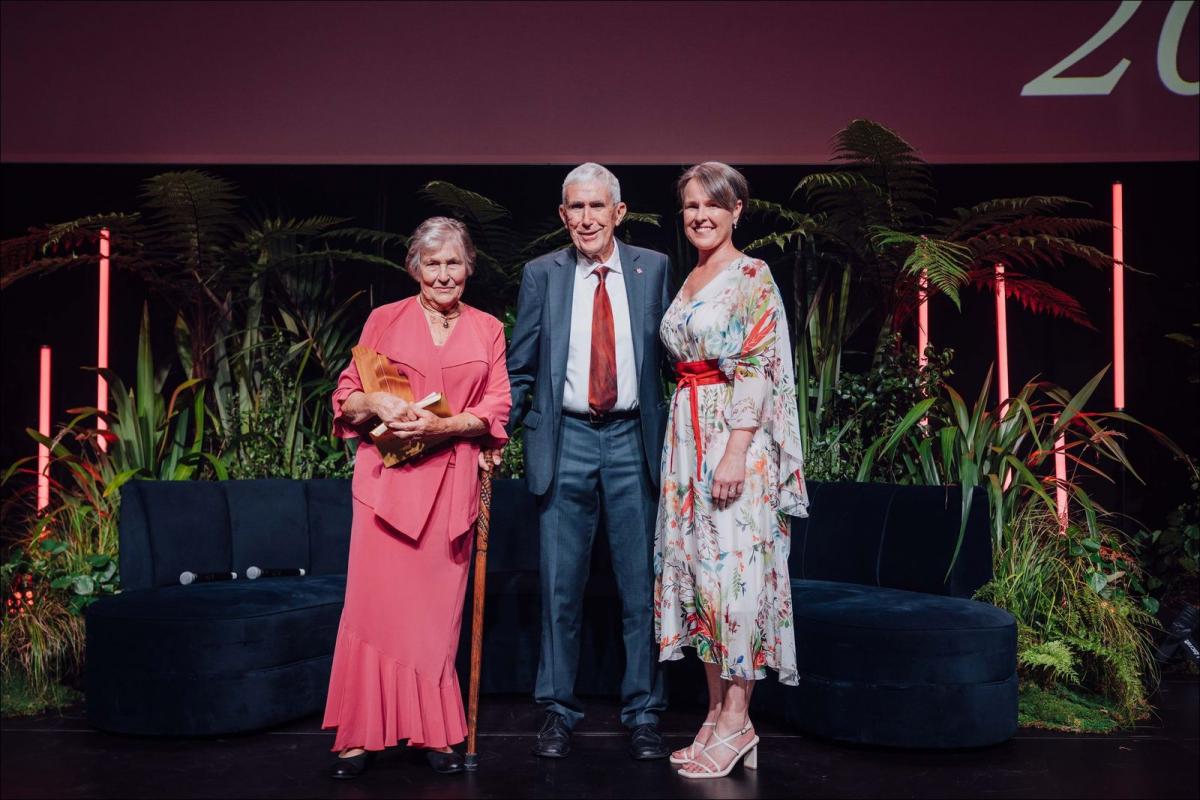
Alan and Hazel Kerr share Senior New Zealander of the Year Award 2026
Dr Alan and Hazel Kerr describe themselves as ‘just ordinary old Kiwis’, despite being named as the 2026 Ryman Healthcare Senior New Zealanders of the Year Te Mātāpuputu o te Tau.
The amazing couple prompted a standing ovation at a star-studded Auckland event which recognised their tireless efforts, with Alan travelling to and from Gaza and the West Bank 40 times to help children over 20 years, and Hazel travelling 20 times.
Click read more to find out more.
Poll: Are you still heading to your local for your caffeine fix, or has the $$ changed your habits? ☕
Auckland has a thriving cafe culture, but with costs climbing, that culture is under pressure. We’ve seen the headlines about recent closures across the country, and it’s a tough pill to swallow along with a $6+ coffee.
We all want our favourite spots to stay open, but we also have to balance our own budgets ⚖️
We want to know: How are you handling the "coffee math" in 2026? Are you still heading to your local for a chat and a caffeine fix, or has the cost of living changed your habits?
Keen to read more about "coffee math"? The Post has you covered.

-
42.8% I avoid spending money on coffee
-
41.1% I still indulge at my local cafe
-
16.1% Irrelevant - coffee is not for me
 Loading…