



Fascination Science public lecture Tuesday (30 April) - The light fantastic
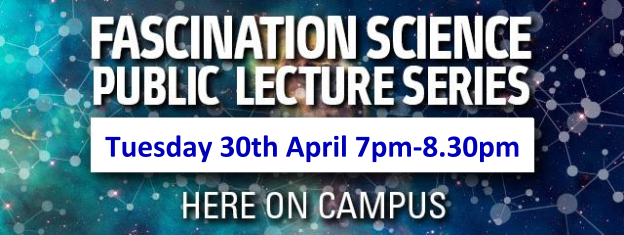
Our next lecture in the Fascination Science series will go ahead on Tuesday 30 April 7pm-8.30pm at Massey University's Auckland campus in Albany in the Sir Neil Waters lecture theatre.
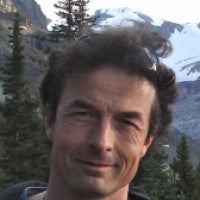
Please join Prof. Martin (Bill) Williams from the Palmerston North campus of Massey University for his talk on
The light fantastic: Dizzying interactions between light and matter
Nature provides fascinating examples of nanotechnology, creating functional entities from the bottom-up; from molecules to materials & devices. But this is not the nanotechnology of miniature submarines and nano-bots; it is that of molecular biology, the wet nanotechnology of biopolymers and their assemblies. It is the nanotechnology of DNA condensation and transcription, of protein fibers and molecular motors. It is the physics of the nanoscale that is so elegantly exploited and Brownian motion that brings the dance to life.
In order to take a trip down the rabbit hole of such exquisite molecular machinery scientists need not only to see but also to feel the nanoworld. Optical tweezers (OT), for which Arthur Askin was awarded the Nobel Prize in Physics in 2018, are one of the exciting tools that can be used to apply and measure minute forces, and they do so, not using tiny mechanical grippers, but using highly focused beams of light. The talk will describe how OT perform this remarkable task and our journey to implement them in order to stretch a single strand of DNA.

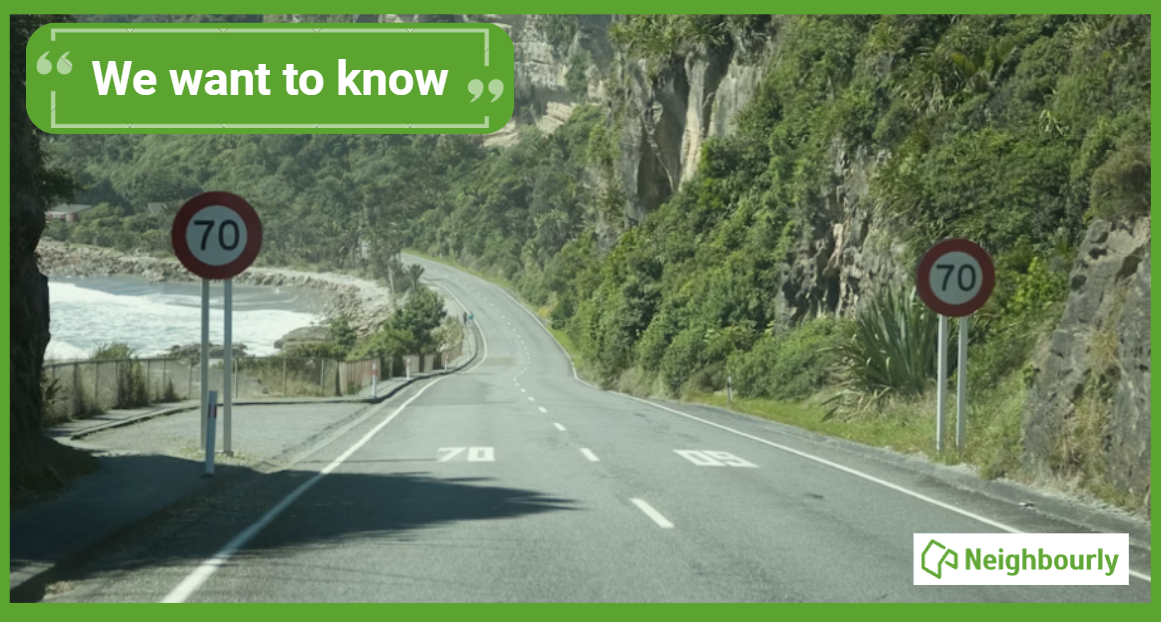
Poll: If we want to reduce speeding, what do you think actually changes driver behaviour? 🛻🚨🚓
In the Post's article on speeding penalties, the question is asked whether speeding fines are truly about road safety, or are they just a way to boost revenue for the Crown?
What do you think? Should speeding motorists receive speeding fines or demerit points?
-
36.2% The sting of a fine (Money talks!)
-
63.8% The threat of demerit points (Nobody wants to lose their license!)

Some Choice News!
DOC is rolling out a new tool to help figure out what to tackle first when it comes to protecting our threatened species and the things putting them at risk.
Why does this matter? As Nikki Macdonald from The Post points out, we’re a country with around 4,400 threatened species. With limited time and funding, conservation has always meant making tough calls about what gets attention first.
For the first time, DOC has put real numbers around what it would take to do everything needed to properly safeguard our unique natural environment. The new BioInvest tool shows the scale of the challenge: 310,177 actions across 28,007 sites.
Now that we can see the full picture, it brings the big question into focus: how much do we, as Kiwis, truly value protecting nature — and what are we prepared to invest to make it happen?
We hope this brings a smile!

Poll: Is Auckland’s economy improving?
The latest reporting from The Post suggests a wave of optimism for 2026. With interest rates finally heading south, businesses are feeling more positive. But for many on the ground, the real-world recovery feels a bit like a slow-moving commute on Auckland's motorways.
We want to know: Are you seeing signs of Auckland's economy improving in your industry or neighbourhood? Whether it's busier shops, new projects kicking off, or just a shift in the mood ...
-
17.4% Yes
-
65.8% No
-
16.8% A little
 Loading…