




Confused about consumer contracts? Read this
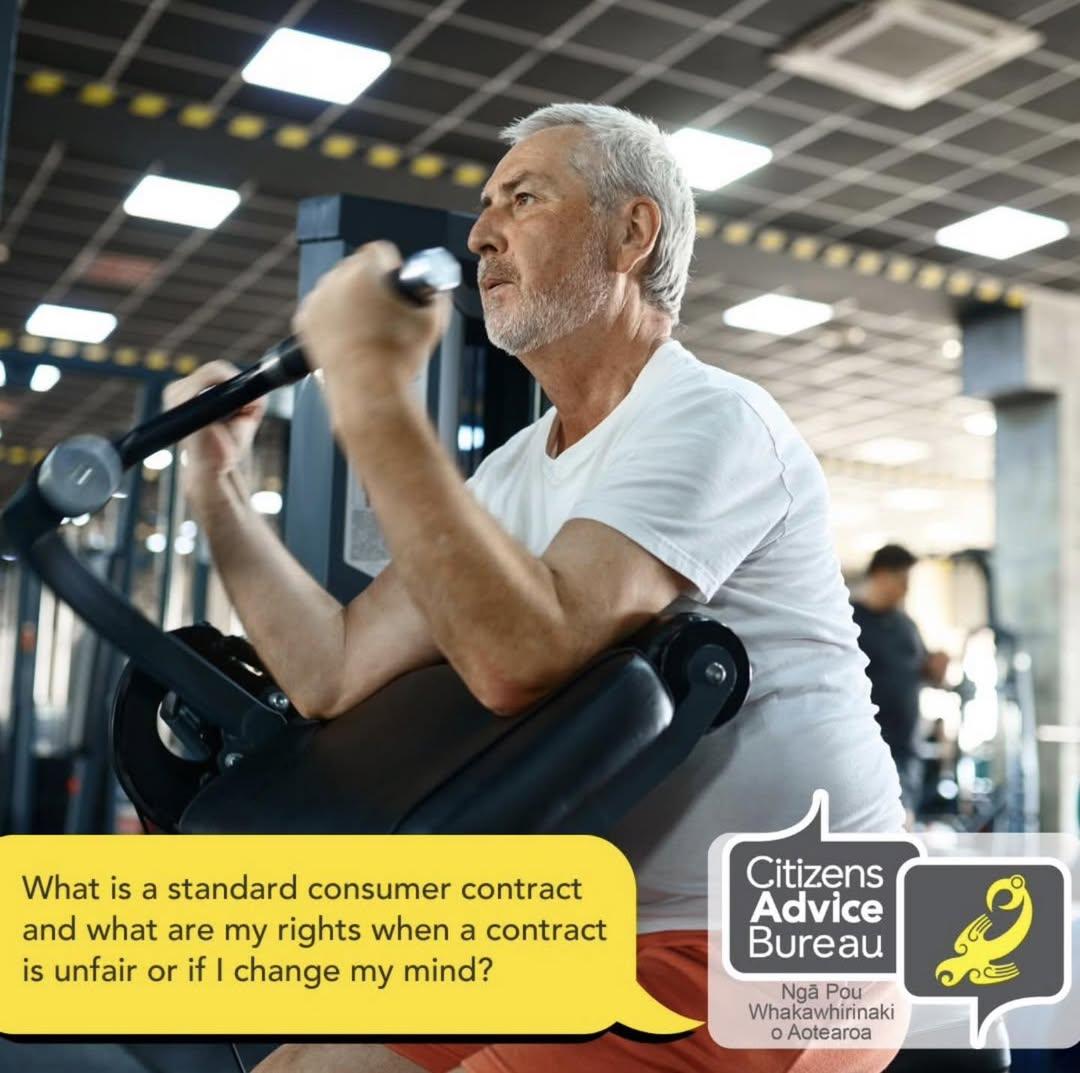
A standard form consumer contract is an agreement where the terms and conditions are already written out for you to sign, and you don’t negotiate what the terms and conditions will be.
The terms can be in a separate document, or on the back of things like tickets, quotes, terms of trade or invoices.
Examples of such contracts are rental car agreements, gym memberships, gas and electricity contracts, finance agreements, and retirement home contracts.
Normally you cannot cancel a standard form consumer contract if you change your mind part way through, but there are some situations where you may be able to e.g. where there is a ‘termination’ clause in the contract giving you the right to cancel with notice for certain reasons, if the other party agrees to accept your cancellation or where they breach an important term or condition of the contract.
Under the Fair Trading Act (FTA), businesses must not include unfair terms in consumer contracts e.g. allowing them to cancel or renew the contract, or to vary the goods or services they provide you, or to change the price payable without giving you the right to end the contract.
If you think your rights have been breached either under the Fair Trading Act or the Consumer Guarantees Act, you can seek a remedy.
✅To learn more about a standard form consumer contract, unfair contract terms, and how you can find help, visit cab.org.nz/article/KB00000040
Original post credit: Citizens Advice Bureau NZ/www.cab.org.nz
[Image description: A person exercising in a gym with equipment. Text reads “What is a standard consumer contract and what are my rights when a contract is unfair or if I change my mind?]

🪱🐦 When are you the most productive? 🌙🦉
The Post has been diving into our daily habits, and research suggests being an early bird or a night owl isn’t just a choice—it’s biology! We all have that specific time when our brains finally "click" into gear.
This raises a big question for the modern workplace. To get the best out of everyone, should employers accommodate our natural body clocks? This idea is at the heart of the four-day work week and flexible scheduling movements.
We want to hear from you:
1. When does your brain "click" into gear?
2. Would a flexible (or shortened) schedule change the way you work?

Poll: Is Auckland’s economy improving?
The latest reporting from The Post suggests a wave of optimism for 2026. With interest rates finally heading south, businesses are feeling more positive. But for many on the ground, the real-world recovery feels a bit like a slow-moving commute on Auckland's motorways.
We want to know: Are you seeing signs of Auckland's economy improving in your industry or neighbourhood? Whether it's busier shops, new projects kicking off, or just a shift in the mood ...
-
17.9% Yes
-
65.3% No
-
16.7% A little

🌉🛶 Early Birds Might Crack This One First… or Not? 🥚🧠
A person is crossing a bridge and sees a boat full of people, yet there isn't a single person on board.
How is this possible?
(Susan from Massey kindly provided this head-scratcher ... thanks, Susan!)
Do you think you know the answer? Simply 'Like' this post if you know the answer and the big reveal will be posted in the comments at 2pm on the day!
Want to stop seeing these in your newsfeed?
Head here and hover on the Following button on the top right of the page (and it will show Unfollow) and then click it. If it is giving you the option to Follow, then you've successfully unfollowed the Riddles page.
 Loading…