






What happens after redundancy? NorthTec layoffs highlight jobseeker struggles
Tertiary Education Union organiser Jill Jones says redundancy can have a deep effect on a person’s sense of identity.
Jones has dealt with many redundancy proposals over the years, the latest being NorthTec.
The result of redundancy went far beyond the financial implications, especially if people were qualified in a niche area.
“It can make it incredibly difficult for them to find another job, especially if they have a commitment to a particular subject, and it becomes part of their identity in a sense,” Jones said.
“The narrower the field, the less likely it is you’re going to find employment.”
Jones said one man had told her he had still not told his adult children he had been made redundant, despite it happening months earlier.
“Because he felt embarrassed and ashamed.”
She pointed out that people who worked in roles with cultural or social impact sometimes experienced a loss of mana as well.
Redundancies are just one of the hardships faced by Northlanders.
Between September 2024 and 2025, the proportion of the working-age population receiving Jobseeker Support increased in most regions, according to Work and Income data.
By the end of September, Northland had the highest proportion receiving Jobseeker Support, at 11.4%.
That coincided with a surge in applications per job listing on Trade Me from July to September, where applications were up 11.8% quarter on quarter.
Though Work and Income had no data readily available to illustrate how many of those on Jobseeker Support had been made redundant, layoffs have undoubtedly played a part.
People Potential chief executive Bronwyn Ronayne recalled that one of the biggest redundancy bouts in Northland was when the Marsden Point oil refinery closed in 2022.
Many people were left with “niche” skills that they struggled to transfer.
There were now “really nice stories” starting to emerge of people who had started their own businesses and made opportunities out of the change, she said.
“There are so many people I can think of personally who are made redundant who are doing really cool stuff.”
Northland’s jobseeker levels came as no surprise to her.
“I think Northland’s always a bit slower to come out of whatever economic impact there is, a bit slower to recover from the knocks.”
Muriel Willem, director and lead careers practitioner at New Focus NZ, said the wellbeing and community-development company had noticed an increase in redundancies over the last six months.
That was particularly in trades associated with building projects that had stalled with the economic downturn, as well as hospitality after cafe closures.
She said clients who had been made redundant often worked through shock, disappointment, sadness and anger.
“The process can be an emotional rollercoaster, especially for those who haven’t needed to update a CV for years or previously found work through word of mouth.”
Willem said people over 60 struggled disproportionately with redundancy.
“Often they have CVs full of experience and knowledge, yet with retirement only a few years away and competition from younger applicants who may accept lower pay rates, they are often overlooked in the job market.”
However, she said mental health was often the greatest barrier for anyone returning to employment.
Trade Me data from July to September showed a 2% decrease in job listings in Northland, which head of Trade Me jobs Nicole Williams said was driven by major centres like Auckland and Wellington recording drops.
“We know job hunters are still finding it tough to land on their feet with the unemployment rate [nationally] at 5.2%,” Williams said.
Northland received the highest growth in applications per listing year-on-year.
Trades and services had the most listings started (approximately 22%), and this category saw 4.7% quarter-on-quarter growth and +14.1% year-on-year growth.
Other categories experiencing quarter-on-quarter growth in the region were transport and logistics (up 24.2%), retail (23.3%), healthcare (18.3%) and construction and roading (17.6%).
The average salary for Northland jobs listed during the July-September quarter was $73,858, a record high.
======================================================

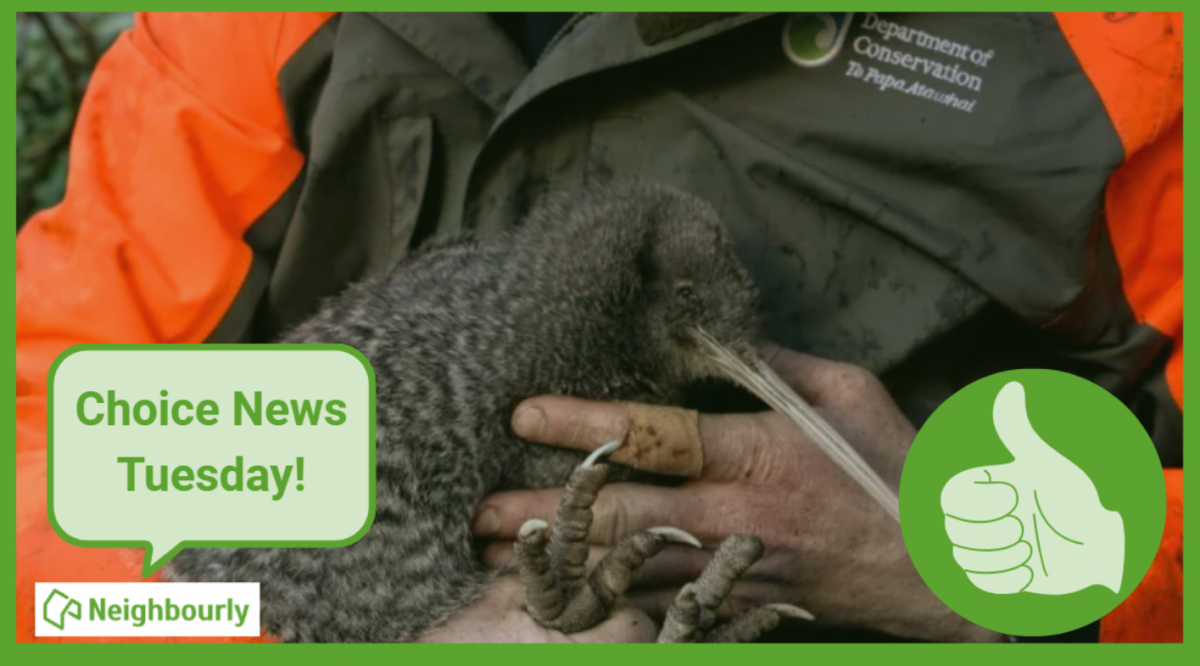
Some Choice News!
DOC is rolling out a new tool to help figure out what to tackle first when it comes to protecting our threatened species and the things putting them at risk.
Why does this matter? As Nikki Macdonald from The Post points out, we’re a country with around 4,400 threatened species. With limited time and funding, conservation has always meant making tough calls about what gets attention first.
For the first time, DOC has put real numbers around what it would take to do everything needed to properly safeguard our unique natural environment. The new BioInvest tool shows the scale of the challenge: 310,177 actions across 28,007 sites.
Now that we can see the full picture, it brings the big question into focus: how much do we, as Kiwis, truly value protecting nature — and what are we prepared to invest to make it happen?
We hope this brings a smile!

🎉 Riddle me this, legends! 🎉
He/She who makes it, sells it.
He/She who buys it, doesn't use it.
The user doesn't know they are using it.
What is it?
(Shezz from Ngāruawāhia kindly provided this head-scratcher ... thanks, Shezz!)
Do you think you know the answer? Simply 'Like' this post if you know the answer and the big reveal will be posted in the comments at 2pm on the day!
Want to stop seeing these in your newsfeed?
Head here and hover on the Following button on the top right of the page (and it will show Unfollow) and then click it. If it is giving you the option to Follow, then you've successfully unfollowed the Riddles page.


Scam Alert: Bank cold calls
ASB is warning customers about reports of cold calls from scammers claiming to be from ASB. These scammers are trying to obtain personal information, including usernames, dates of birth, and verification codes sent to your mobile phone.
🛡️ The "Caller Check" Test
If you get a call from someone claiming to be from ASB and you’re unsure, just ask them for a Caller Check. You will then be able to verify the call through the app.
Remember, banks will:
❌ Never ask for your banking passwords, PINs, or verification codes
❌ Never need to know your full credit card number – especially the CVC
❌ Never ask you to download software or remotely access your device
❌ Never ask you to purchase gift cards or transfer funds.
If you have received a phone call and think your account has been compromised, call ASB on 0800 ASB FRAUD (0800 272 372), or visit your local branch.
 Loading…