






McDonald's worries about losing low-income customers: Is price the reason why?
Fast food giant McDonald's is worried about losing lower-income customers, as data shows it can probably no longer be considered a "cheap" food option.
When McDonald's released its latest earnings report in the United States it said comparable sales were up but chief executive Christopher Kempczinski said low-income customers were avoiding its restaurants.
CNBC reported that he noted "traffic from lower-income consumers declining nearly double-digits in the third quarter, a trend that's persisted for nearly two years.
"Traffic growth among higher-income consumers remains strong, increasing nearly double-digits in the quarter."
A spokesperson for McDonald's in New Zealand said this country did not report on total sales or business performance so he could not say whether the same trend was happening here.
On social media posts recently, customers have questioned the price of the new Big Arch burger, and complained that there had been price increases on the McDonald's app.
Another said it was like a Big Mac but more expensive while a third customer said it was due to wage rises.
On Uber Eats this week, a Bacon & Egg McMuffin was $9.30, a Big Mac was $11.80 and a cheeseburger $6.80. A Big Arch burger was $16.
Burger King had a Whopper with cheese for $14.80 and a Hawaiian BK Chicken for $17.60. Its triple cheeseburger was $13.90.
Gareth Kiernan, chief forecaster at Infometrics, said Stats NZ data showed takeaway food of all types had become a lot more expensive recently.
Between September 2005 and September 2025, the consumer price index had risen 66 percent, the food price index 84 percent, ready-to-eat food 103 percent and a Big Mac 93 percent.
Fish and chips had lifted 154 percent.
Kiernan said the fact the Big Mac had increased in price less than the 147 percent increase in the minimum wage over the period could be considered a good outcome.
He said takeaway food prices would have been driven up by both the wider increase in food prices and the cost of labour.
Bodo Lang, a marketing expert at Massey University, said it was often said that McDonald's had stopped being a cheap option but he was not convinced that weas the case.
"Despite offering high priced menu items, McDonalds still offers a range of choices for smaller appetites and smaller wallets. Classic items, such as the Big Mac or Quarter Pounder are still likely at the cheaper end when compared to others. For example, McDonald's prices are comparable with other international chains such as Burger King or KFC. Even when compared to local independent operators, McDonalds prices are still fairly comparable. At least for its classic items. Ordering anything via an app and have it delivered will obviously at much cost and little convenience, thus distorting consumers price impression."
Burger Fuel was charging $24.50 for a Bacon Backfire burger on Uber Eats this week.
"What McDonald's has done very well is to diversify its product portfolio to appeal to different tastes and wallet sizes. While its classics are still available at comparatively low prices, McDonald's luxe items, such as its Grilled Chicken Bacon Deluxe, are at the upper end of the price range and compete head on with the likes of local chains, such as Burger Fuel. So McDonald's has done an excellent job of trying to appeal to its classic customers, particularly through bundles and offers, while appealing to others with premium priced items," Lang said.
========================================================

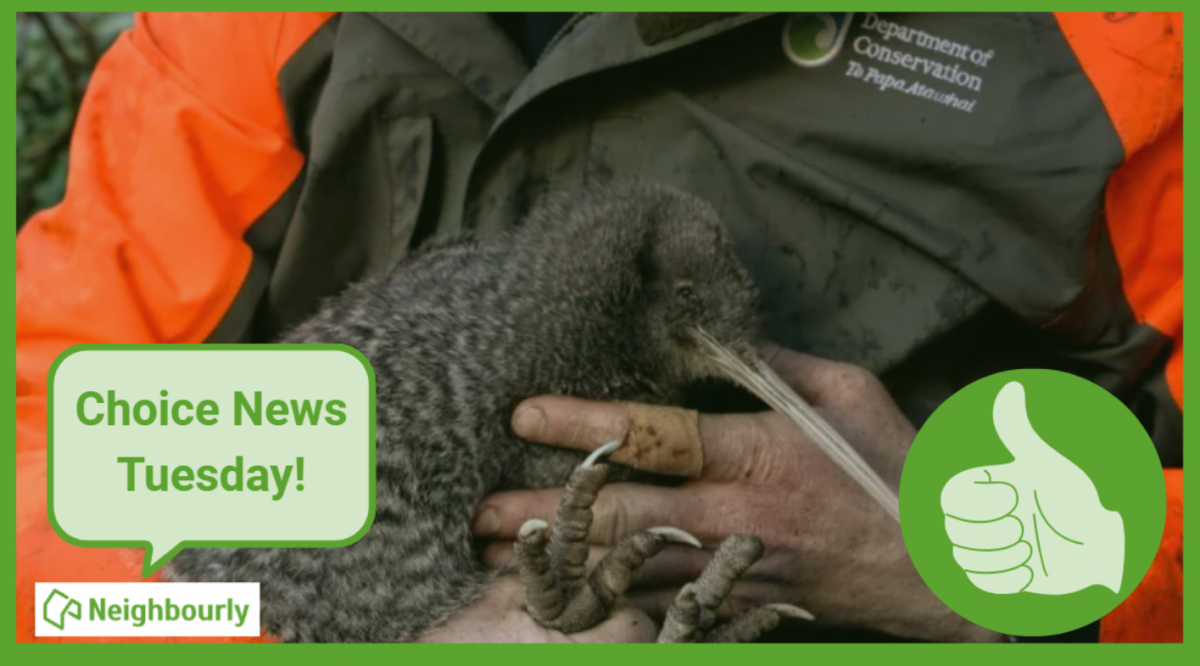
Some Choice News!
DOC is rolling out a new tool to help figure out what to tackle first when it comes to protecting our threatened species and the things putting them at risk.
Why does this matter? As Nikki Macdonald from The Post points out, we’re a country with around 4,400 threatened species. With limited time and funding, conservation has always meant making tough calls about what gets attention first.
For the first time, DOC has put real numbers around what it would take to do everything needed to properly safeguard our unique natural environment. The new BioInvest tool shows the scale of the challenge: 310,177 actions across 28,007 sites.
Now that we can see the full picture, it brings the big question into focus: how much do we, as Kiwis, truly value protecting nature — and what are we prepared to invest to make it happen?
We hope this brings a smile!

🎉 Riddle me this, legends! 🎉
He/She who makes it, sells it.
He/She who buys it, doesn't use it.
The user doesn't know they are using it.
What is it?
(Shezz from Ngāruawāhia kindly provided this head-scratcher ... thanks, Shezz!)
Do you think you know the answer? Simply 'Like' this post if you know the answer and the big reveal will be posted in the comments at 2pm on the day!
Want to stop seeing these in your newsfeed?
Head here and hover on the Following button on the top right of the page (and it will show Unfollow) and then click it. If it is giving you the option to Follow, then you've successfully unfollowed the Riddles page.


Scam Alert: Bank cold calls
ASB is warning customers about reports of cold calls from scammers claiming to be from ASB. These scammers are trying to obtain personal information, including usernames, dates of birth, and verification codes sent to your mobile phone.
🛡️ The "Caller Check" Test
If you get a call from someone claiming to be from ASB and you’re unsure, just ask them for a Caller Check. You will then be able to verify the call through the app.
Remember, banks will:
❌ Never ask for your banking passwords, PINs, or verification codes
❌ Never need to know your full credit card number – especially the CVC
❌ Never ask you to download software or remotely access your device
❌ Never ask you to purchase gift cards or transfer funds.
If you have received a phone call and think your account has been compromised, call ASB on 0800 ASB FRAUD (0800 272 372), or visit your local branch.
 Loading…