






Which sectors pay more than a median $100,000 salary?
It used to be that once someone's salary hit six digits, they would be considered highly paid.
But there are now about a dozen sectors paying at least a median $100,000.
Over the past 10 years, the median wage across New Zealand has risen from about $67,000 - depending how you measure it - to nearly $80,000.
Infometrics principal economist Nick Brunsdon compiled LEED data from Stats NZ which showed the break down of mean and median income by industry.
It showed workers in mining, manufacturing, electricity and gas supply, rail, water, air and space transport, telecommunications, finance and insurance, computer system design, and hospitals all had median and mean incomes above $100,000.
The data reports on PAYE earners so will not capture self employed people who do not pay PAYE, or anyone who is not in paid work.
Coal, oil, gas and metal ore mining was top, with a median income of $136,770 and a mean of $144,450.
Computer systems design and related services was second, with a median income of $125,630.
It was followed by exploration and other mining support services on a median $124,960 and auxiliary finance and insurance services on $124,390.
At the other end of the table was food and beverage services, with a median $40,170, and food retailing on a median $45,030.
"The big caveat is that it doesn't include hours worked, and there will be differences in the prevalence of part time workers across industries," Brunsdon said.
He said it seemed overall that it was private sectors that were paying the highest salaries, with the exception of hospital staff. But he said hospital wages were likely to be being pulled up by highly paid surgeons and other specialists.
"Generally the private sector has greater ability to pay."
He said qualifications were also a factor, although mining roles were not necessarily those requiring degrees.
He said manufacturing salaries could be being pushed up by shift work loadings that could bring people over the $100,000 salary level "quite easily".
There had been a couple of years of quite aggressive minimum wage increases, he said. "That's going to have an effect at the bottom end and it's going to have that knock-on effect to anyone - or should have a knock-on effect to anyone - who's near the minimum wage to maintain relativity.
"But I guess it depends on what's going on. When you've got particular pressures in particular areas, that's going to push up wages. A couple of years ago there was a lot of pressure in the public sector and professional services wages during that period. Not so much now."
He said there was not much impetus for wage growth in the current environment.
"People are generally pretty grateful to keep the job they've got rather than push the boat out and try to get paid more... the job hopping that can push things up is not going on as well."
He said the economy might be at a turning point for recovery but Infometrics was not expecting it to tick over into strong growth.
"It's sort of expected to be a prolonged recovery, which means that it could be some years until we start to get that sort of heat back in the economy that contributes to strong wage growth."
Top five
=======
Coal, oil gas and metal ore mining
Mean $144,450 median $136,770
Mining is the highest paid sector in New Zealand.
A report in the middle of this year said that 7470 people were employed in the sector.
Computer systems design and related services
Mean $128,690, median $125,630
These sorts of roles are often among the most highly paid in things like Trade Me's reports of advertised salaries.
They include things like planning, integrating and managing computer hardware and software, as well as communication technologies.
Exploration and other mining support services
Mean $129,940, median $124,960
That same mining report said the biggest job creation and economic impact was in Buller, Hauraki and Waitaki.
Earlier in the year, RNZ reported that forest and mining roles had the second-biggest pay increases last year at 6.2 percent.
Auxiliary finance and insurance services
Mean $134,480, median $124,390
This category captures people whose work is related to financial transactions and insurance but who work in businesses that don't own the financial assets themselves.
Finance
Mean $126,220, median $122,020
General finance jobs were also paying well.
=======================================================

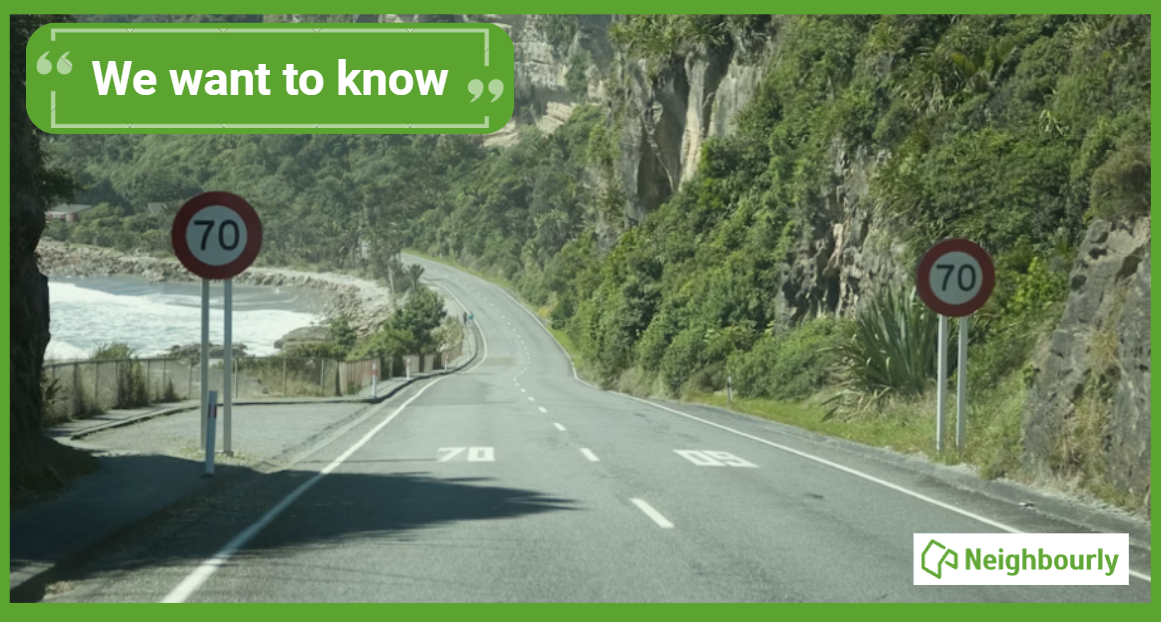
Poll: If we want to reduce speeding, what do you think actually changes driver behaviour? 🛻🚨🚓
In the Post's article on speeding penalties, the question is asked whether speeding fines are truly about road safety, or are they just a way to boost revenue for the Crown?
What do you think? Should speeding motorists receive speeding fines or demerit points?
-
37.1% The sting of a fine (Money talks!)
-
62.9% The threat of demerit points (Nobody wants to lose their license!)

Some Choice News!
DOC is rolling out a new tool to help figure out what to tackle first when it comes to protecting our threatened species and the things putting them at risk.
Why does this matter? As Nikki Macdonald from The Post points out, we’re a country with around 4,400 threatened species. With limited time and funding, conservation has always meant making tough calls about what gets attention first.
For the first time, DOC has put real numbers around what it would take to do everything needed to properly safeguard our unique natural environment. The new BioInvest tool shows the scale of the challenge: 310,177 actions across 28,007 sites.
Now that we can see the full picture, it brings the big question into focus: how much do we, as Kiwis, truly value protecting nature — and what are we prepared to invest to make it happen?
We hope this brings a smile!


🎉 Riddle me this, legends! 🎉
He/She who makes it, sells it.
He/She who buys it, doesn't use it.
The user doesn't know they are using it.
What is it?
(Shezz from Ngāruawāhia kindly provided this head-scratcher ... thanks, Shezz!)
Do you think you know the answer? Simply 'Like' this post if you know the answer and the big reveal will be posted in the comments at 2pm on the day!
Want to stop seeing these in your newsfeed?
Head here and hover on the Following button on the top right of the page (and it will show Unfollow) and then click it. If it is giving you the option to Follow, then you've successfully unfollowed the Riddles page.

 Loading…