






Major electoral law overhaul includes ending same-day enrolment, clarity on treats for voters
The Government is making a “significant, but necessary change” to New Zealand’s electoral laws to address “strain on the system”.
Among the changes being proposed is stopping same-day enrolment for voters in a general election. Justice Minister Paul Goldsmith said allowing late enrolments was “well intentioned” but had placed pressure on the system.
Also being dealt to is offering treats to voters. A new offence will be created prohibiting the provision of free food, drink and entertainment within 100 metres of a voting place while voting is occurring. Offenders could be punished with a fine of up to $10,000.
“There has been some confusion in the past around what is and isn’t ‘treating’. This will make the rules crystal clear,” Goldsmith said.
The list of key changes includes:
===========================
Closing enrolment 13 days before election day to reduce pressure on post-election timeframes.
Requiring 12 days of advance voting at each election.
Introducing automatic enrolment updates so the Electoral Commission can update people’s enrolment details using data from other government agencies.
Enabling greater use of digital communication by removing postal requirements for enrolment.
Creating a new offence that prohibits the provision of free food, drink or entertainment within 100m of a voting place while voting is taking place. It will be punishable by a fine of up to $10,000.
Reinstating a total ban on prisoner voting.
“The donation threshold for reporting the names of party donors is also being adjusted from $5000 to $6000, to account for inflation.”
============================================
Goldsmith said late enrolments had “placed too much strain on the system”.
“The final vote count used to take two weeks, last election it took three,” he said.
“If we leave things as they are, it could well take even longer in future elections. The 20-day timeframe for a final result will likely already be challenging to achieve at the next election without changes.
“Therefore, the Government has agreed to close enrolment before advance voting begins. People will need to make sure they enrol or update their enrolment details by midnight on the Sunday, before advance voting opens on Monday morning.
“This is a significant, but necessary change. The Electoral Commission will have plenty of time to run an education campaign to ensure people understand the new requirements.
“For Australia’s federal election earlier this year, the enrolment deadline was 26 days before election day. I have every confidence New Zealand can manage within the 13-day deadline.”
Act justice spokesman Todd Stephenson welcomed the reforms, saying it was “outrageous” that someone “completely disengaged and lazy can rock up to the voting booth, get registered there and then, and then vote to tax other people’s money away”.
“People who want to pull the levers of democracy ought to get organised, look at the policies, and register well in advance,” he said.
Labour leader Chris Hipkins called it “draconian”.
“Preventing people from enrolling to vote during advance voting is a draconian measure that could rob tens of thousands of Kiwis of their democratic right to vote, and there is no good reason for it. It’s anti-democratic.”
The Greens’ spokeswoman for democracy and electoral reform, Celia Wade Brown, said the Government was “weakening our democracy”.
“What we do with our democracy matters; who we shut out and who we afford special privileges shapes the decisions made in Parliament and the direction this country is taken in.”
The Herald reported last year that the Government was looking to overturn the 2020 decision to allow same-day enrolment after a report from the Auditor-General exposed a series of problems with counting votes at the most recent election.
The report noted that none of the problems found with the most recent election would have changed the national result or the result in any individual electorate.
The report did not recommend changing the Electoral Act to prohibit election-day enrolments, but it found that the 2020 change had put immense pressure on the Electoral Commission because same-day enrolments must be counted as special votes, meaning they take 10 times longer to process than ordinary votes.
Hipkins said at the time that the changes should be kept, given that 100,000 people took up the opportunity to enrol on election day.
“I think in a fiscally constrained time, and particularly where there are so many issues that are being hotly contested, it’s important that we ensure that everybody has the right to vote and that everybody’s vote gets counted. The Government’s simply saying, ‘Hey, we’re going to cancel 100,000 people’s votes.’ That’s not democratic,” Hipkins said.
Other changes being made, according to Goldsmith, include allowing special vote processing earlier, increasing the number of members on the Electoral Commission board, and setting a single deadline for candidate nominations.
“The Government is progressing a separate bill to amend the Constitution Act 1986 to ensure the continuity of executive government in the post-election period,” a statement said.
This will address an issue where ministers may remain in office after an election for 28 days while the final count is completed. However, if there is a delay to the election results (for example, due to a recount), then the 28 days can expire before new MPs are appointed. This happened at the 2023 election.
The bill will allow for ministers to remain in office until all successful electorate and list MPs have been declared.
==================================================

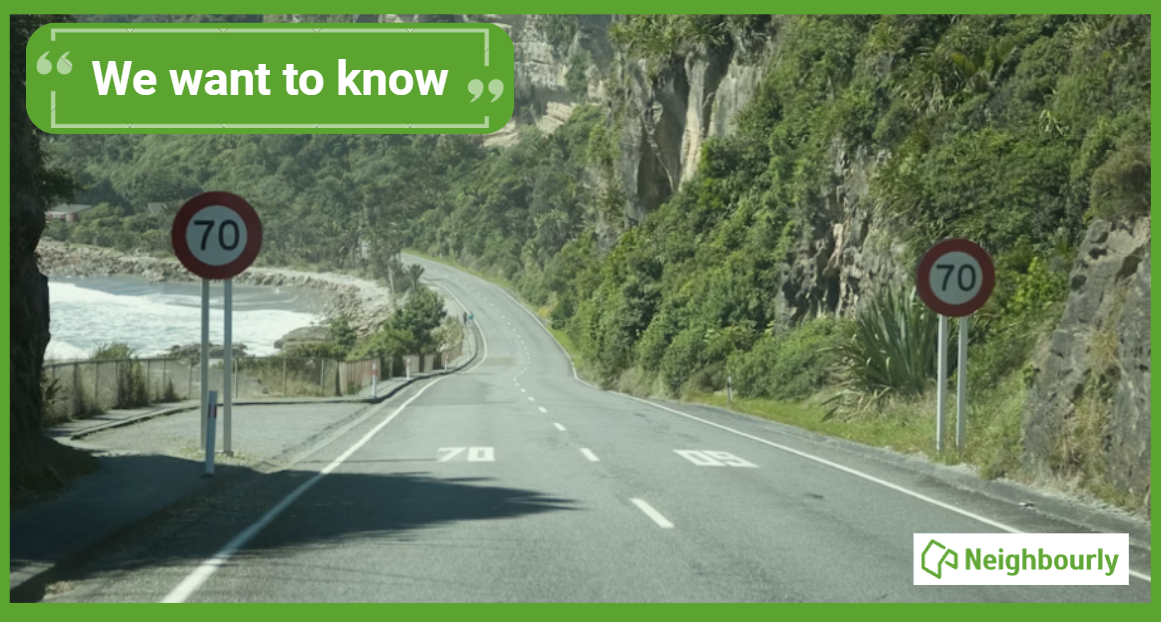
Poll: If we want to reduce speeding, what do you think actually changes driver behaviour? 🛻🚨🚓
In the Post's article on speeding penalties, the question is asked whether speeding fines are truly about road safety, or are they just a way to boost revenue for the Crown?
What do you think? Should speeding motorists receive speeding fines or demerit points?
-
37% The sting of a fine (Money talks!)
-
63% The threat of demerit points (Nobody wants to lose their license!)

Some Choice News!
DOC is rolling out a new tool to help figure out what to tackle first when it comes to protecting our threatened species and the things putting them at risk.
Why does this matter? As Nikki Macdonald from The Post points out, we’re a country with around 4,400 threatened species. With limited time and funding, conservation has always meant making tough calls about what gets attention first.
For the first time, DOC has put real numbers around what it would take to do everything needed to properly safeguard our unique natural environment. The new BioInvest tool shows the scale of the challenge: 310,177 actions across 28,007 sites.
Now that we can see the full picture, it brings the big question into focus: how much do we, as Kiwis, truly value protecting nature — and what are we prepared to invest to make it happen?
We hope this brings a smile!


🎉 Riddle me this, legends! 🎉
He/She who makes it, sells it.
He/She who buys it, doesn't use it.
The user doesn't know they are using it.
What is it?
(Shezz from Ngāruawāhia kindly provided this head-scratcher ... thanks, Shezz!)
Do you think you know the answer? Simply 'Like' this post if you know the answer and the big reveal will be posted in the comments at 2pm on the day!
Want to stop seeing these in your newsfeed?
Head here and hover on the Following button on the top right of the page (and it will show Unfollow) and then click it. If it is giving you the option to Follow, then you've successfully unfollowed the Riddles page.

 Loading…