






Food shock: Prices soar in June as fruit and veges follow butter and cheese spike
New stats show food prices rose 4.6% in the year to June – the largest rate of increase since late 2023.
That was up from a 4.4% increase in the year to May, Stats NZ’s latest Selected Price Indexes show.
Rising prices for fruit and vegetables in June have added to already elevated pricing for dairy products to push costs higher.
Higher prices for the fruit and vegetables group and the grocery foods group drove the increase in food prices for June 2025, Stats NZ said.
They were up 5% and 0.8% respectively for the month.
“More expensive tomatoes, capsicum, and broccoli drove the increase for fruit and vegetables, while higher prices for boxed chocolates and eggs drove the increase for grocery foods,” Stats NZ said.
Meanwhile, dairy and meat prices remain elevated, reflecting strong export prices on global markets.
“Dairy products continue to drive the higher cost in food prices,” said prices and deflators spokeswoman Nicola Growden.
==============================
The average milk price was $4.57 for 2 litres, up 14.3% annually. Butter was $8.60 per 500g, up 46.5% annually, and cheese was $13.04 for a 1kg block, up 30% annually.
===============================
“Butter prices are nearly five dollars more expensive than 10 years ago, an increase of over 120%,” Growden said.
The increase in the meat, poultry, and fish group was driven by higher prices for beef steak and beef mince, up 22.3% and 15.6%, respectively.
“The average cost for 1kg of beef mince was $21.73 in June 2025, up from $18.80 a year ago,” Growden said.
The increase in food prices was higher than expected, said ASB senior economist Mark Smith.
Meanwhile, rental prices continue to moderate.
Rent prices increased 2.6% in the 12 months to June 2025, following a 2.8% rise in the year to May.
The 2.6% increase is the lowest lift for rent prices since October 2011, when they rose 2.5%, Stats NZ said.
On a monthly basis, rents were flat, rising just 0.1%.
ASB’s Smith is forecasting it to land at an annual rate of 2.8% and rising above 3% in the third quarter.
That would be above the Reserve Bank’s target range of 1-3%. Elevated inflation concerns prompted the RBNZ to pause its cycle of interest rate cuts last week.
But Smith noted that there were good reasons to expect inflation to move lower by the end of the year and into 2026.
Reduced demand due to weak economic conditions should be disinflationary forces for the service sector and other non-tradable parts of the economy.
“We expect a further 25bp OCR cut in August but acknowledge that weak activity data and the downward skew to global risks could see a sub 3% OCR emerge by year-end,” he said.
But this outlook was not without risk, Smith said.
There was a possibility that the uptick in inflation proved to be more persistent than transitory, “providing an unwelcome lift to inflation expectations that central banks have worked arduously to re-anchor post-Covid”.
==================================================

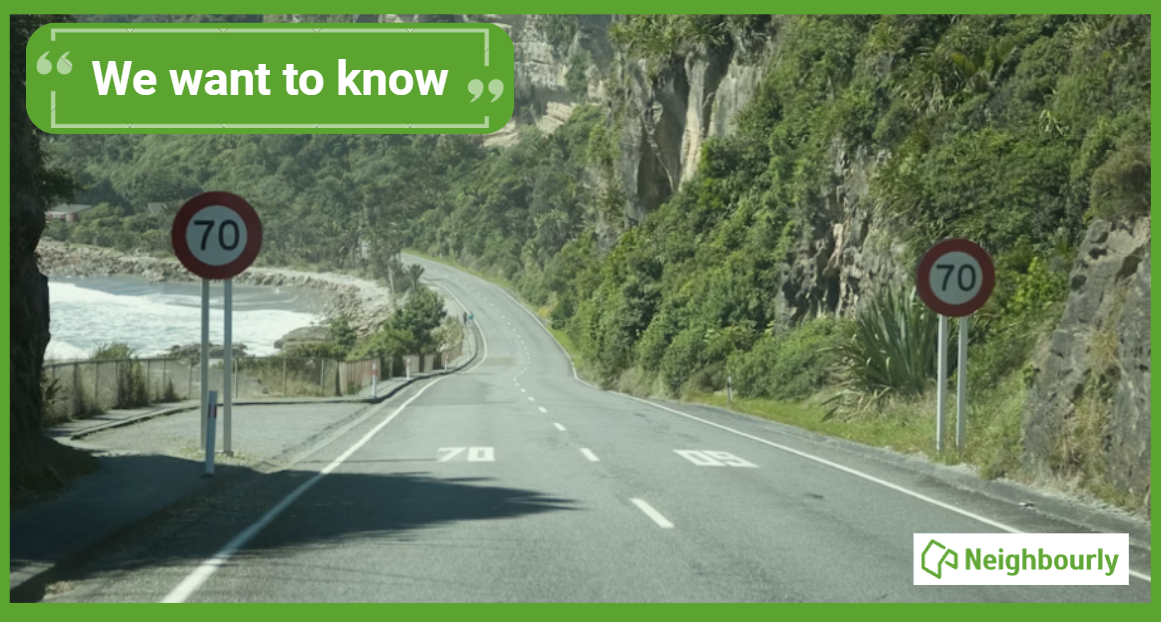
Poll: If we want to reduce speeding, what do you think actually changes driver behaviour? 🛻🚨🚓
In the Post's article on speeding penalties, the question is asked whether speeding fines are truly about road safety, or are they just a way to boost revenue for the Crown?
What do you think? Should speeding motorists receive speeding fines or demerit points?
-
37% The sting of a fine (Money talks!)
-
63% The threat of demerit points (Nobody wants to lose their license!)

Some Choice News!
DOC is rolling out a new tool to help figure out what to tackle first when it comes to protecting our threatened species and the things putting them at risk.
Why does this matter? As Nikki Macdonald from The Post points out, we’re a country with around 4,400 threatened species. With limited time and funding, conservation has always meant making tough calls about what gets attention first.
For the first time, DOC has put real numbers around what it would take to do everything needed to properly safeguard our unique natural environment. The new BioInvest tool shows the scale of the challenge: 310,177 actions across 28,007 sites.
Now that we can see the full picture, it brings the big question into focus: how much do we, as Kiwis, truly value protecting nature — and what are we prepared to invest to make it happen?
We hope this brings a smile!


🎉 Riddle me this, legends! 🎉
He/She who makes it, sells it.
He/She who buys it, doesn't use it.
The user doesn't know they are using it.
What is it?
(Shezz from Ngāruawāhia kindly provided this head-scratcher ... thanks, Shezz!)
Do you think you know the answer? Simply 'Like' this post if you know the answer and the big reveal will be posted in the comments at 2pm on the day!
Want to stop seeing these in your newsfeed?
Head here and hover on the Following button on the top right of the page (and it will show Unfollow) and then click it. If it is giving you the option to Follow, then you've successfully unfollowed the Riddles page.

 Loading…