





How many job hunters are there for each job ad?
Finding work may not be as easy as "getting off the PlayStation": data shows there are many times more potential job hunters than jobs advertised.
The Rotorua Daily Post reported Prime Minister Christopher Luxon told local business leaders that unemployed school leavers needed to "get off the couch and stop playing PlayStation".
And he told Morning Report on Monday there were employers "crying out" for young people.
But data shows in almost all parts of the country, there were more people unemployed than there were jobs available.
Using just the number of people on Work Ready JobSeeker benefits, not including those who are on the benefit for sickness or disability reasons, there are just under four people for every job ad, nationwide.
That's down from about nine in 2020 but about twice the rate of 2021 and 2022 and the number has stayed relatively constant since then.
The number of unemployed per job ad is five, which is not as high as the 2010 peak but higher than the 2020 number.
Luxon said Hawke's Bay and the South Island were particularly keen on workers but Hawke's Bay had 7359 jobSeekers and 568 jobs on Seek.
Based only on Trade Me jobs data, Kawerau had the highest ratio of jobseekers to jobs, at 228.
Queenstown-Lakes was the only area in balance by that measure.
Professor Matthew Roskruge, from the Massey University school of economics, said it was an "incredibly difficult" time to be looking for a job.
"Especially where they don't have really specific experience or certification… the regions from what we have seen have been hit particularly hard. Public service cuts look like they've hit regions hard and we've seen manufacturing go, too."
He said policies designed to push people off the benefit would work better when the labour market was stronger. "It might make sense if there was demand out there for employees but if we increase supply they have got to have somewhere to go."
Craig Renney, policy director at the Council of Trade Unions and previously an adviser to former Finance Minister Grant Robertson, agreed it was a tough market. "We're seeing more and more people want more work and can't get it."
He said the number of unemployed per job ad would understate the real picture because about 400,000 people were underutilised - not working as much as they would like to.
"We still appear to be shedding work, we see on a weekly basis at major plants and in particular manufacturing sites closing across the country."
He said the situation was worse in the North Island then the South.
He said many job ads were for temporary positions or commission-based roles that would not give security.
He said young people had been particular hit by the downturn. The number of unemployed 15 to 19 year olds had risen by 10,000 in two years, to 37,200.
Simplicity chief economist Shamubeel Eaqub said jobhunters without experience would be "at the back of the queue".
He said people should be careful about comparing regions because the boundaries could be arbitrary.
"People travel across territorial authority boundaries all the time."
But he said there were some localised areas of pain such as Tokoroa where there had been major employer closures.
"That means those local job opportunities are further reduced."
He said young people trying to enter a workforce during weak economic times could feel the effect for a long time.
"They miss out on that entry into the job, the career pathway. And then by the time the economy recovers, there's a new cohort of people who are competing for those positions."
Massey University Dean's Chair in Management Professor Jarrod Haar said it did not help anyone to have young people on benefits.
But he said it would be better to use the money that would have been spent on teenagers' benefits on encouraging businesses to hire them.
"The reality is there's just no jobs, you know, or let's be honest, there'll be the few jobs out there, but there'll be hundreds of young people wanting them, applying for them. And it'll be the case that demand outstrips supply in a big way."
Meanwhle, An orchardist says the horticulture industry is not crying out for workers.
Yummy Fruit Company chief executive Paul Paynter, who grows apples and stone fruit in Hawke's Bay, said the industry wasn't short staffed right now.
=====================================================

Poll: Should we ditch daylight saving? 🕰️
First introduced in New Zealand in 1927 with the passing of the Summer Time Act, it's what we know as 'Daylight Saving' and this year it ends on the first Sunday in April.
While we do get to sleep in this time around, some people would like to scrap the clock tinkering for good.
And why? Some evidence suggests the time changes are bad for our health as they mess with sleep patterns leading to short-term fatigue and affecting mood. Meanwhile the hour change is frustrating for farmers and a nightmare for getting the littlies to sleep. But what's your take?

-
39.3% Yes - get rid of the clock changes
-
58.7% No, I enjoy it
-
2% Other - I'll share below

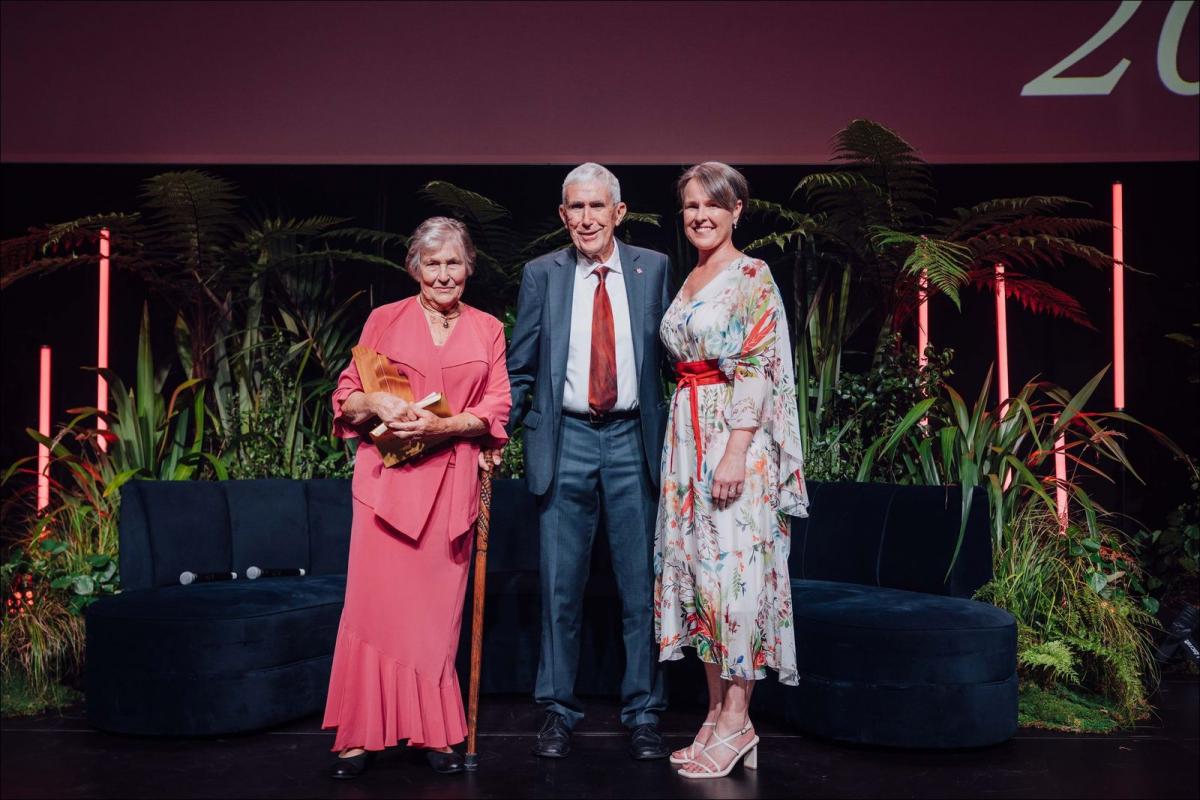
Alan and Hazel Kerr share Senior New Zealander of the Year Award 2026
Dr Alan and Hazel Kerr describe themselves as ‘just ordinary old Kiwis’, despite being named as the 2026 Ryman Healthcare Senior New Zealanders of the Year Te Mātāpuputu o te Tau.
The amazing couple prompted a standing ovation at a star-studded Auckland event which recognised their tireless efforts, with Alan travelling to and from Gaza and the West Bank 40 times to help children over 20 years, and Hazel travelling 20 times.
Click read more to find out more.
Poll: Are you still heading to your local for your caffeine fix, or has the $$ changed your habits? ☕
Auckland has a thriving cafe culture, but with costs climbing, that culture is under pressure. We’ve seen the headlines about recent closures across the country, and it’s a tough pill to swallow along with a $6+ coffee.
We all want our favourite spots to stay open, but we also have to balance our own budgets ⚖️
We want to know: How are you handling the "coffee math" in 2026? Are you still heading to your local for a chat and a caffeine fix, or has the cost of living changed your habits?
Keen to read more about "coffee math"? The Post has you covered.

-
42.9% I avoid spending money on coffee
-
40.9% I still indulge at my local cafe
-
16.2% Irrelevant - coffee is not for me
 Loading…