







Bible Q&A: Why is the Bible Made Up of Only the 66 Books?
Attend any of our Bible Addresses at the above address to hear topics like this......
Why is the Bible Made Up of Only the 66 Books?
Introduction
A question is posed regarding the experience of studying a Bible that contained the books of First and Second Maccabees in secondary school. While the narrative behind Hanukkah was enjoyable, the question arises: why are these and other apocryphal books not included in every Bible? The core of the question is rephrased to explore why these specific books are not considered inspired.
Canon vs. Inspiration: A Crucial Distinction
The first point made is that it is important to distinguish between the canon of Scripture and inspiration. The canon (from *c-a-n-o-n*) refers to the collection of texts recognized as authoritative by a religion. It is clear that many more inspired sayings and writings existed than are captured in the 39 books of the Old Testament canon. This logically leads to a further question: should we then search for other inspired writings outside our canon? The answer given is no.
The Overarching Reason: God’s Providence
The most important reason is foundational. Belief in God is established for reasons largely independent of the Bible’s exact book count—such as the evidence from creation, the historical facts of Jesus’ resurrection, and the scattering and return of Israel. If we believe in such a God—a moral God who sent Jesus—it is reasonable to assume He wants to communicate with us and is able to ensure we have the texts He intended. Therefore, we can trust that the Scriptures we possess are what God intended us to have and are sufficient for His communication to us.
Why Do We Have the 39 Books of the Old Testament?
While trust in God’s oversight is primary, it is still instructive to understand the historical process. Key evidence points to the early fixation of the Hebrew canon:
Strong evidence from the Babylonian Talmud and the writings of the first-century historian Josephus indicates that Jews had settled on a three-part Hebrew Bible structure (the Law, the Prophets, and the Writings) comprising 24 books long before the 1st century. These 24 books correspond to the 39 books of our Old Testament.
Jesus himself hinted at this three-part structure in Luke 24:44 when he referred to “the Law of Moses, the Prophets, and the Psalms.”
Josephus specifically noted that the detailed records written after the time of Nehemiah (circa Artaxerxes) were not granted the same credit as the earlier records because “there has not been since then the exact succession of prophets.” This reflects mainstream Jewish thought that writings after a certain period held a secondary status.
The Formal Recognition at Jamnia
Following the destruction of the Jerusalem Temple in 70 AD, Jewish rabbis convened at Jamnia. They formally pronounced these 24 books as the canon of the Hebrew Bible. Significantly, there was hardly any debate on the issue because the canon was already long established through centuries of use and practice. This was not a human committee arbitrarily choosing books, but rather confirming a canon that God had providentially overseen and that was already fixed. The Jewish concept of scrolls that “defile the hands” (requiring ritual washing due to their holiness) also served to distinguish these authoritative scriptural scrolls from others.
How the Apocrypha Entered Christian Usage
The Hebrew Bible was translated into Greek (the Septuagint) in Alexandria. These Greek translations included some secondary books, like First and Second Maccabees. It was through these Greek translations that such books came into some streams of Christian usage. Today, churches like the Anglican Communion may accept some apocryphal books “for instruction in life and manners but not for the establishment of doctrine.” The Catholic and Eastern churches have slightly different sets, but none treat these secondary books as a primary source for doctrine.
Conclusion
In conclusion, God has providentially overseen the process that has given us the Bible we have today. Cross-denominationally, there is a recognition that the apocryphal books do not carry the same status and authority as the 66 books of the canon. They can be useful for cultural and historical background, such as understanding the context of Hanukkah or Jewish life in the intertestamental period. Most importantly, we have no need to be concerned that we are missing inspired revelation or that we have books in our Bible that shouldn’t be there. The canon we possess is sufficient and authoritative.

Poll: How important is the ability to book a doctor’s appointment online?
Hi Neighbours
Here at The Doctors we would love to hear how you prefer to book your doctor’s appointments. With busy schedules, different people find different methods easier.
For some, online booking is very convenient, you can make an appointment anytime without needing to wait on the phone. Others still prefer calling the clinic and speaking to a real person, especially if they have specific questions about their visit.
Your feedback helps us understand what works best for our patients and how we can improve access to care.

-
39.6% I prefer booking online whenever possible
-
20.7% Online booking is helpful but not essential
-
36% I prefer calling the clinic
-
3.7% I didn’t know online booking was available

Poll: Should we ditch daylight saving? 🕰️
First introduced in New Zealand in 1927 with the passing of the Summer Time Act, it's what we know as 'Daylight Saving' and this year it ends on the first Sunday in April.
While we do get to sleep in this time around, some people would like to scrap the clock tinkering for good.
And why? Some evidence suggests the time changes are bad for our health as they mess with sleep patterns leading to short-term fatigue and affecting mood. Meanwhile the hour change is frustrating for farmers and a nightmare for getting the littlies to sleep. But what's your take?

-
34.1% Yes - get rid of the clock changes
-
64.8% No, I enjoy it
-
1.1% Other - I'll share below
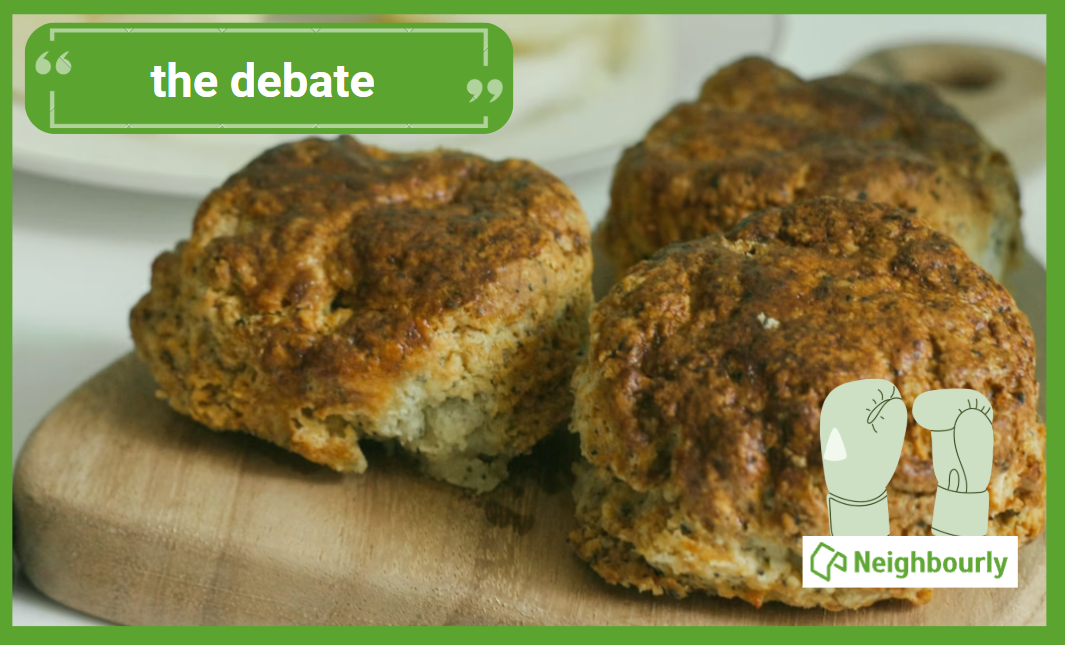
Poll: Does a savoury scone require cheese on top, or folded inside?
Help settle the great kiwi debate ... cheese on top, or folded inside?
-
76.3% Inside!
-
23.7% On top!
 Loading…