







How well do you know your neighbours?
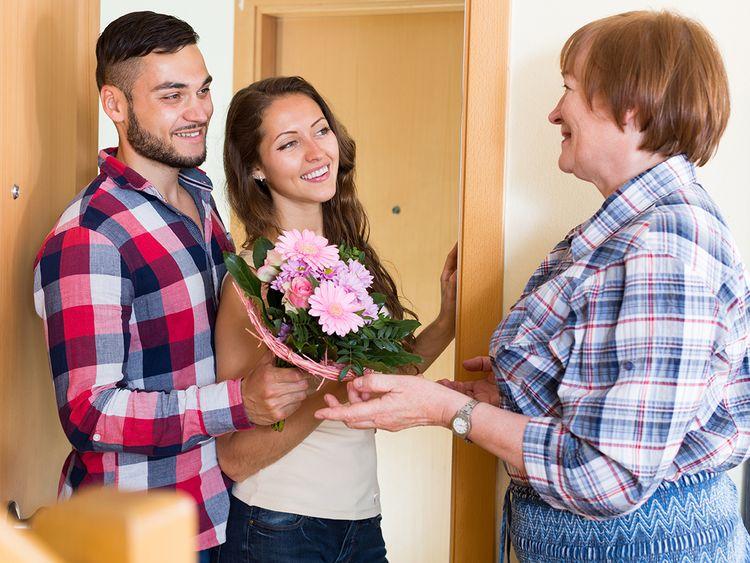
Some people refuse contact with neighbours even when they live in adjacent houses / apartments.
Do you know your neighbours? I don’t. I have been living in the same apartment for three years, but haven’t exchanged a word with my neighbours. Wonder why?
Let me explain. I’m kind of an antisocial. Don’t make friends easily, and don’t talk to strangers. An antiseptic smile is the best I can manage. Prefers to keep to myself and stick to the same circle of friends and relatives. Well, you can call me an introvert. That would explain my lack of interaction with neighbours.
My wife’s exactly the opposite. Yet, she has failed to strike up a conversation with the occupants of the flat across the corridor. The doors face each other. At times, we open the doors simultaneously, and the elderly lady behaves as if we don’t exist. So do the two young adults. We hardly get to see the other neighbours.
How young children make a difference
================================
Maybe they want to be left alone. I understand that. Yet, it feels strange. Weird, actually!
Humans, they say, are social animals. Our lives are interlinked and interdependent in some way, especially when we share a building. The blank stares and the radio silence in the elevators baffle me. Isn’t this a community? I ask myself.
I lived in another apartment for 20 years, and the experience was totally different. We had plenty of friends in the building and the neighbouring blocks. Some of those friendships exist even today, even after they have moved to other countries.
Much of the indifference may be due to big-city syndrome. People are so busy with their lives that they don’t have time for socialising.-
What’s the difference? One reason was our children. They were young and had plenty of friends. I remember a time when the doors of three neighbouring flats, including ours, were never locked as children kept moving from one house to another to continue their games. That was when my daughter was a toddler. At least 25 children in the neighbourhood would attend my son’s birthdays.
The children’s parents became our friends, and we called on each other for festive occasions and pujas. Sweets used to be sent and received during Diwali. Help used to be sought and given. Seems like another era.
Even after we moved, my wife maintained friendships in our old neighbourhood. She frequently travels there to attend birthdays, pujas, picnics, and other community activities. I often tease her, saying that her social skills haven’t worked in the new neighbourhood. She shrugs it off, saying it takes two people to strike a friendship.
Much of the indifference may be due to big-city syndrome. People are so busy with their lives that they don’t have time for socialising. When you get home from work late, visiting the neighbours is the last thing on tired minds.
What about weekends and holidays? Plans would have been made weeks ahead, and grocery shopping and prayers at a temple or a church are a weekend phenomenon. In homes where husbands and wives work, Saturdays and Sundays can turn into marathon cooking sessions to cover the week. All that doesn’t leave much time for neighbours and friends.
In many cases, it’s down to privacy. People value their privacy, which is why they keep to themselves. Imagine if your neighbours are nosy parkers. They could make lives miserable with incessant questions and the insatiable curiosity to know everything that happens in the neighbourhood.
None of us would want that. Right? Then why am I complaining?
You don’t have to take the biblical phrase “Love Thy Neighbour” literally. A little bit of social contact between neighbours wouldn’t hurt. And you don’t have to be friends with all the neighbours. A hello, a good morning, a smile, or a nod would suffice.
Do I do that? Yes, I do. Especially when I’m riding the elevator. It feels good when others return the gesture. A smile is the best. So keep smiling.
=================================================

Poll: 🤖 What skills do you think give a CV the ultimate edge in a robot-filled workplace?
The Reserve Bank has shared some pretty blunt advice: there’s no such thing as a “safe” job anymore 🛟😑
Robots are stepping into repetitive roles in factories, plants and warehouses. AI is taking care of the admin tasks that once filled many mid-level office jobs.
We want to know: As the world evolves, what skills do you think give a CV the ultimate edge in a robot-filled workplace?
Want to read more? The Press has you covered!
-
53.7% Human-centred experience and communication
-
14.6% Critical thinking
-
29.1% Resilience and adaptability
-
2.6% Other - I will share below!


Poll: Should complete designs be shared with the public, or should the community help shape the designs from the start?
The Post recently shared an opinion piece on the Harbour Crossing and why a more democratic approach might be needed 🚗🚲👟
While most decisions sit within the political arena, many organisations—like NZTA—manage long-term projects that go beyond party lines. Politics can sometimes disrupt progress, and the next Harbour Crossing is a big decision that will affect all Aucklanders.
We’d love your thoughts: Should near-complete, shovel-ready designs be shared with the public, or should the community have a hand in shaping the designs from the start?
-
81.3% Community feedback and transparency is needed.
-
18.7% No. This would be impossible in practice.
 Loading…