






Plan Change 120 Letter
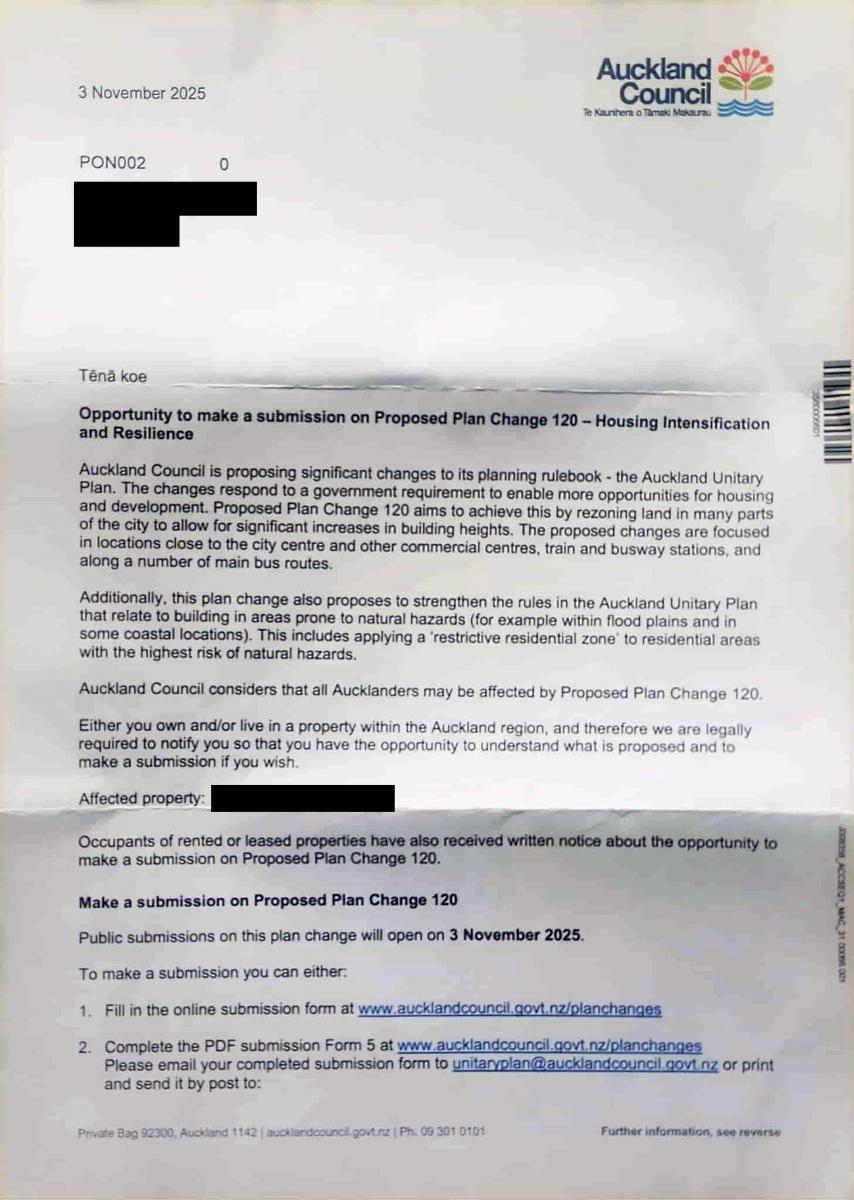
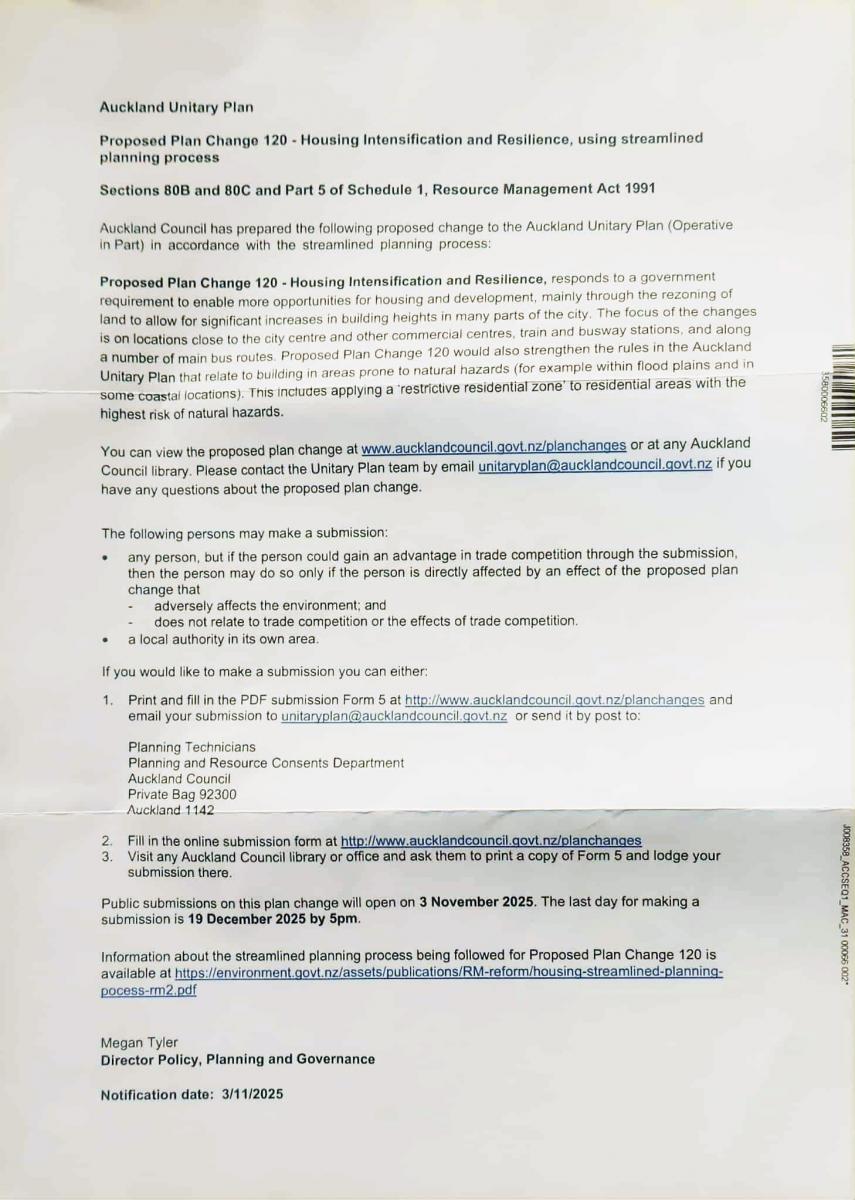
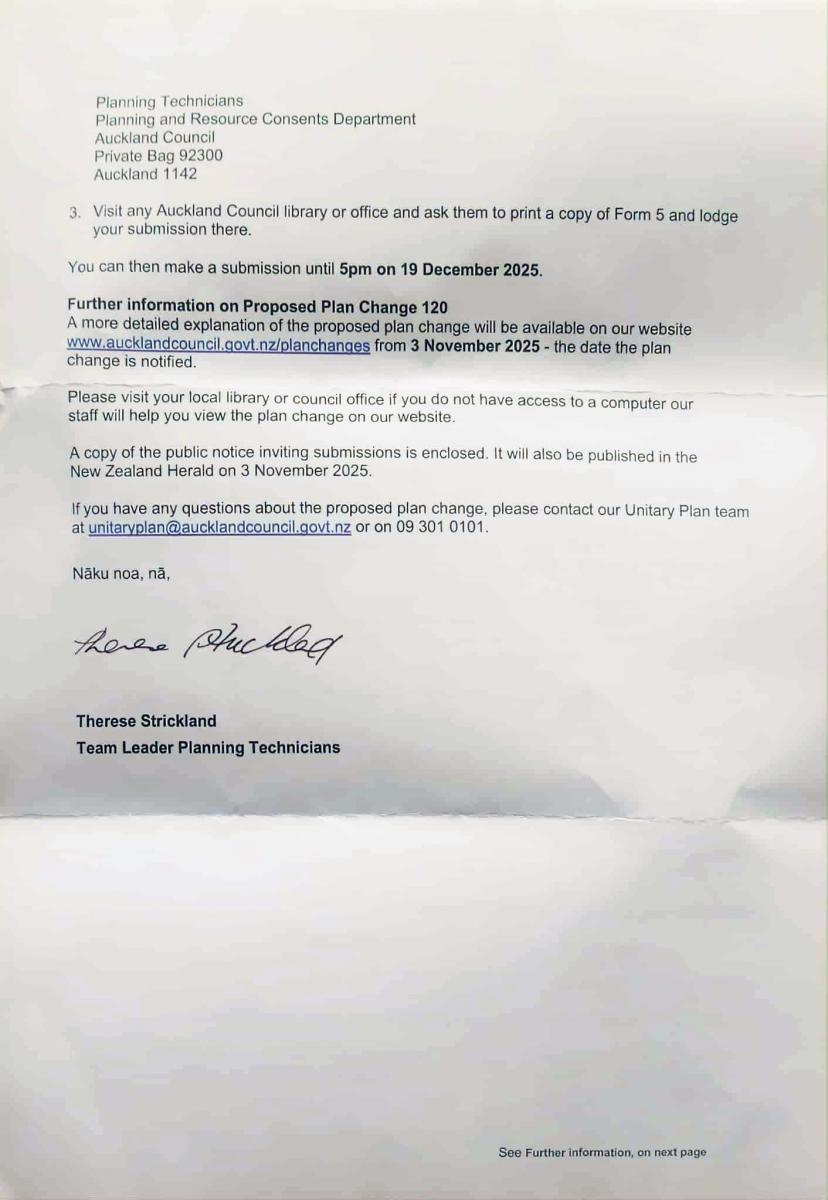
Did you receive this letter from Auckland Council? It is being delivered to every household in Auckland and is causing a bit of confusion.
Essentially, it is inviting everyone in Auckland to comment on proposed changes to the Unitary Plan from 3 November. The Unitary Plan is the set of rules that says what can and can't be built on each property. The proposed changes (Plan Change 120) are so significant and change the rules so much for most properties, that over time, most streets and neighbourhoods will likely be affected in some way. That's why all home owners and renters are being invited to submit.
The consultation will open on 3 November and more info will be available online then.
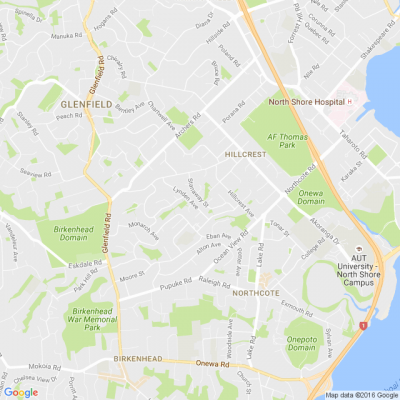
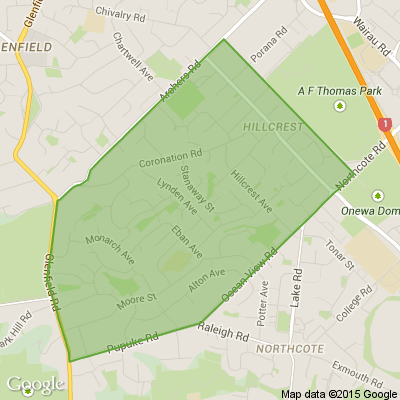
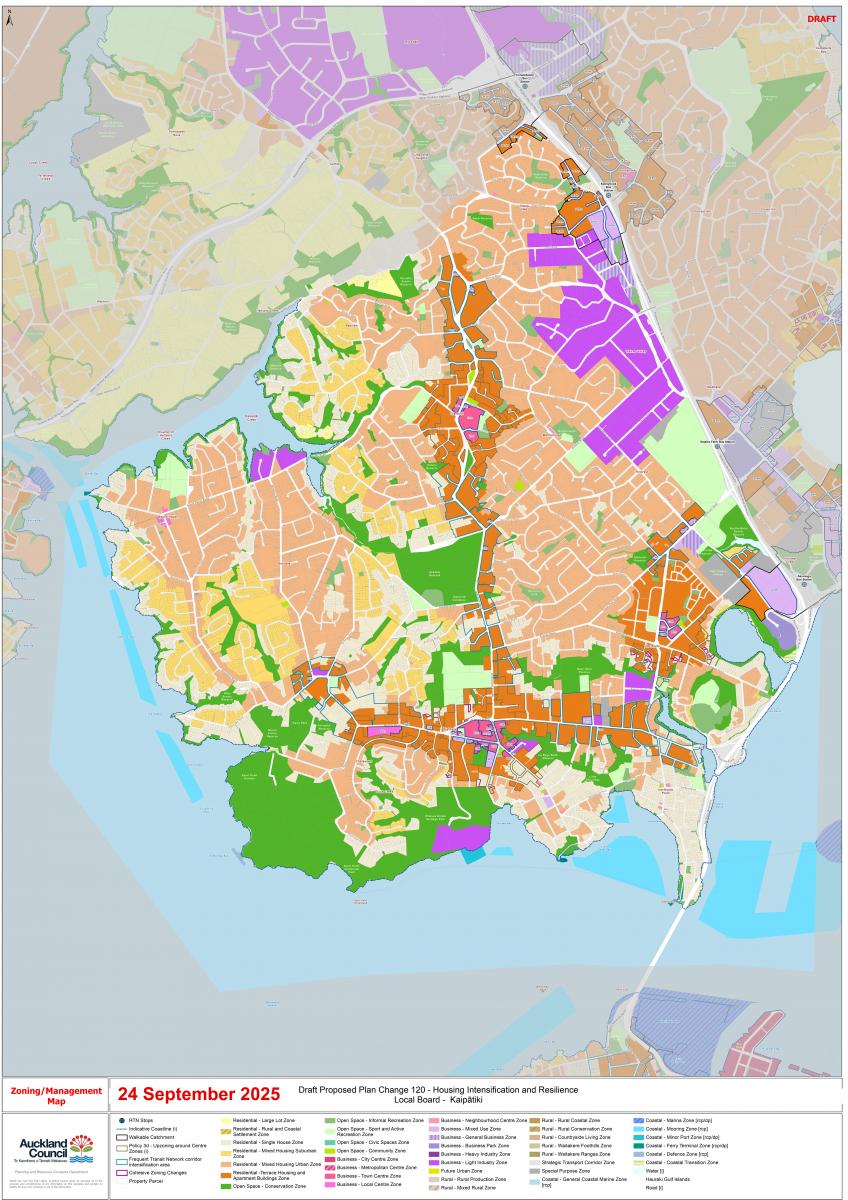
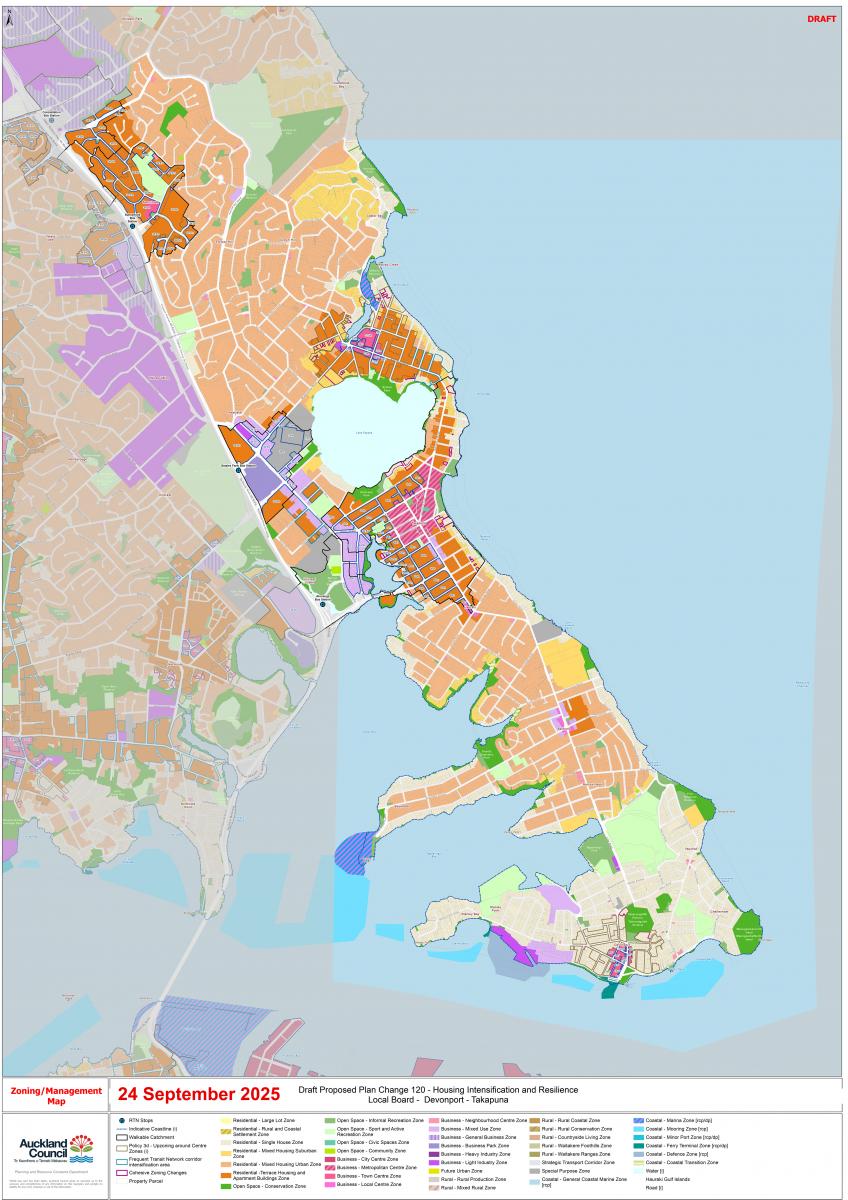
I've attached the zone maps for the North Shore that show the proposed new zone for each property. More maps showing more information for the North Shore and other parts of Auckland can be downloaded from the below link, and further information including factsheets will be available from 3 November: www.aucklandcouncil.govt.nz...
So what is this all about? It's complicated, but here's a brief history:
➡️ In 2016, the Unitary Plan zone rules allowed for an additional 900,000 new dwellings to be built, with greater intensification and higher building heights across much of Auckland. It also allowed buildings to stretch across land parcels, and reduced the amount of outdoor space needed for each dwelling. Since then, we've seen a lot more intensive housing being built and pressure on infrastructure.
➡️ In 2022, the Labour Government's MDRS rules came into effect, which allowed any property in Auckland to have up to 3 dwellings of 3 storeys built without needing a resource consent. This was to force Auckland to accommodate up to 2 million dwellings. However, Auckland Council's changes to the Unitary Plan to allow for this (called Plan Change 78) never fully came into effect, leading to a confusing layering of rules and much debate at consent hearings. While the MDRS rules didn't apply in special character areas, significant ecological areas, or any area that didn't have adequate infrastructure, it did apply in many flood plain and erosion-prone areas.
Also in 2022, the Government prohibited Councils from requiring developers to have on-site carparks. This has lead to a noticeable increase in cars parked on roads, creating safety and visibility issues on narrow roads.
➡️ The Unitary Plan together with the MDRS rules have led to a "pepper pot" approach to town planning, as new developments have appeared on almost every suburban road, with Council having to play catchup with infrastructure everywhere, rather than in a planned or staged manner.
➡️ This year, the National Government has allowed Auckland to opt out of the MDRS rules, and to make it more difficult to build on flood plains and coastal areas. But the Government is instead forcing Auckland to still accommodate 2 million new dwellings. To do this, Council is proposing Plan Change 120 which includes big changes to what can be built on most properties.
Some of the changes:
🏢 All zones have had changes made to the detail of them. So even if your property or your neighbour’s property is proposed to have the same zone as before, there may be changes that you should be aware of.
🏢 Many properties that were zoned for 2-storey “Mixed Housing Suburban Zone” are being up-zoned to 3-storey “Mixed Housing Urban Zone”. This affects most suburban roads and will allow 3 storey buildings by default, rather than 2 storeys as at present.
🏢 Terraced and apartment housing will be allowed up to 6 storeys high by default on main road corridors, such as Glenfield Rd, Onewa Rd, Mokoia Rd, Kitchener Rd, Hurstmere Rd and Killarney St.
🏢 There will be higher heights of 10-15 storeys allowed by default in “walkable catchments” around bus stations, train stations, town centres and some local centres, for example, 10 storeys around the Sunnynook Bus Station and 15 storeys in parts of Takapuna.
🏢 A lot of Single House Zoned properties will be up-zoned, except for coastal areas due to the risk erosion and slips; around many significant ecological areas due to the impact on the bush and risk of slips; and in special character areas.
🏢 There will be a reduction in the number of properties with Special Character Area overlay, with reductions in Devonport, Birkenhead and Northcote Point, and with the greatest number removed from Mt Eden.
🏢 If a property has a Natural Hazard layer applied to it, the underlying zone will still apply, however a developer will need to show that the design mitigates the hazard, for example, in a flood plain.

🎉 Riddle me this, legends! 🎉
He/She who makes it, sells it.
He/She who buys it, doesn't use it.
The user doesn't know they are using it.
What is it?
(Shezz from Ngāruawāhia kindly provided this head-scratcher ... thanks, Shezz!)
Do you think you know the answer? Simply 'Like' this post if you know the answer and the big reveal will be posted in the comments at 2pm on the day!
Want to stop seeing these in your newsfeed?
Head here and hover on the Following button on the top right of the page (and it will show Unfollow) and then click it. If it is giving you the option to Follow, then you've successfully unfollowed the Riddles page.


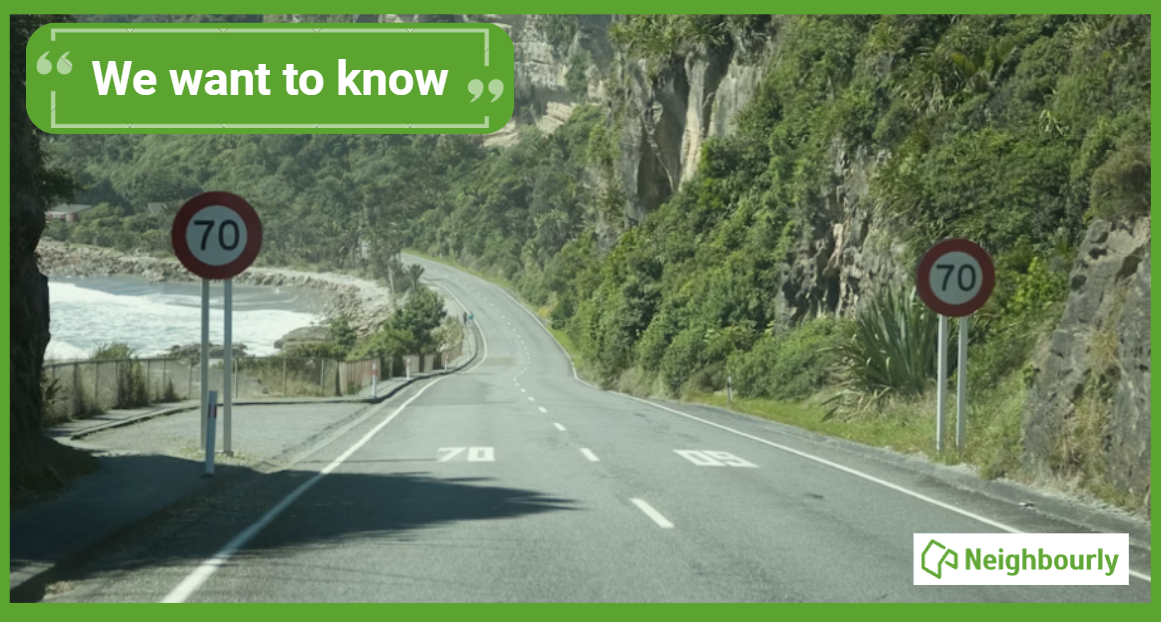
Poll: If we want to reduce speeding, what do you think actually changes driver behaviour? 🛻🚨🚓
In the Post's article on speeding penalties, the question is asked whether speeding fines are truly about road safety, or are they just a way to boost revenue for the Crown?
What do you think? Should speeding motorists receive speeding fines or demerit points?
-
37.2% The sting of a fine (Money talks!)
-
62.8% The threat of demerit points (Nobody wants to lose their license!)
Scam Alert: Bank cold calls
ASB is warning customers about reports of cold calls from scammers claiming to be from ASB. These scammers are trying to obtain personal information, including usernames, dates of birth, and verification codes sent to your mobile phone.
🛡️ The "Caller Check" Test
If you get a call from someone claiming to be from ASB and you’re unsure, just ask them for a Caller Check. You will then be able to verify the call through the app.
Remember, banks will:
❌ Never ask for your banking passwords, PINs, or verification codes
❌ Never need to know your full credit card number – especially the CVC
❌ Never ask you to download software or remotely access your device
❌ Never ask you to purchase gift cards or transfer funds.
If you have received a phone call and think your account has been compromised, call ASB on 0800 ASB FRAUD (0800 272 372), or visit your local branch.
 Loading…