





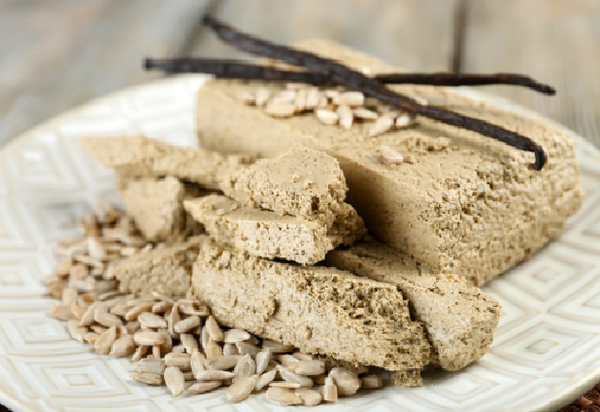
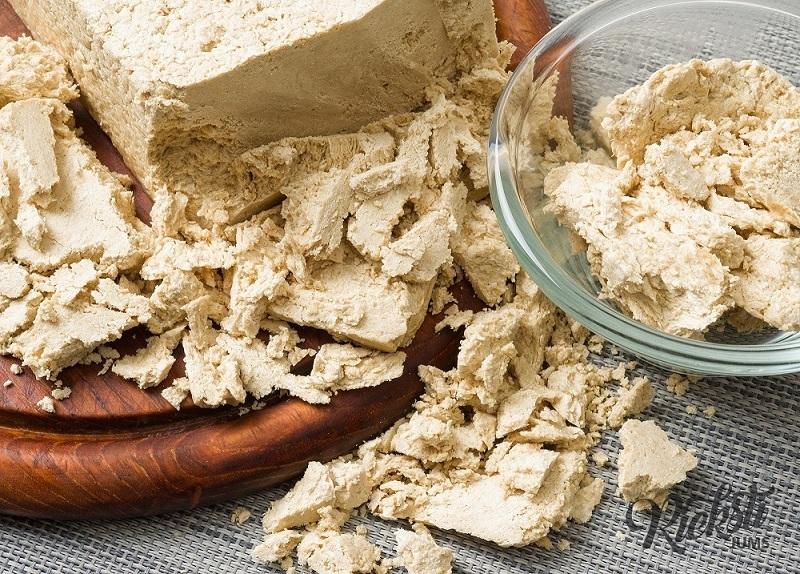
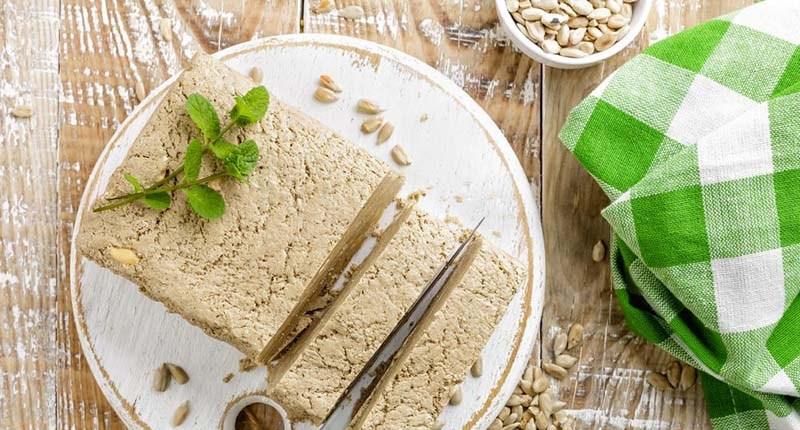
What is halva?
It’s a traditional sweet, which is popular in huge territory. Various sources claim that it originated in the Middle East and later spread out to the Balkan peninsula, North Africa and even India. Nowadays halva is much appreciated dessert in almost half of the Europe (if you add on Poland, Lithuania, Latvia, Ukraine and big part of Russia to the Balkan states). Nevertheless, the Middle East still offers the biggest variety of halva. But this sweet is more and more on demand in other countries, notably UK and US, because of the great beneficial properties.
In ancient times halva was made from dates and milk or from sesame seeds and honey. As the time passed, more variations of it were invented, more ingredients were tried, more complex ways of production were used. These days in different countries you may find a lot of quite similar and totally diverse kinds of halva (which may be called helva, halawa, chalva, halwa, halvah, chałwa, alva, haleweh, halava, helava, halua, aluva etc). But in fact there are two main types of halva: flour based and nut based. The most common to Europeans is the latter one, made from crushed sesame or sunflower seeds, sugar syrup and flavors. Very often the extra ingredients like nuts, cocoa, dried fruits or even chocolate are added to it. I noticed that halva is a little bit varied in every country. So there‘s much to explore, if you like this sweet.
You may also call it the oldest food supplement in the world, as halva contains a lot of essential minerals, fatty acids, dietary fiber, proteins, aminoacids and other useful elements. But stay sane and indulge this dessert in a moderate way because of the high sugar content. Up to 30 g of halva should be enough to satisfy your sweet tooth.
Would you like to try it. Halva is are waiting for you in our store.

Poll: 🤖 What skills do you think give a CV the ultimate edge in a robot-filled workplace?
The Reserve Bank has shared some pretty blunt advice: there’s no such thing as a “safe” job anymore 🛟😑
Robots are stepping into repetitive roles in factories, plants and warehouses. AI is taking care of the admin tasks that once filled many mid-level office jobs.
We want to know: As the world evolves, what skills do you think give a CV the ultimate edge in a robot-filled workplace?
Want to read more? The Press has you covered!
-
52.7% Human-centred experience and communication
-
14.8% Critical thinking
-
29.5% Resilience and adaptability
-
3% Other - I will share below!

Brain Teaser of the Day 🧠✨ Can You Solve It? 🤔💬
Make a hearty dish. Take just half a minute. Add four parts of kestrel. Then just add one. What have you made?
(Trev from Silverdale kindly provided this head-scratcher ... thanks, Trev!)
Do you think you know the answer? Simply 'Like' this post and we'll post the answer in the comments below at 2pm on the day!
Want to stop seeing these in your newsfeed? No worries! Simply head here and click once on the Following button.


Have you got New Zealand's best shed? Show us and win!
Once again, Resene and NZ Gardener are on the hunt for New Zealand’s best shed! Send in the photos and the stories behind your man caves, she sheds, clever upcycled spaces, potty potting sheds and colourful chicken coops. The Resene Shed of the Year 2026 winner receives $1000 Resene ColorShop voucher, a $908 large Vegepod Starter Pack and a one-year subscription to NZ Gardener. To enter, tell us in writing (no more than 500 words) why your garden shed is New Zealand’s best, and send up to five high-quality photos by email to mailbox@nzgardener.co.nz. Entries close February 23, 2026.
 Loading…